
Born on the Track: 10 Street-Legal Legends with Race-Bred Engines
There is a visceral, unmistakable thrill that comes from gripping the wheel of a machine infused with genuine motorsport DNA. We aren’t merely discussing aesthetic “track-inspired” trim packages or stiffened suspension. We are talking about the rare breed of high-performance vehicles that house actual power plants originally forged for the podium. These race-bred engines represent the pinnacle of internal combustion, designed to withstand the brutal thermal loads of endurance racing or the frantic RPM limits of Formula 1.
When you pilot a car with a motorsport-derived engine, the connection between the driver and the asphalt is instantaneous. It’s an auditory and sensory experience that mass-market sports cars simply cannot replicate. In this deep dive, we explore 10 iconic production cars that brought track-only engineering to public roads, proving that the “Win on Sunday, Sell on Monday” philosophy is still the ultimate benchmark for automotive excellence.
The Engineering Bridge: Why Racing Matters in 2025
The relationship between the checkered flag and the showroom floor has never been more relevant. As we move deeper into the decade, performance car investment from major OEMs is skyrocketing. Why? Because racing is the ultimate laboratory. On the track, failure is public and expensive. This pressure forces breakthroughs in advanced aerodynamics, thermal management, and lightweight composites that eventually trickle down to the exotic cars for sale at your local high-end dealership.
Beyond the prestige, the technical data gathered at Le Mans or in F1 allows engineers to optimize engine reliability and power density. Whether it’s the carbon-ceramic brakes on a modern supercar or the lightning-fast dual-clutch transmissions we take for granted, the street-legal car is the ultimate beneficiary of racing’s “trial by fire.”
Alfa Romeo Montreal: The Endurance Prototype Heart

The Alfa Romeo Montreal is a masterclass in Italian style, but its true soul lies beneath its vented hood. While most grand tourers of the era utilized modified sedan engines, the Montreal featured a 2.6-liter V8 directly descended from the Tipo 33 sports prototype.
This was an engine born for the Targa Florio and the 24 Hours of Daytona. To make it street-legal, Alfa Romeo’s engineers increased displacement and added mechanical fuel injection. Even in its “civilized” form, it screamed to a 7,000 RPM redline, producing 200 hp. For collectors looking for classic cars with racing engines, the Montreal remains a sophisticated, high-revving masterpiece of 1970s engineering.
The BMW M Legacy: M1, E30 M3, and the M88/S14
BMW’s “M” division didn’t start as a marketing exercise; it was a dedicated racing arm. The BMW M1 was the genesis, utilizing the 3.5-liter M88 inline-six developed for the ProCar series. This engine was so robust and versatile that it eventually found its way into the E28 M5 and E24 M6, effectively creating the “super sedan” category.
Perhaps even more legendary is the E30 M3. Its S14 four-cylinder engine was essentially a “shrunk” version of the M88, utilizing the same head architecture. Designed specifically to dominate DTM (German Touring Car) racing, the E30 M3 wasn’t built for straight-line speed but for mechanical harmony. Today, the BMW M3 resale value continues to climb, as enthusiasts seek out that authentic, high-winding DTM soul that modern turbocharged engines often lack.
1969 Chevrolet Camaro ZL1: A Can-Am Terrorist
In the late 60s, the “C.O.P.O.” (Central Office Production Order) system allowed a few savvy dealers to bypass GM’s corporate bans on large engines. The result was the 1969 Camaro ZL1. This wasn’t just another big-block; it featured an all-aluminum 427 cubic-inch V8 developed for the Can-Am racing series.
The all-aluminum construction made the engine nearly 100 pounds lighter than a standard iron-block 396, drastically improving the car’s weight distribution. While officially rated at 430 hp to appease insurance companies, true dyno tests of the era often saw these units pushing closer to 500 hp. With only 69 units produced, the ZL1 is one of the most expensive muscle cars for sale in the contemporary auction circuit.
Ferrari Dino 206 GT: The Formula 2 Tribute
Named after Enzo Ferrari’s late son, the Dino 206 GT was a pivotal moment for the Maranello-based manufacturer. The heart of the Dino was a 2.0-liter V6 designed by Vittorio Jano for Ferrari’s Formula 2 racing efforts.
By the time it reached the 206 GT, the V6 had been refined for road use, yet it retained the high-pitched, metallic wail of a race car. It produced 180 hp in a chassis that weighed just over 2,000 lbs. This car didn’t wear the Ferrari badge initially, as Enzo reserved that for V12s, but the Dino’s racing pedigree eventually paved the way for the mid-engine V8 Ferraris we celebrate today.
Ferrari F50: An F1 Car in a Tuxedo
If the F40 was a raw turbocharged beast, the Ferrari F50 was a sophisticated F1 tribute. The engine, designated the Tipo F130B, was a 4.7-liter V12 derived straight from the 1990 Ferrari 641 F1 car.
This engine wasn’t just “inspired” by F1; it shared the same block architecture and was bolted directly to the carbon-fiber chassis, acting as a stressed member—just like a formula car. With a screaming 8,500 RPM limit and 513 hp, the F50 provides an unfiltered mechanical symphony. It remains the closest experience a civilian can have to driving Alain Prost’s podium-winning machinery on a coastal highway.
Ford GT: From Le Mans to the Local Highway
The Ford GT nameplate is synonymous with endurance dominance. The 2005 revival utilized a 5.4-liter supercharged V8 that drew heavily from Ford’s Daytona Prototype engine development. It was a sledgehammer of an engine, providing 550 hp with bulletproof reliability.

Fast forward to 2017, and Ford did it again with the second-generation GT. This time, they used a 3.5-liter twin-turbo EcoBoost V6. While critics initially missed the V8, the V6 was a direct port of the engine that won the LM GTE Pro class at Le Mans in 2016. It’s a specialized, high-efficiency unit that proves V6 performance technology can compete with the world’s best exotics.
Jaguar XJ220: The Group C Survivor
The story of the Jaguar XJ220 is one of the most fascinating in supercar history. Originally promised as a V12 AWD grand tourer, the production version arrived as a RWD beast powered by a 3.5-liter twin-turbo V6. While buyers were initially disappointed, that V6 was a thoroughbred—the same unit found in the Jaguar XJR-11 Group C race car.
The racing-spec motor allowed the XJ220 to reach 217 mph, briefly holding the title of the fastest production car in the world. Its performance was so staggering that it silenced the V12 skeptics, proving that motorsport-derived turbocharging was the future of high-speed travel.
Plymouth Belvedere: The NASCAR “Race Hemi”
In the 1960s, NASCAR was the ultimate marketing tool. To remain competitive, Plymouth introduced the 426 Hemi V8 in 1964. This engine, known as the “Elephant Motor” due to its massive size and power, was essentially a NASCAR race engine sold in a plain-wrapper sedan.
The street-legal version of the Belvedere Hemi produced 425 hp and 490 lb-ft of torque. It was so dominant that NASCAR actually banned the engine for the 1965 season until Plymouth could prove they were selling enough units to the general public. This “homologation” requirement is the reason some of the greatest classic muscle cars exist today.
Porsche 918 Spyder: The Hybrid Prototype
Porsche has a long history of using racing to prove new tech, and the 918 Spyder is the ultimate example. Its 4.6-liter V8 is a direct evolution of the engine found in the RS Spyder LMP2 race car.
By pairing this high-revving, naturally aspirated V8 with two electric motors, Porsche created a 887 hp monster. The engine itself weighs only 298 lbs, a feat of engineering possible only through racing-spec metallurgy. The 918 Spyder set the blueprint for the modern hybrid supercar, proving that electrification doesn’t have to come at the expense of a racing soul.
Porsche Carrera GT: The Shelved F1 Project
The Porsche Carrera GT is widely considered the last “great” analog supercar. Its 5.7-liter V10 engine has one of the most interesting backstories in the industry. It began as a secret Formula 1 engine project in the early 90s, was later adapted for a Le Mans prototype (the LMP2000) that was never raced, and finally found its home in the Carrera GT.
With a 603 hp output and a ceramic clutch that requires the precision of a professional driver, the Carrera GT is not for the faint of heart. Its V10 howl is arguably the greatest engine note ever produced by a street car—a haunting, high-pitched scream that serves as a permanent reminder of its grand prix origins.
Experience the Legacy of Speed
Driving a car with a race-bred engine is more than just a commute; it is an act of preservation and a tribute to the engineers who spend their lives chasing tenths of a second. Whether you are looking for a modern hybrid hypercar or a classic piece of American iron, the connection to the track is what defines the ultimate driving machine.
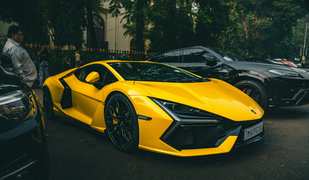
Are you ready to elevate your garage with a vehicle that carries the DNA of a champion? Our team of experts specializes in sourcing high-performance vehicles and exotic car financing for those who refuse to settle for the ordinary. Contact us today to find your next track-inspired legend and feel the power of a racing engine for yourself.