
Rimac Nevera R: Re-Engineer the Ultimate Hypercar for Pure Track Prowess
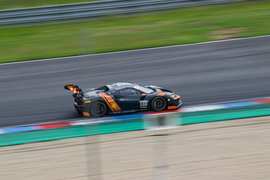
The Evolution of a Revolution: How Rimac Refined the World’s First All-Electric Hypercar to Dominate the Track
In the hypercar sphere, Rimac is more than just a manufacturer; it’s a paradigm shifter. When the Nevera debuted, it wasn’t merely an addition to the elite hypercar landscape—it was a seismic event. The Nevera established itself as the world’s first production all-electric hypercar, shattering the myth that electrification would compromise visceral performance. It was designed to bridge the gap between the raw ferocity of a track machine and the refinement of a luxury grand tourer. However, while the Nevera defined the category, the relentless pursuit of pushing the envelope is etched into the DNA of Bugatti Rimac. Customers, ever-hungry for more, demanded a machine that capitalized on the Nevera’s sophisticated chassis and powertrain to deliver a pure cornering experience, one that leverages the Rimac All-Wheel Torque Vectoring and advanced electronics to their absolute limits.
The result of this engineering evolution is the Rimac Nevera R. It is not a radical departure from the Nevera, but rather a surgical refinement—a “surgical strike” on performance. This new model retains the architectural brilliance of its predecessor but is reimagined as a hyper sports car designed to maximize driving dynamics and cornering ability. It’s a vehicle where the power of its 2,107 hp powertrain is not just about straight-line velocity, but about orchestrating a symphony of grip, precision, and responsiveness, even at the limit. With a performance-oriented battery system and advanced brakes, the Nevera R transforms itself from a world-beating grand tourer into an all-electric hypercar focused on setting new benchmarks in lap times and grip levels.
Mate Rimac, the visionary Founder and President of the Rimac Group, CEO of Bugatti Rimac and Rimac Technology, articulated the genesis of this new machine with characteristic clarity. “When we developed the Nevera,” he explained, “an important part of the brief was that it should be a Grand Tourer. We made sure it was spacious, comfortable and finely balanced between thrilling and accessible. Ultimately what we achieved struck that balance perfectly; a high-performance record-breaking car that could set new benchmarks at the Nürburgring Nordschleife and be driven comfortably thousands of miles across continents. It was a watershed moment in automotive performance; the world’s first production all-electric hypercar, single-handedly leading a new generation. But we’re relentlessly tweaking to customers’ desires, and many were looking for a car that really emphasized the Nevera’s cornering ability, using all the advanced technology on-board. We responded with the Nevera R: all the DNA of the record-breaking Nevera, but lighter, faster and more focused.”
This quote underscores a fundamental truth in performance engineering: the evolution of a product is often driven by the evolution of user expectation. The Nevera was groundbreaking because it delivered the electric hypercar experience. The Nevera R is groundbreaking because it delivers the electric track car experience—a distinction that, in the age of Electric Vehicle (EV) hypercars, is becoming increasingly critical for brands seeking to dominate the high-performance EV market.
Re-Engineering the Chassis: Precision, Weight, and Suspension Refinement
To transform the Nevera into the Nevera R, Rimac’s designers and engineers executed a meticulous re-engineering of the vehicle’s core characteristics. The objective was to strip away any extraneous elements that might detract from the ultimate driving experience and introduce enhancements that would maximize cornering performance. This philosophy extends beyond mere power increases; it permeates the chassis, suspension, and weight distribution, all of which are critical for hypercar performance and handling.
One of the most significant changes in the Nevera R is its weight reduction. The engineers meticulously optimized the vehicle’s architecture to shave grams where possible, recognizing that in hypercar design, even marginal weight savings have a disproportionately positive effect on agility, acceleration, and cornering ability. This pursuit of lightweight engineering is a hallmark of top-tier EV manufacturers, who understand that weight is the nemesis of performance. While the specific weight reduction figures are highly guarded, the impact is felt demonstrably in the vehicle’s responsiveness and feedback, making it feel more lively and connected to the driver.
The suspension system has been the subject of intense refinement. The Nevera R features a performance-tuned suspension, with a focus on tighter damping and revised spring rates. This ensures that the car remains composed and planted during high-speed cornering and aggressive maneuvers. The engineers adjusted the suspension kinematics to improve grip levels, particularly under lateral load, and to reduce understeer—a phenomenon that can dull the driving experience and limit cornering speed. This focus on handling dynamics is central to the Nevera R’s identity as a track-focused hypercar.
Furthermore, the Nevera R utilizes a performance-oriented battery pack, which has been optimized not only for energy density but also for thermal management under extreme loads. The Rimac battery system is renowned for its power delivery capabilities, and in the Nevera R, it has been further tuned to provide even faster and more precise power delivery to the wheels. This enhanced thermal management ensures that the car maintains peak performance even during extended track sessions, which is critical for high-performance electric cars.
The advancements in the Nevera R’s chassis are complemented by a comprehensive aerodynamic overhaul. While the Nevera already boasts an advanced active aerodynamic system, the Nevera R introduces a new, larger fixed rear wing and an aggressive front aero package that includes a new large diffuser. These components are designed to maximize downforce, which in turn provides greater stability and grip levels, particularly at high speeds. The engineers also fine-tuned the aerodynamic balance of the car to reduce understeer, creating a more neutral and predictable handling experience. Through this combination of negative camber, the higher grip level of the new tires and the added downforce the Nevera R is ready to bend physics like never before. Every element, crafted through a performance-driven design philosophy, has been rethought for agility and handling.

This comprehensive approach to chassis refinement demonstrates Rimac’s commitment to providing a truly engaging driving experience. By focusing on weight reduction, suspension tuning, battery optimization, and aerodynamic enhancements, the Nevera R evolves into a track-focused hypercar that leverages the Nevera’s technological foundation to deliver a new level of driving excitement.
Performance Reimagined: Unleashing 2,107 HP of Pure Electric Force
The heart of the Rimac Nevera R is its 2,107 hp electric powertrain, which delivers mind-bending acceleration and top speed. This powerhouse is derived from the advanced Rimac battery system and four independent electric motors, each driving a single wheel. However, the Nevera R elevates this performance to new heights through a strategic re-tuning of the traction control system and All-Wheel Torque Vectoring (R-AWTV).
The Rimac All-Wheel Torque Vectoring (R-AWTV) is the cornerstone of the Nevera’s exceptional handling capabilities. This sophisticated system allows the Rimac Nevera R to distribute torque to each wheel independently, enabling precise control over the vehicle’s trajectory during cornering. In the Nevera R, the R-AWTV has been re-tuned to maximize the potential of the Michelin Cup 2 tires and the increased downforce, delivering sharper, tighter cornering that keeps the driver glued to the road. The traction control system has also been revised to expand the capabilities of the R-AWTV, ensuring predictability even in wet conditions.
The introduction of Michelin Cup 2 tires is a critical factor in the Nevera R’s enhanced grip levels. These tires offer superior lateral grip and reduced understeer compared to standard road tires, allowing the driver to push the car harder through corners. The Nevera R boasts an overall reduction in understeer by 10% and an increase in lateral grip by 5%, resulting in a significant reduction in lap times. This focus on grip levels and handling dynamics underscores the Nevera R’s evolution into a track-focused hypercar.
Performance figures for the Nevera R are simply staggering:
Top speed: 412 km/h / 256 mph (with manufacturer oversight)
0-60 mph: 1.74s
0-100 km/h / 0-62 mph: 1.81s
0-200 km/h / 0-124 mph: 4.38s
100-200 km/h / 62-124 mph: 2.46s
0-300 km/h / 0-186 mph: 8.66s
1⁄4 mile: 8.23s

These numbers place the Nevera R firmly at the apex of