
Ferrari 296 GTB 2025 Review: The Benchmark Against the Lamborghini Temerario
Introduction: A Hybrid Revolution in Maranello
Since its 2022 debut, the Ferrari 296 GTB has cemented its position at the pinnacle of the hybrid supercar segment. Discarding the multi-award-winning twin-turbo V8 in favor of a new 120-degree twin-turbo V6 engine augmented by an electric motor, the 296 GTB immediately set a new standard for mid-engined performance. While competitors like the naturally aspirated V10 Lamborghini Huracán and the turbocharged V8 McLaren 720S were formidable rivals, the arrival of the 903bhp, 10,000rpm twin-turbo V8 hybrid Lamborghini Temerario underscores Ferrari’s strategic foresight in embracing this new technological paradigm.
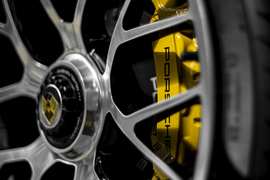
The 296 GTB represents a paradigm shift for Maranello. It is the first V6-powered Ferrari road car—notably, the iconic 246 GT Dino never wore the prancing horse emblem during its production run—and features a ‘hot-vee’ turbocharger configuration. It also functions as a plug-in hybrid with an electric-only range of approximately 15 miles. The compact V6 engine is mounted low in a newly developed aluminum chassis, with the wheelbase shortened by 50mm compared to previous V8 models. This fundamental redesign allowed the occupants to sit slightly further forward, optimizing weight distribution and agility.
The synergy between the internal combustion engine and the electric motor is the hallmark of this car. The electric motor produces 165bhp and 232lb ft of torque, while the V6 independently generates a staggering 654bhp and 546lb ft. Ferrari refrains from quoting the combined peak torque, likely due to the complex interaction between the electric and combustion systems, but it is undeniably immense. Overall, the V6 unit saves 30kg over a V8 engine and is coupled to an eight-speed dual-clutch transmission. The battery pack, a long, oblong structure, is positioned behind the seats, further contributing to a balanced center of gravity.
A suite of advanced electronic chassis systems ensures that this prodigious power is safely and predictably delivered. Ferrari has developed the six-axis sensor known as 6w-CDS, which measures acceleration and rotational velocity across the X, Y, and Z axes. This technology replaces the conventional yaw sensor, working in concert with a steering rack sensor to monitor driver inputs and grip levels at the tire contact patches. These systems control the Side Slip Control (SSC) and the active E-diff, maximizing cornering speed while maintaining exceptional stability. Additionally, the 296 incorporates ABS-evo (ABS evolution) in RACE mode and above, which utilizes a brake-by-wire system to shorten braking distances and enhance braking performance during trail braking.
For the first time, Ferrari has applied active aerodynamics not to reduce drag but to increase downforce. The car generates a claimed 360kg of downforce at 155mph, with the rear wing contributing up to 100kg of this figure through its dynamic deployment.
The thermal management system is equally sophisticated. The car features two radiators in the nose for engine and gearbox cooling, alongside two condensers for the battery. Hot air is expelled from underneath the car to prevent interference with the intercooler air intakes positioned along the flanks. The small apertures beneath the headlamps feed cooling air to the brakes, while the roofline-integrated wing generates a ‘virtual’ rear screen that channels airflow to the rear of the car. The majority of the 296’s downforce is created under the car, with meticulous attention paid not only to airflow channeling and the rear diffuser but also to the underbody height to maximize the effectiveness of these aerodynamic surfaces.
The 296 GTB models evaluated at the launch were equipped with the Assetto Fiorano package. This package replaces the standard dampers with Multimatic units derived from GT racing technology and adds further carbon-fiber aerodynamic enhancements to the nose, boosting front downforce by 20kg.
The interior features significant carbon-fiber components, including door panels, reducing overall weight by 12kg. This weight saving increases to 15kg when the optional Lexan rear engine cover is specified. Furthermore, Assetto Fiorano cars can be ordered with an exterior graphics package inspired by the 250LM from the 1960s.
Having spent extensive time with the 296 GTB, its design is undeniably stunning—distinctive and elegant, echoing the 250LM even without the optional graphic stripes. This blend of classical design and futuristic technology is what makes the Ferrari 296 GTB review compelling.
Performance and 0-62mph Dynamics
Engaging the powertrain is as simple as a double press on the bottom of the steering wheel boss, followed by selecting first gear. The 296 operates in Hybrid mode by default, allowing the car to move away on electric power alone. This mode persists unless the driver activates different driving modes via the haptic ‘buttons’ on the left side of the steering wheel. If throttle application remains moderate, the car continues on purely electric power, provided the battery has sufficient charge.
Drivers can also select a dedicated EV mode, regardless of performance demands, or choose between Performance and Qualifying modes. In both these modes, both power sources work together. Performance mode prioritizes overall driveability while maintaining battery charge, whereas Qualifying mode focuses on maximum performance and disregards the battery’s state of charge.
One of the most surprising aspects of the Ferrari 296 GTB review is the quiet pleasure of gliding through villages on electric power. The damping is remarkably sophisticated, making the car an exceptionally comfortable cruiser. The ‘frunk’ at the front provides a reasonable luggage area, unlike the SF90. However, the truly captivating question is the experience of unleashing both the engine and electric motor at their full potential.
The true character of the 296 GTB is evident when accelerating from low revs in a high gear. The car simply rockets forward, with zero lag, making one momentarily question the necessity of gears such is its potency. However, with eight gears to exploit and an engine that revs to 8500rpm, the 296 GTB unleashes a startling wave of performance.
As the figures suggest (0-62mph in 2.9 seconds, a top speed of 205mph), the acceleration is intense—a gripping, adrenaline-fueled experience that borders on overwhelming but remains incredibly addictive. This is a seriously fast car. The soundtrack is equally impressive, with dynamic turbo sound effects overlaying a tuneful V6 rasp. The Ferrari 296 GTB review always highlights this audio experience as a key differentiator.
Ride and Handling: Precision Meets Engagement
What truly elevates the 296 GTB is its chassis responsiveness. Ferrari’s aim to make the car ‘fun to drive’ is evident in every aspect of its behavior. It feels agile without becoming nervous. The steering is typically light and quick, but it offers genuine feedback, and while grip levels are exceptionally high, the car remains throttle-adjustable in a way that induces smiles.
The 296 GTB feels significantly lighter than its 1470kg (dry) weight suggests. There is a noticeable lack of inertia throughout the car, which encourages the driver to work with it, making small inputs and relishing its accuracy. The CT Off mode allows drivers to exploit the car’s limits with the reassurance of an advanced electronic brain monitoring the situation. However, even with everything switched off, the 296 GTB’s natural balance allows it to be teased into oversteer—a feat one wouldn’t expect from a 819bhp hybrid supercar.
On the track, the 296 GTB shrinks even the longest start-finish straight, but its true brilliance lies in its precision. The power is sufficient to break traction at the rear at multiple points around the lap, but the 296 is also highly sensitive to braking and steering inputs. Drivers quickly learn that precision yields the greatest reward.
The incredibly accurate and rapid turn-in dramatically shortens the entry phase of every corner. Instead of easing the car into turns and allowing loads to build gradually, the 296 GTB takes its line immediately on the Multimatic dampers. The hyper-quick steering pairs perfectly with the enhanced roll support of the Assetto Fiorano setup. Even drivers transitioning from conventional sports cars will find the 296 GTB’s speed, precision, and agility phenomenal and deeply satisfying lap after lap. The integration of the electric motor ensures instant torque delivery, providing a thrilling surge of acceleration when needed.
Interior Design: Borrowing from the Future
The cabin architecture will be familiar to anyone who has experienced the SF90, as the 296 GTB borrows heavily from that car’s interior design. The purely digital interface, accompanied by haptic switchgear, is a sophisticated but challenging feature. These controls are used liberally on the steering wheel and on the more traditional Ferrari pods located either side of the steering wheel.
While complex, the system must handle a vast amount of information. The main challenge is the precision required for simple operations, which sometimes necessitate a second attempt if the first doesn’t register, or even uncertainty as to whether a press was successful. Nonetheless, the interior feels premium and special. The quality of materials and attention to detail contribute to the overall luxury experience of the Ferrari 296 GTB.
Legacy: evo Car of the Year 2022 Verdict
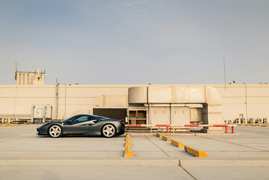
When a car is laden with such advanced technology, there is