
The Most Expensive Cars in the World Today: A Study in Elite Automotive Manufacturing
The global automotive industry is a sector characterized by innovation, engineering mastery, and intense market competition. While mainstream vehicles are engineered to deliver reliable, safe, and cost-efficient transportation for millions of consumers, the highest echelon of the industry caters to a rarefied global clientele for whom financial considerations are secondary to exclusivity, performance, and artistic merit. These vehicles are not mere modes of conveyance; they are the apex of mechanical achievement and design aspiration, setting benchmarks that often inform the development of more conventional automobiles. For enthusiasts and investors, understanding the landscape of these elite machines provides critical insights into future automotive trends and the zenith of what is currently achievable with advanced materials, aerodynamic theory, and propulsion technology.
The production of these exclusive vehicles is a meticulous process that contrasts sharply with the mass-market manufacturing of passenger cars. These hypercars and limited-edition models frequently enter the market with projected or realized production volumes below 50 units, reflecting a strategy of extreme exclusivity. This distinction is crucial: the list excludes collectible automobiles, such as historically significant racing prototypes that constitute a “1 of 1” or items that represent pivotal moments in motorsport history, such as a 1960s Ferrari or Porsche Grand Prix racer with lineage tied to European competition. These historical pieces command value based on provenance and scarcity in the collector market and are fundamentally different from contemporary, purpose-built performance vehicles.
When examining these ultra-luxury automobiles, it is important to recognize that they may never be encountered in everyday environments. Their habitat is primarily the concours d’elegance circuits—ultra-sophisticated automotive events that showcase the pinnacle of design and engineering, often featuring historical and bespoke vehicles—or within the sterile environments of prestigious automotive museums. However, for the fortunate few who encounter one on public roads or at exclusive events, understanding the provenance and pricing of such a machine offers a distinct measure of admiration. This report delves into the current landscape of the most expensive production cars available as of 2025, representing a synthesis of raw power, aerodynamic sophistication, and unparalleled material craftsmanship. For consumers seeking high-performance options with more accessible cost structures, resources such as performance car rankings and detailed reviews of sports cars provide comprehensive alternatives that bridge the gap between extreme exclusivity and everyday usability.
2025 Ferrari SF90 XX: The Apex of Electrified Performance
Ferrari, a brand synonymous with performance, racing pedigree, and engineering excellence, produces a diverse portfolio of sports cars. While the core lineup is generally focused on delivering high-octane performance to the global market, the brand also manufactures exclusive, limited-run hypercars. Among these elite offerings is the Ferrari SF90, a plug-in hybrid that represents a significant technological advancement for the marque. This highly specialized vehicle is further elevated by the “XX” designation, which signifies vehicles designed to push the boundaries of performance to their absolute limits. The SF90 XX is offered in two distinct formats: the hardtop “Stradale” and the open-top “Spider.”
The SF90 XX benefits from a sophisticated hybrid powertrain that integrates a twin-turbocharged V8 engine with three electric motors. This synergistic combination produces a total output of 1,036 horsepower, which represents a notable 30-horsepower increase over the standard SF90 model. The additional power, combined with a strategic reduction in vehicle weight, enables the SF90 XX to achieve a 0-to-60 mph acceleration time of 2.3 seconds and a top velocity of 211 mph. The vehicle is also equipped with aggressive aerodynamic features designed to enhance its performance capabilities, particularly under demanding track conditions. The estimated cost for this exclusive machine is approximately $890,000, with a total production volume of 1,398 units, split between 799 Stradale models and 599 Spider units. For those exploring options within the Ferrari lineage, analyzing the specifications of models like the Ferrari 296 GTB reveals how Ferrari’s electrification efforts translate into exhilarating performance across its product range.
2025 Gordon Murray Automotive T.33: The Enthusiast’s Purebred Driver’s Car
Gordon Murray Automotive (GMA) has carved a distinct niche in the hypercar market by emphasizing driver engagement, advanced aerodynamics, and lightweight construction. The T.33 is positioned as a more accessible entry point into the GMA portfolio, though this categorization by no means diminishes its extraordinary capabilities. It utilizes the same foundational powertrain as the highly acclaimed T.50, but produces slightly less power.
The T.33 features a high-revving, naturally aspirated V12 engine and is notable for its six-speed manual transmission, a feature becoming increasingly rare in the high-performance automotive sector. This commitment to driver interaction is a hallmark of GMA’s design philosophy. Unlike the T.50, the T.33 does not incorporate the signature fan-based aerodynamics that define that model, and it employs a conventional two-seat roadster configuration, contrasting with the T.50’s unique three-seat, center-driver layout. The estimated price for the T.33 is $1.72 million, with a production run limited to 100 units.
2025 Koenigsegg Gemera: The Four-Seat Hyper-Tourer
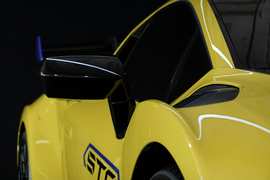
Under the leadership of automotive visionary Christian Von Koenigsegg, the Swedish automaker Koenigsegg is synonymous with pushing the boundaries of automotive engineering. The Gemera is an exceptional addition to the hypercar category, distinguished by its four-seat cockpit, accessed via distinctive dihedral doors. It features a unique powertrain architecture that allows it to operate on gasoline, electricity, or a combination of both.
First introduced in 2020, the Gemera has evolved through continuous updates to its powertrain options. The standard configuration delivers 1,381 horsepower. However, consumers can specify a V8 engine that, in conjunction with an electric motor, produces a staggering 2,269 horsepower. This combination of power and advanced propulsion technology places the Gemera at the forefront of modern automotive engineering. The estimated price for the Gemera is $1.7 million, with production capped at 300 units.
2026 McLaren W1: A Pure-Performance Machine Following Automotive Heritage
McLaren frequently produces hypercars that transcend its already exceptional lineup of supercars, creating vehicles that become benchmarks for performance and engineering. Following the iconic F1 and the revolutionary P1, the W1 represents the next limited-production hypercar from the British marque. With all 399 planned units already allocated, this vehicle represents the culmination of advanced engineering lessons learned from ultra-exclusive models like the McLaren Senna.
The W1 is powered by a 4.0-liter twin-turbocharged V8 engine, integrated with an electric motor to deliver a formidable 1,258 horsepower and 988 pound-feet of torque. This immense power output enables the vehicle to accelerate from 0 to 60 mph in a mere 2.7 seconds and achieve a top speed of 217 mph. As a plug-in hybrid, it offers a limited electric-only range of just two miles, which aids in silent starts and low-speed driving. The estimated price for the McLaren W1 is $2.1 million, with 399 planned units.
2025 Rimac Nevera R: The Electrified Rocket
For consumers who find the blistering performance of premium electric vehicles insufficient, Rimac offers a compelling solution in the hypercar segment. The Nevera is the successor to the CTwo project from the ultra-low-volume Croatian manufacturer of electric hypercars. It utilizes a 120 kWh Lithium Nickel Manganese Cobalt Oxide (NMC) battery to power electric motors at all four wheels, delivering a combined system output of 1,813 horsepower and 1,741 pound-feet of torque. For the 2025 model year, the Nevera R has joined the lineup, with its power output elevated to an astonishing 2,107 horsepower.
This extraordinary level of power and torque ensures that tire wear will be a constant concern. The Nevera can accelerate from 0 to 60 mph in an astonishing 1.85 seconds and complete the quarter-mile in 8.6 seconds. The upgraded Nevera R achieves the same 0-to-60 mph sprint in a staggering 1.74 seconds. The battery system provides 350-kWh fast-charging capability, allowing for a charge from 20% to 80% in just 18 minutes. On a full charge, the Nevera achieves a range of 205 miles, though extreme acceleration runs will naturally reduce this range. The estimated price for the Rimac Nevera R is $2.5 million, with production limited to 40 units. For those interested in the highest tier of Rimac performance, the specifications of the Rimac Nevera GT3 reveal the extreme modifications available for track-focused driving.
2025 Pininfarina Battista: A Masterpiece of Italian Design and Electric Engineering
Pininfarina stands as one of the most iconic names in Italian automotive design. Responsible for decades of legendary Ferrari designs, the company’s first-ever standalone production car is named in honor of Pininfarina’s founder, Battista “Pinin” Farina. The Battista is built in the same manufacturing facility as the Rimac Nevera and utilizes the same EV powertrain, but Pininfarina has invested significant effort to ensure that the chassis and underpinnings are distinct from its partner’s architecture.
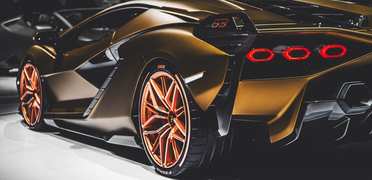
The electric Pininfarina Battista is constructed with a full carbon fiber monocoque and carbon fiber body panels, ensuring lightweight strength