
The Velocity Frontier: A Deep Dive into the World’s Fastest Production Cars of 2026
In the relentless pursuit of speed, the automotive industry stands at the precipice of a technological revolution. For automotive enthusiasts, the notion of a production car crossing the 300 mph threshold has long been the ultimate benchmark, a sacred quest that pushes the boundaries of physics, engineering, and aerodynamics. While top speed remains a metric that holds little relevance in daily commutes, it functions as the most visceral proof of a manufacturer’s technical prowess. The modern era of hypercars has evolved far beyond the early days of racing-derived machines, demanding specialized development, advanced materials, and multi-million-dollar budgets.
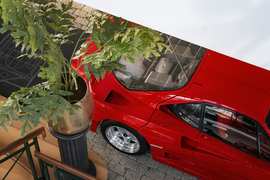
From the mid-1990s, the race to 200 mph saw legends like the Ferrari F40, Porsche 959, Jaguar XJ220, and the epoch-defining McLaren F1 establish new performance paradigms. Today, the battle is waged closer to the 300 mph mark, a feat exponentially more challenging for internal combustion engines to achieve. Yet, the landscape is shifting dramatically. The exponential growth of electric hypercar technology is democratizing speed, allowing newer manufacturers to produce vehicles capable of dethroning venerable brands. This article explores the current state of fastest production cars, tracing the history of this legendary pursuit and dissecting the engineering marvels that define the absolute peak of automotive speed in 2026.
The Top Speed Record Chase: A Historical Context
The quest to identify the world’s fastest cars is a narrative steeped in historical competition. In the pre-digital age, top speed validation was often contested through unofficial runs conducted on public infrastructure, sometimes lacking rigorous scientific measurement. Brands like Bugatti, Koenigsegg, and Saleen have consistently pushed these boundaries, seeking to reclaim the top speed record from their rivals. The introduction of strict regulations on public roads has forced manufacturers to transition their high-speed testing to purpose-built facilities such as the Ehra-Lessien track in Germany or the Johnny Bohmer Proving Grounds in Florida.
This shift toward regulated testing ensures that the fastest cars in the world are authenticated and verified, moving the category from rumor to definitive fact. The definition of a production car itself has also become subject to scrutiny. When producers like Bugatti and SSC claim specific figures, independent verification by organizations like the Guinness World Records or independent auditors becomes crucial to maintain credibility within the car speed record community.
Evaluating the Contenders: Methodologies and Challenges
Determining the fastest road car in 2026 involves understanding the different metrics used to define “fast.” While the maximum top speed is the headline number, many manufacturers also reference acceleration statistics, such as 0-60 mph or 0-124 mph, and the ability to accelerate and decelerate rapidly (0-200-0 mph), as indicators of a car’s overall performance.
The Current Velocity Hierarchy: Top 20 Fastest Production Cars
The following compilation lists the fastest road legal cars ranked by their validated top speeds. Note that some entries represent projected figures for upcoming models or cars that have shown high potential in testing but lack official production validation.
McLaren F1 (240.1 mph)
While no longer the fastest car, the McLaren F1 remains an icon of engineering purity. Produced in 1998, it achieved a verified top speed of 240.1 mph with a naturally aspirated V8 engine and a manual transmission. Its revolutionary 1+2 seating layout, carbon fiber monocoque construction, and rear-mounted engine established a standard for hypercar design that still influences modern machines. Its significance as a record-breaking car ensures its place on historical lists.
W Motors Fenyr SuperSport (245 mph)
The W Motors Fenyr SuperSport, produced in Dubai, represents the opulent side of record-breaking sports cars. Following the success of the Lykan Hypersport, the Fenyr utilizes a custom twin-turbocharged flat-six engine sourced from Ruf Automobile. Its design is aggressive, highlighted by luxury materials, including diamond-encrusted headlights. While its top speed is formidable, the Fenyr is more a statement of ultra-exclusive luxury than a purely engineering-focused speed machine.
Saleen S7 Twin Turbo (248 mph)
The Saleen S7 Twin Turbo, an American classic, burst onto the scene in 2005, challenging the existing order with a 750-horsepower V8 engine. It claimed a top speed of 248 mph, surpassing the legendary McLaren F1 by 8 mph. Built primarily in Irvine, California, the Saleen S7 was a raw, track-focused machine that delivered a visceral experience, although its top-end speed was never officially verified under race-ready conditions. It remains a significant vehicle in the history of American hypercars.
Koenigsegg Gemera & CCXR (248 mph)
Koenigsegg’s repeated appearances on this list underscore their dominance in the hypercar development space. The Koenigsegg Gemera, a revolutionary four-seater hybrid, combines three electric motors with a combustion engine to produce over 1,700 bhp. Its unique powertrain and ambitious luxury focus are reflected in its price point, around $1.7 million. Alongside it is the Koenigsegg CCXR, a predecessor that also reached 248 mph, showcasing the brand’s ability to engineer high-speed vehicles for decades.
Aspark Owl (249 mph)
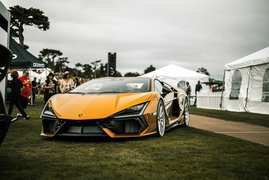
The Aspark Owl signifies the burgeoning power of electric hypercars. From the Japanese manufacturer Aspark, the Owl uses four electric motors to generate an astounding 1,985 bhp. In 2020, it achieved a confirmed 0–60 mph acceleration of 1.72 seconds and a top speed of 249 mph, cementing its status as a production hypercar capable of challenging traditional giants.
Ultima RS (250 mph)
The Ultima RS stands out as a unique anomaly in the high-speed world. Manufactured in the UK, it is essentially a high-end kit car with a Corvette V8 engine tuned to produce 1,200 bhp. This raw approach to speed prioritizes power-to-weight ratio over complex electronic aids. While accessible to the public for construction, the Ultima RS achieves its claimed top speed of 250 mph through minimalist, ultra-lightweight construction, making it one of the most radical engineering examples in the speed car ranking.
McLaren Speedtail (250 mph)
The McLaren Speedtail, positioned as the spiritual successor to the F1, was designed to break the 250 mph barrier. Tested at the Kennedy Space Center in Florida, the Speedtail hit this figure over 30 times, validating its status as the fastest McLaren for a time. It features a revolutionary three-seat configuration with the driver positioned centrally, and a seamless, teardrop-shaped body optimized for aerodynamic efficiency. Limited to 106 examples, it is a highly sought-after piece of automotive history.
Czinger 21C V Max (253 mph+)
The Czinger 21C, produced in Los Angeles, leverages cutting-edge computational fluid dynamics and additive manufacturing in its construction. The V Max variant features a twin-turbocharged flat-plane crank V8 engine combined with hybrid electric motors for a total output of 1,233 bhp. By removing the drag-inducing rear wing, the 21C V Max achieves speeds in excess of 253 mph, proving that 3D printing technology is transforming high-performance vehicle development.
Koenigsegg Regera (255 mph)
The Koenigsegg Regera is celebrated for its technological innovation, including the unique Koenigsegg Direct Drive (KDD) transmission system. This revolutionary single-speed setup utilizes three electric motors to provide immediate torque, eliminating the need for gear changes. With a combined output of nearly 1,500 bhp, the Regera reached 255 mph and set a production car acceleration record for 0–249–0 mph in 2019, showcasing the advantages of electrification.
SSC Ultimate Aero (256.18 mph)
The SSC Ultimate Aero, manufactured in Washington, USA, stole the fastest production car crown from the Bugatti Veyron in the mid-2000s. Powered by a 1,183 bhp twin-turbo V8, the Aero achieved a verified top speed of 256.18 mph on a closed public road. Stripping away electronic aids, it offered a raw and untamed driving experience, making it a favorite among speed purists and an icon of American car performance.
Rimac Nevera / Nevera R (258 mph / 268 mph)
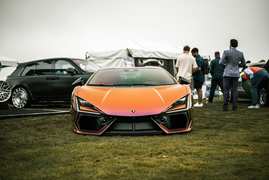
The Rimac Nevera, from the Croatian manufacturer, has fundamentally altered the definition of speed. This battery-electric hypercar produces a staggering 1,888 bhp and has reached a verified top speed of 258 mph. In 2022, Rimac took it even further with