
The Apex Predators: Unveiling the World’s Fastest Road Cars of 2026
In the exclusive echelon of automotive engineering, where automotive manufacturing companies push the boundaries of physics and design, the chase for the ultimate speed record remains a perennial battle. For decades, enthusiasts and critics alike have obsessed over the question: what are the world’s fastest road cars? While absolute top speed is often an academic statistic for most drivers—rarely utilized on public roads outside of specific legal environments like the German Autobahn—it represents a benchmark of ingenuity and a powerful tool for prestige within the industry. For manufacturers, creating a road-legal vehicle capable of exceeding benchmarks like 200 mph, 250 mph, or even 300 mph is the ultimate demonstration of engineering prowess. It is a quest that requires monumental investment in research and development, often transforming racing technology into road-legal marvels.
The Evolution of Speed: From Racing Heritage to Engineering Supremacy
Historically, the lineage of the world’s fastest cars can be traced back to early motor racing. In the inaugural decades of the 20th century, automotive titans such as Bentley and Bugatti established their reputations on the race tracks of Le Mans. Cars were often road-legal, blurring the lines between competition and commerce. However, the modern landscape demands a stricter separation between homologated race machines and street-legal vehicles. Today, manufacturers must commit significant resources and specialized focus to developing vehicles that not only achieve blistering acceleration but also comply with stringent safety and emissions regulations.
The automotive era of the 1990s and early 2000s saw a legendary arms race among pioneers like the Ferrari F40, Porsche 959, Jaguar XJ220, and the legendary McLaren F1. These icons proved that road-legal cars could achieve speeds previously confined to purpose-built racers. Their impact was amplified by their scarcity and breathtaking engineering, creating a legacy of desire that persists to this day.
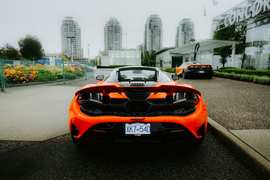
Today, the automotive world is witnessing another seismic shift. The competitive focus has moved closer to the elusive 300 mph barrier, a threshold that demands exponentially higher levels of engineering complexity to overcome aerodynamic resistance and power limitations. This pursuit is no longer limited to established automotive marques. The rapid maturation of electric vehicle (EV) technology has injected new life into this exclusive arena. Visionary startups and niche manufacturers, leveraging the instant torque and brutal efficiency of electric powertrains, are now challenging the dominance of legacy brands. What was once the preserve of multi-billion-dollar corporations is now accessible to emerging players, fundamentally reshaping the world’s fastest road cars landscape.
This article provides an exhaustive look at the fastest cars in the world as of 2026, examining the titans of speed, the challengers pushing the envelope, and the revolutionary technologies driving the future of velocity. We will delve into their specifications, pricing, and the technical achievements that place them at the pinnacle of automotive performance.
The Zenith of Velocity: A Top 20 Ranking of the World’s Fastest Road Cars
Identifying the definitive list of the world’s fastest road cars is a dynamic challenge. The leaderboard is in constant flux, with manufacturers continuously refining their creations and technological advancements allowing for unprecedented leaps in performance. This ranking presents a comprehensive view of the fastest cars on the road, incorporating the latest data, verified speed records, and projected figures where applicable. To avoid repetition and ensure a diverse representation of engineering prowess, we have focused on unique models and distinct high-performance variants.
McLaren F1
Top speed: 240.1 mph
Price: £15 million+
While technically a relic from 1998, the McLaren F1 remains a legendary benchmark in automotive history. Engineered by the visionary Gordon Murray, the F1 achieved its record-setting speed using a naturally aspirated V8 engine and a manual gearbox, a combination that remains unmatched in terms of raw driver engagement and purist appeal. Its legacy extends even to the present day, serving as the conceptual foundation for the GMA T50, Murray’s modern successor. Although no official top speed figures have been released for the T50, it is widely speculated to rival or even exceed the F1’s remarkable performance. For enthusiasts seeking ultra-high-performance cars, the F1 represents a timeless masterpiece of lightweight design and raw power.
W Motors Fenyr SuperSport
Top speed: 245 mph
Price: £1.4 million
Emerging from the garage of W Motors—a manufacturer first established in Lebanon and now headquartered in Dubai—the Fenyr SuperSport is the successor to the acclaimed Lykan HyperSport. Both models are engineered to reach a claimed top speed of 245 mph, a formidable figure that underscores the brand’s commitment to exclusivity and performance. Power is supplied by a bespoke twin-turbocharged flat-six engine sourced from Ruf, a German Porsche tuner known for its engineering excellence. The Fenyr is adorned with luxurious materials, including diamond and sapphire accents in the headlights, setting it apart as a unique and expensive vehicle. Automotive enthusiasts will recognize the Lykan HyperSport as the most expensive car featured in the Fast & Furious film series, specifically appearing in Furious 7, where it famously crashed between two skyscrapers. For those searching for high-end sports cars with an element of exotic rarity, the Fenyr SuperSport represents a compelling option.
Saleen S7 Twin Turbo
Top speed: 248 mph
Price: £500,000
The Saleen S7 Twin Turbo, unveiled in 2005, was a significant challenge to the established hierarchy of fast sports cars. Producing 750 bhp, the American marque claimed a top speed of 248 mph, surpassing the iconic McLaren F1 by a significant 8 mph margin. At the time, this was an audacious assertion for a relatively young manufacturer, which lacked the extensive engineering infrastructure of giants like BMW (who supplied the F1’s engine). The S7 was an all-American brute, powered by a V8 engine and equipped with massive twin turbos. While the claim has never been officially validated in a standardized, independent test, there have been numerous anecdotal accounts of owners achieving similar speeds, making the S7 a legendary icon in the realm of US-built hypercars.

Koenigsegg Gemera & CCXR
Top speed: 248 mph
Price: £2 million
Koenigsegg, the Swedish hypercar manufacturer, commands a commanding presence on any list of world’s fastest cars. This entry acknowledges two of their remarkable machines that share an identical top speed of 248 mph (400 km/h): the Gemera and the CCXR. The Gemera is a groundbreaking achievement in hypercar engineering, featuring a revolutionary hybrid powertrain that combines three electric motors with a traditional combustion engine. The electric motors provide substantial power, with two motors producing approximately 500 bhp each and the front motor contributing around 800 bhp. The CCXR, on the other hand, is an older model that utilizes a supercharged V8 engine. Despite its relative age, the CCXR boasts a lower curb weight and superior aerodynamic efficiency, allowing it to reach the same top speed as the ultra-modern Gemera. The Gemera is notable for being the fastest hybrid hypercar, pushing the boundaries of what is possible with electric-assisted performance.
Aspark Owl
Top speed: 249 mph
Price: £2.5 million
While one might expect names like McLaren and Koenigsegg to dominate a list of fastest electric cars, the domain of elite hypercars is also the breeding ground for emerging brands aiming to create exclusive, hand-built machines. The Japanese automaker Aspark is a prime example of this trend. First unveiled as a prototype at the 2017 Frankfurt Motor Show, the Owl is a battery-electric vehicle with staggering performance specifications. The Owl claims an acceleration time of 0–60 mph in 1.72 seconds, which would make it the fastest production car in terms of sheer acceleration. Furthermore, Aspark quotes the Owl’s top speed at 249 mph. Its blistering acceleration is facilitated by a relatively lightweight 64 kWh battery pack, which is smaller than those found in many rivals but capable of providing a range of approximately 280 miles on a full charge. The Aspark Owl represents the forefront of Japanese hypercars and the vanguard of the electric speed revolution.
Ultima RS
Top speed: 250 mph
Price: £130,000
The Ultima RS stands out as the most unusual inclusion on this list. Not only is it significantly more affordable than its competitors—costing around £130,000—but it is also a kit car. The prospect of driving at 250 mph in a car assembled in a personal workshop might seem improbable, but it is a tangible reality for individuals with the dedication and skills to build it. The Ultima RS achieves its remarkable speed not through complex electronics but through a philosophy of extreme lightweight design and raw power. It utilizes a Corvette engine tuned to deliver 1,200 bhp, proving that old-school power-to-weight ratios can still compete with cutting-edge technology. This approach makes the Ultima RS a unique entry in the world of affordable hypercars, offering unparalleled performance for its price bracket.
McLaren Speedtail
Top speed: 250 mph
Price: £2.1 million
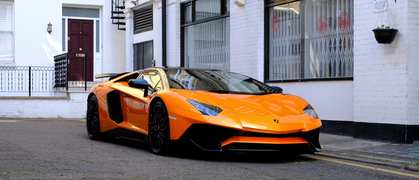
According to the British luxury brand McLaren