

The Apex Predator Evolves: Unpacking the Porsche 911 GT3 RS 992.2 and its Enduring Track Dominance
For over two decades, the Porsche 911 GT3 RS has stood as a benchmark for unadulterated track performance, a machine sculpted by necessity and honed by an obsessive pursuit of apex velocity. What began as an audacious enhancement to the already potent 996 GT3 in 1999 has, through successive iterations, become the undisputed king of the circuit, a testament to Stuttgart’s engineering prowess and a beacon for driving purists. As an industry observer with a decade immersed in the automotive landscape, I’ve witnessed the GT3 RS’s evolution firsthand, and the anticipation surrounding the forthcoming 992.2 variant is palpable, representing not just a facelift, but a potential culmination of an era.
The initial spark for the RS designation, born from homologation requirements for racing, quickly transcended its utilitarian origins. Porsche’s engineers, never content with simply meeting a benchmark, saw opportunity in the raw, race-bred DNA of the GT3. The introduction of the 996.2 GT3 RS wasn’t just a power bump; it was a surgical strike against mass, an aggressive refinement of an already formidable package. Lighter wheels, more potent engine tuning, and subtle aerodynamic enhancements transformed what was already considered the ultimate 911 into something altogether more extreme. The GT3, in comparison, began to feel almost pedestrian, a comfortable tourer by RS standards. This stark differentiation cemented the RS’s reputation as the car for those who prioritized lap times above all else, a status it has jealously guarded through every subsequent generation.
Stepping into the current 992.1 GT3 RS, we find an even more radical expression of this track-focused philosophy. This isn’t merely a car; it’s an aero-sculpted projectile. The signature central radiator, a departure from the traditional side-mounted units, now dictates the front-end design, complete with prominent “nostril” outlets on the carbon fibre bonnet. These aren’t mere aesthetic flourishes; they are vital components of an intricate airflow management system, directing heat away from the engine and channeling air over the roof for enhanced downforce. The hydraulically adjustable front splitter, a feature previously seen on the Turbo S, offers on-the-fly aerodynamic tuning, mirroring the complexity of motorsport.
And then there’s the rear wing. The colossal swan-neck design, a visual statement of intent, is more than just a dramatic aerofoil. It incorporates a Drag Reduction System (DRS), directly lifting technology from Formula 1 and hypercars like the McLaren P1. This active aerodynamic element allows for reduced drag on straights, pushing top speed boundaries and further blurring the lines between road car and dedicated race machine. The adjustable, race-derived suspension, coupled with dynamic engine mounts, ensures the chassis remains exquisitely controlled under immense G-forces. Large air intakes and aggressive side skirts further contribute to this visual and functional symphony of speed. At its heart beats the legendary 4.0-liter naturally aspirated Flat-6, an engine that, in this iteration, produces a staggering 525 horsepower. The result is a 0-62 mph sprint in a mere 3.2 seconds and an astonishing 860 kg of downforce at 177 mph, culminating in a breathtaking Nürburgring lap time of 6:44.85. To put it mildly, the 992.1 GT3 RS is as far removed from a standard 911 as a fighter jet is from a glider. This relentless pursuit of performance has made the Porsche 911 GT3 RS price a significant factor for enthusiasts, reflecting its exclusivity and engineering.
The automotive world is abuzz with the imminent arrival of the Porsche 911 GT3 RS 992.2, and recent spy shots from its natural habitat – the Nürburgring – offer tantalizing glimpses of its evolution. While the camouflage obscures specific details, the overall silhouette and core design cues remain remarkably familiar, a testament to the enduring efficacy of the 992.1’s approach. We can expect the continuation of the central radiator setup, the distinctive “nostril” outlets, and the imposing swan-neck rear wing with DRS. Large air intakes and side skirts will undoubtedly persist, maintaining the aggressive stance. Even the door handles appear to be carried over, a subtle nod to continuity.
One intriguing detail observed is the repositioning of the turn signals to a lower light cluster, a departure from the norm for many 992.2 variants where they’ve been integrated into the headlights. The rear diffuser has also undergone subtle revisions, featuring small, unobtrusive intakes flanking the exhaust. Whether the 992.2 GT3 RS will adopt the digital dashboard seen across the broader 992.2 range remains to be seen, but the fundamental aesthetic of a brutally effective track weapon is clearly being preserved. This attention to detail is what makes discussing new Porsche GT3 RS models so exciting for dedicated enthusiasts.
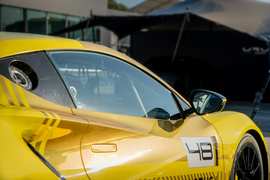
Whispers have circulated about the possibility of the 992.2 GT3 RS adopting the new 3.6-liter twin-turbo hybrid Flat-6 powertrain that is making waves across the 992.2 lineup. Such an integration would undoubtedly push horsepower figures well beyond the current 4.0-liter naturally aspirated unit. However, based on a decade of observing Porsche’s strategic decisions, I remain skeptical. My reasoning is threefold.
Firstly, if Porsche intended to standardize the hybrid powertrain across its performance spectrum, it’s highly probable we would have seen it implemented in the standard GT3 first. The fact that the GT3 remains resolutely naturally aspirated suggests a deliberate separation of philosophies for these distinct models. The pursuit of Porsche GT3 RS performance upgrades often hinges on purity, and a hybrid system, while potent, introduces complexity and weight.
Secondly, despite the remarkable advancements Porsche has achieved in integrating hybrid technology, the inherent weight penalty of such a system remains a significant hurdle. For a car where every kilogram is scrutinized and its absence is celebrated, adding mass is almost sacrilegious to the RS ethos. The very essence of the GT3 RS lies in its agility and direct connection to the driver, elements that are inherently compromised by added weight. This focus on weight reduction is a key differentiator in the best track day cars market.
Most importantly, however, shoehorning a hybrid powertrain solely for the sake of increased power risks diluting the fundamental spirit of the GT3 RS. At its core, the GT3 and its RS variant are about providing an exhilarating, raw, and mechanically engaging driving experience. They are designed to thrill and connect the driver to the road, not simply to chase abstract supercar benchmarks. The ultimate objective for these machines is to deliver an unparalleled track day experience, and this is why discussing Porsche GT3 RS track performance remains so crucial for potential buyers.
This is where the forthcoming GT2 RS, which is far more likely to incorporate the 3.6-liter hybrid Flat-6, will likely play its part. Porsche understands that its dedicated GT3 RS clientele craves purity, a mechanical symphony of precision engineering. To deviate from the naturally aspirated Flat-6, particularly for the RS, feels like a fundamental misunderstanding of the product’s DNA. Especially considering the tantalizing possibility that the 992.2 GT3 RS could represent the swansong for this iconic engine in a road-going GT3 RS. This potential end of an era makes the Porsche 911 GT3 RS 992.2 release date a highly anticipated event.
The competitive landscape is also heating up. Mercedes-Benz has recently unveiled spy shots of its new track-focused AMG GT, a formidable competitor that will undoubtedly vie for the attention of those seeking extreme performance. While the new AMG GT appears undeniably impressive, it faces an unenviable task in matching the sheer track-honed prowess of the GT3 RS. There’s a reason this lineage has endured for two decades, consistently redefining the boundaries of what’s possible in a road-legal track car. And as the 992.2 GT3 RS potentially stands at the twilight of the naturally aspirated Flat-6 era, it promises to deliver a final, thunderous encore.
For those who appreciate the pinnacle of automotive engineering and a driving experience that borders on the sublime, the evolution of the Porsche 911 GT3 RS is a story worth following. Whether you’re a seasoned track enthusiast looking to enhance your performance on your next track day at a venue like Circuit of the Americas, or a discerning collector seeking the ultimate expression of Porsche’s racing heritage, the Porsche GT3 RS for sale in its latest iteration represents an opportunity to own a piece of automotive history.
The anticipation for the 992.2 GT3 RS is more than just about horsepower figures and lap times; it’s about experiencing the relentless pursuit of perfection that has defined this legendary model for generations. As this chapter potentially closes on the naturally aspirated Flat-6 in the RS, it’s a moment to reflect on the incredible journey and to prepare for what promises to be the most potent and refined iteration yet.

Are you ready to experience the next evolution of track dominance? Explore the latest Porsche 911 GT3 RS models and discover how you can secure your place at the forefront of automotive performance.