
The Evolution of the Apex Predator: Analyzing the Upcoming 2025 Porsche 911 GT3 RS (992.2)
If you have spent the last decade tracking the trajectory of high-performance automotive engineering as I hav
e, you know that few badges carry the weight, prestige, and sheer mechanical purity of the “RennSport” moniker. When Porsche attaches those two letters—RS—to a 911, the industry stops to pay attention. We aren’t just talking about a faster car; we are talking about a philosophical shift from “sports car” to “track weapon.”
As we approach the release of the updated 992.2 generation, the automotive world is holding its collective breath. Is this the final stand for the naturally aspirated engine? Will hybridization dilute the experience? Based on recent spy shots and a deep understanding of how the minds at Weissach operate, we are looking at the refinement of perfection rather than a reinvention of the wheel.
In this deep dive, we will explore the legacy of the Porsche 911 GT3 RS, dissect the current 992.1 technical marvels, analyze the spy shots of the upcoming facelift, and discuss the financial realities of owning what might be the last of a dying breed.
The RennSport Legacy: Contextualizing the Hype
To understand where we are going with the 992.2, we have to look back at the genesis of the water-cooled GT program. Back in 1999, the 996 GT3 launched as a homologation special—a car built to satisfy race regulations. Enthusiasts thought it was the ceiling of performance. It was raw, it was loud, and it required a skilled hand to drive fast without ending up in a hedge.
But Porsche engineers are a unique breed of obsessive. They looked at the GT3 and saw compromise. Following the facelift of the 996 generation, they introduced the GT3 RS. They shaved weight through polycarbonate windows and a carbon fiber hood, tweaked the suspension geometry, and revised the aero. The result was a car that made the standard GT3 feel almost pedestrian.
For over 20 years, this has been the pattern. The Porsche 911 GT3 RS represents the absolute limit of what is possible with a rear-engine layout and a naturally aspirated flat-six. It is the benchmark against which every Corvette Z06, McLaren Longtail, and AMG Black Series is measured.
The Current Benchmark: The 992.1 GT3 RS
Before we speculate on the future, we must acknowledge the sheer absurdity of the current 992.1 Porsche 911 GT3 RS. When this car launched, it didn’t just move the goalposts; it dismantled the stadium.
The headline isn’t just the engine; it’s the aerodynamics. We are talking about active aero elements that were previously the domain of Formula 1 or multimillion-dollar hypercars like the McLaren P1. The massive swan-neck rear wing features a Drag Reduction System (DRS). With the push of a button on the steering wheel, the wing flattens to reduce drag on straights, then snaps back to maximum attack mode under braking to act as an air brake.
Combined with the central radiator concept—borrowed directly from the 911 RSR and GT3 R race cars—which replaces the three-radiator layout of previous models, the 992.1 manages airflow in a way no road car has done before. This layout freed up space in the sides for active aerodynamic elements capable of generating a staggering 1,895 lbs (860 kg) of downforce at 177 mph.
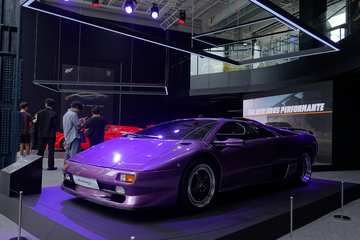 Under the rear decklid sits the 4.0-liter naturally aspirated flat-six, churning out 518 horsepower (525 PS). While that horsepower figure might seem modest compared to a 1,000-hp Ferrari SF90, the GT3 RS isn’t about dyno sheets. It’s about the integration of chassis, aero, and powertrain. The result is a Nürburgring Nordschleife lap time of 6:44.85.
This level of performance creates a unique proposition for buyers. We are seeing a surge in demand for exotic car insurance policies specifically tailored for track usage, as owners aim to utilize these machines as intended rather than letting them sit in climate-controlled garages.
The 992.2 Facelift: Evolution, Not Revolution
Recent spy shots captured at the Nürburgring have given us our first clear look at the upcoming 992.2 Porsche 911 GT3 RS. If you were expecting a radical redesign, you don’t know Porsche. The philosophy here is iterative improvement.
Visually, the prototype looks remarkably similar to the outgoing 992.1. The aggressive aerodynamic profile remains: the nostrils in the hood (frunk), the roof fins that channel air, and the colossal rear wing are all present. However, the devil is in the details.
Lighting and Fascia Updates
The most notable change appears to be in the lighting signature. The 992.2 generation is moving toward integrating the turn signals directly into the main headlight matrix unit, eliminating the need for separate light strips in the bumper. This seemingly minor change allows for cleaner airflow into the front cooling ducts.
Rear Diffuser and Exhaust
At the rear, the diffuser appears to have undergone subtle reshaping. Spy shots reveal small, revised air intakes flanking the central exhaust pipes. In the world of high-downforce engineering, a millimeter of change in the diffuser strakes can result in pounds of additional downforce or reduced drag. This suggests Porsche is fine-tuning the underbody airflow to squeeze even more efficiency out of the package.
Interior and Digitalization
While we haven’t seen the interior of the RS specifically, the broader 992.2 lineup has adopted a fully digital instrument cluster, ditching the iconic analog tachometer. Purists may mourn the loss of the physical needle, but the digital display offers more configurability for track data—essential for a driver monitoring tire temps and oil pressure at 150 mph.
The Engine Debate: Hybrid or Pure Combustion?
This is the billion-dollar question. Rumors have been swirling that the 992.2 Porsche 911 GT3 RS might adopt the new 3.6-liter “T-Hybrid” system found in the new Carrera GTS. This system uses an electric turbocharger and a small electric motor in the transmission to eliminate lag and boost power.
However, as an industry analyst, I am betting heavily against this for the GT3 RS. Here is why.
Weight is the Enemy
The ethos of the “RS” (RennSport) is lightweight construction. The hybrid system, while incredibly effective, adds weight. In a Turbo S or a GTS, that weight is acceptable. In a GT3 RS, where engineers fight to save grams by using magnesium wheels and carbon fiber anti-roll bars, adding 100+ lbs of battery and motor is anathema.
The “Standard” GT3 Precedent
Porsche recently unveiled the standard 992.2 GT3, and notably, it retained the 4.0-liter naturally aspirated engine. It did not go hybrid. If Porsche intended to hybridize the track lineup, they would have likely started there.
The Swan Song Theory
The prevailing consensus among experts is that the 992.2 Porsche 911 GT3 RS will be the final celebration of the naturally aspirated, non-hybrid flat-six engine. We expect Porsche to massage the existing 4.0-liter unit, perhaps pushing output closer to 530 or 535 horsepower through revised camshafts and intake timing.
This decision has massive implications for collector car valuation. If this is indeed the last of the Mohicans, the 992.2 GT3 RS will likely appreciate significantly, making luxury sports car financing strategies crucial for buyers looking to acquire one as an investment asset.
The Financial Reality: Ownership and Investment
Let’s shift gears and talk about the business of owning a car like this. In 2025, buying a Porsche 911 GT3 RS is not just a vehicle purchase; it is a portfolio allocation.
The MSRP for the 992.1 started around $241,000, but real-world pricing is significantly higher. Due to limited production numbers and high demand, “Market Adjustments” (dealer markups) can push the price well over $400,000.
Under the rear decklid sits the 4.0-liter naturally aspirated flat-six, churning out 518 horsepower (525 PS). While that horsepower figure might seem modest compared to a 1,000-hp Ferrari SF90, the GT3 RS isn’t about dyno sheets. It’s about the integration of chassis, aero, and powertrain. The result is a Nürburgring Nordschleife lap time of 6:44.85.
This level of performance creates a unique proposition for buyers. We are seeing a surge in demand for exotic car insurance policies specifically tailored for track usage, as owners aim to utilize these machines as intended rather than letting them sit in climate-controlled garages.
The 992.2 Facelift: Evolution, Not Revolution
Recent spy shots captured at the Nürburgring have given us our first clear look at the upcoming 992.2 Porsche 911 GT3 RS. If you were expecting a radical redesign, you don’t know Porsche. The philosophy here is iterative improvement.
Visually, the prototype looks remarkably similar to the outgoing 992.1. The aggressive aerodynamic profile remains: the nostrils in the hood (frunk), the roof fins that channel air, and the colossal rear wing are all present. However, the devil is in the details.
Lighting and Fascia Updates
The most notable change appears to be in the lighting signature. The 992.2 generation is moving toward integrating the turn signals directly into the main headlight matrix unit, eliminating the need for separate light strips in the bumper. This seemingly minor change allows for cleaner airflow into the front cooling ducts.
Rear Diffuser and Exhaust
At the rear, the diffuser appears to have undergone subtle reshaping. Spy shots reveal small, revised air intakes flanking the central exhaust pipes. In the world of high-downforce engineering, a millimeter of change in the diffuser strakes can result in pounds of additional downforce or reduced drag. This suggests Porsche is fine-tuning the underbody airflow to squeeze even more efficiency out of the package.
Interior and Digitalization
While we haven’t seen the interior of the RS specifically, the broader 992.2 lineup has adopted a fully digital instrument cluster, ditching the iconic analog tachometer. Purists may mourn the loss of the physical needle, but the digital display offers more configurability for track data—essential for a driver monitoring tire temps and oil pressure at 150 mph.
The Engine Debate: Hybrid or Pure Combustion?
This is the billion-dollar question. Rumors have been swirling that the 992.2 Porsche 911 GT3 RS might adopt the new 3.6-liter “T-Hybrid” system found in the new Carrera GTS. This system uses an electric turbocharger and a small electric motor in the transmission to eliminate lag and boost power.
However, as an industry analyst, I am betting heavily against this for the GT3 RS. Here is why.
Weight is the Enemy
The ethos of the “RS” (RennSport) is lightweight construction. The hybrid system, while incredibly effective, adds weight. In a Turbo S or a GTS, that weight is acceptable. In a GT3 RS, where engineers fight to save grams by using magnesium wheels and carbon fiber anti-roll bars, adding 100+ lbs of battery and motor is anathema.
The “Standard” GT3 Precedent
Porsche recently unveiled the standard 992.2 GT3, and notably, it retained the 4.0-liter naturally aspirated engine. It did not go hybrid. If Porsche intended to hybridize the track lineup, they would have likely started there.
The Swan Song Theory
The prevailing consensus among experts is that the 992.2 Porsche 911 GT3 RS will be the final celebration of the naturally aspirated, non-hybrid flat-six engine. We expect Porsche to massage the existing 4.0-liter unit, perhaps pushing output closer to 530 or 535 horsepower through revised camshafts and intake timing.
This decision has massive implications for collector car valuation. If this is indeed the last of the Mohicans, the 992.2 GT3 RS will likely appreciate significantly, making luxury sports car financing strategies crucial for buyers looking to acquire one as an investment asset.
The Financial Reality: Ownership and Investment
Let’s shift gears and talk about the business of owning a car like this. In 2025, buying a Porsche 911 GT3 RS is not just a vehicle purchase; it is a portfolio allocation.
The MSRP for the 992.1 started around $241,000, but real-world pricing is significantly higher. Due to limited production numbers and high demand, “Market Adjustments” (dealer markups) can push the price well over $400,000.
 Financing and Leasing Strategies
For high-net-worth individuals, paying cash isn’t always the smartest move. Leveraging high-performance vehicle leasing or balloon financing allows buyers to keep capital liquid for other investments while enjoying the car. Because the residual values of GT3 RS models are astronomically high (often exceeding MSRP), lease payments can be surprisingly attractive compared to high-depreciation supercars like the McLaren Artura.
Maintenance and Running Costs
Prospective owners must also budget for Porsche maintenance costs. The Michelin Pilot Sport Cup 2 R tires are sticky, but they have a very short lifespan, especially with track use. A set of tires can cost upwards of $2,500 and may only last a few track days. Furthermore, if you opt for the Porsche Ceramic Composite Brakes (PCCB), replacement rotors cost a small fortune—though they serve as excellent selling points for resale value.
Insurance
Securing exotic car insurance for a GT3 RS requires a specialized broker. Standard carriers often cap coverage or deny policies for cars with this performance capability. Agreed Value policies are essential to ensure that in the event of a total loss, you are reimbursed for the current market value (including the markup), not just the depreciated MSRP.
The Competitive Landscape
Porsche does not operate in a vacuum. The 992.2 Porsche 911 GT3 RS faces stiff competition, though it occupies a very specific niche.
Mercedes-AMG GT Black Series / Track Variant
Spy shots of a new track-hardened AMG GT are circulating. Mercedes traditionally counters Porsche with brute force—more horsepower, more torque. However, AMG vehicles tend to be heavier and consume tires at a faster rate. The AMG is a sledgehammer; the GT3 RS is a scalpel.
Chevrolet Corvette Z06 (C8)
The Z06 is the closest philosophical rival from the US, featuring a flat-plane crank V8 that mimics the Ferrari 458. It offers 80-90% of the GT3 RS’s performance for half the price. However, in terms of build quality, material selection, and long-term investment grade automobiles status, the Porsche remains the superior asset.
The Internal Rival: GT2 RS
The true threat to the GT3 RS comes from within. The upcoming GT2 RS is expected to utilize the hybrid powertrain, likely pushing 800+ horsepower. It will be faster in a straight line, but for the purist seeking connection and response, the naturally aspirated GT3 RS will always be the preferred choice.
Driving Dynamics: What to Expect from the 992.2
With the 992.2 update, I expect Porsche to focus on “drivability” at the limit. The current car is incredibly stiff—almost too stiff for compliant road driving in the US, where infrastructure varies wildly.
We may see revised damper calibration in the PASM (Porsche Active Suspension Management) to provide a slightly more compliant ride in “Normal” mode without sacrificing track stiffness. This would make driving the car to and from track events like those at Laguna Seca or Road Atlanta much more bearable.
Furthermore, expect refinements to the traction control software. As tire technology evolves, Porsche updates its stability management systems to allow for more slip angle before intervention, giving skilled drivers more freedom while maintaining a safety net.
The Verdict: A Future Classic in Real-Time
The upcoming 992.2 Porsche 911 GT3 RS represents the pinnacle of internal combustion sports car development. It is a car built by engineers who refuse to accept “good enough.”
While the visual changes may be subtle—new lights, tweaked diffuser, digital dash—the driving experience will likely be sharpened to a razor’s edge. By rejecting the hybrid powertrain for this specific model, Porsche is sending a love letter to the enthusiasts who have supported the brand for decades.
For those lucky enough to secure an allocation, the 992.2 is more than a car. It is a ticket to a club of drivers who value precision over power and heritage over trends. It acts as a hedge against the electrification of the automotive industry, preserving the visceral roar of a flat-six at 9,000 RPM for one more generation.
Whether you are looking to acquire one for the track or tuck one away in a collection, the window of opportunity is closing. The era of the naturally aspirated, non-hybrid track weapon is ending, and the 992.2 GT3 RS is its magnificent curtain call.
Ready to secure your piece of automotive history?
Financing and Leasing Strategies
For high-net-worth individuals, paying cash isn’t always the smartest move. Leveraging high-performance vehicle leasing or balloon financing allows buyers to keep capital liquid for other investments while enjoying the car. Because the residual values of GT3 RS models are astronomically high (often exceeding MSRP), lease payments can be surprisingly attractive compared to high-depreciation supercars like the McLaren Artura.
Maintenance and Running Costs
Prospective owners must also budget for Porsche maintenance costs. The Michelin Pilot Sport Cup 2 R tires are sticky, but they have a very short lifespan, especially with track use. A set of tires can cost upwards of $2,500 and may only last a few track days. Furthermore, if you opt for the Porsche Ceramic Composite Brakes (PCCB), replacement rotors cost a small fortune—though they serve as excellent selling points for resale value.
Insurance
Securing exotic car insurance for a GT3 RS requires a specialized broker. Standard carriers often cap coverage or deny policies for cars with this performance capability. Agreed Value policies are essential to ensure that in the event of a total loss, you are reimbursed for the current market value (including the markup), not just the depreciated MSRP.
The Competitive Landscape
Porsche does not operate in a vacuum. The 992.2 Porsche 911 GT3 RS faces stiff competition, though it occupies a very specific niche.
Mercedes-AMG GT Black Series / Track Variant
Spy shots of a new track-hardened AMG GT are circulating. Mercedes traditionally counters Porsche with brute force—more horsepower, more torque. However, AMG vehicles tend to be heavier and consume tires at a faster rate. The AMG is a sledgehammer; the GT3 RS is a scalpel.
Chevrolet Corvette Z06 (C8)
The Z06 is the closest philosophical rival from the US, featuring a flat-plane crank V8 that mimics the Ferrari 458. It offers 80-90% of the GT3 RS’s performance for half the price. However, in terms of build quality, material selection, and long-term investment grade automobiles status, the Porsche remains the superior asset.
The Internal Rival: GT2 RS
The true threat to the GT3 RS comes from within. The upcoming GT2 RS is expected to utilize the hybrid powertrain, likely pushing 800+ horsepower. It will be faster in a straight line, but for the purist seeking connection and response, the naturally aspirated GT3 RS will always be the preferred choice.
Driving Dynamics: What to Expect from the 992.2
With the 992.2 update, I expect Porsche to focus on “drivability” at the limit. The current car is incredibly stiff—almost too stiff for compliant road driving in the US, where infrastructure varies wildly.
We may see revised damper calibration in the PASM (Porsche Active Suspension Management) to provide a slightly more compliant ride in “Normal” mode without sacrificing track stiffness. This would make driving the car to and from track events like those at Laguna Seca or Road Atlanta much more bearable.
Furthermore, expect refinements to the traction control software. As tire technology evolves, Porsche updates its stability management systems to allow for more slip angle before intervention, giving skilled drivers more freedom while maintaining a safety net.
The Verdict: A Future Classic in Real-Time
The upcoming 992.2 Porsche 911 GT3 RS represents the pinnacle of internal combustion sports car development. It is a car built by engineers who refuse to accept “good enough.”
While the visual changes may be subtle—new lights, tweaked diffuser, digital dash—the driving experience will likely be sharpened to a razor’s edge. By rejecting the hybrid powertrain for this specific model, Porsche is sending a love letter to the enthusiasts who have supported the brand for decades.
For those lucky enough to secure an allocation, the 992.2 is more than a car. It is a ticket to a club of drivers who value precision over power and heritage over trends. It acts as a hedge against the electrification of the automotive industry, preserving the visceral roar of a flat-six at 9,000 RPM for one more generation.
Whether you are looking to acquire one for the track or tuck one away in a collection, the window of opportunity is closing. The era of the naturally aspirated, non-hybrid track weapon is ending, and the 992.2 GT3 RS is its magnificent curtain call.
Ready to secure your piece of automotive history?
 Navigating the allocation process and understanding the financial nuances of modern classics requires expert guidance. Check your local authorized Porsche center for allocation waitlists, or consult with a specialized automotive broker today to ensure you don’t miss out on the ultimate driving machine.