
2025 Ferrari 296 GTB Review: The V6 Hybrid Supercar That Defined a New Era
When Maranello first announced that the successor to the F8 Tributo would drop two cylinders, the skepticism in the exotic ca
r community was palpable. For decades, the mid-engine V8 was the heartbeat of the brand’s “Berlinetta” lineage. Yet, here we are in 2025, and the Ferrari 296 GTB has not only silenced the purists but has arguably established itself as the most dynamically capable road car the Prancing Horse has ever produced.
As an automotive journalist and industry analyst with over a decade spent testing high-performance machinery—from the raw agility of the 458 Italia to the technological might of the SF90 Stradale—I have witnessed the industry’s awkward adolescence with electrification. The Ferrari 296 GTB represents the moment that technology matured. It isn’t a hybrid for the sake of emissions compliance; it is a hybrid for the sake of absolute, terrifying speed.
With the looming arrival of the 900+ horsepower Lamborghini Temerario and its 10,000 RPM redline, the supercar wars have entered a new phase. But make no mistake: the Ferrari 296 GTB is the benchmark that every competitor, from Sant’Agata to Woking, must now attempt to clear.
The Powertrain: A “Piccolo V12” Revolution
To understand this car, you must look past the cylinder count. The heart of the Ferrari 296 GTB is a 3.0-liter, twin-turbocharged V6. This isn’t a scaled-down Maserati engine; it is a bespoke marvel of engineering. The cylinders are splayed at a massive 120-degree angle, allowing the turbochargers to sit inside the “V” of the engine (a “hot-vee” configuration). This lowers the center of gravity and drastically reduces the plumbing distance for the intake air, effectively eliminating turbo lag.
On its own, this internal combustion engine churns out 654 horsepower. That is a specific output of 218 horsepower per liter—a record-breaking figure for a production car. But the magic happens when you introduce the electric motor. Sandwiched between the engine and the eight-speed dual-clutch transmission is an MGU-K (Motor Generator Unit-Kinetic) derived from Formula 1 technology.
This electric motor adds 165 horsepower, bringing the total system output to a staggering 819 horsepower. The torque fill provided by the electric motor at low RPMs is instantaneous. Where older turbocharged cars required a split second to gather their breath, the Ferrari 296 GTB simply teleports forward.
The Sound of Science
Ferrari engineers dubbed this engine the “piccolo V12” (little V12) during development, and the nickname is earned. Because of the firing order and the equal-length exhaust headers, the acoustic frequency mimics a naturally aspirated V12 as it screams toward its 8,500 RPM redline. It doesn’t drone; it sings. For US buyers concerned that they might lose the emotional soundtrack of a V8, rest assured: this V6 has more soul than most ten-cylinder engines on the market today.
Design and Aerodynamics: A Nod to the 250 LM
Visually, the Ferrari 296 GTB is a masterclass in clean, reductive design. Unlike the aggressive, vent-heavy styling of the Honda NSX or the track-focused Porsche GT RS models, the 296 is smooth and elegant. It draws heavy inspiration from the 1963 250 LM, particularly in the design of the B-pillar and the rear haunches.
However, the clean lines hide sophisticated active aerodynamics. The centerpiece is the active rear spoiler inspired by the LaFerrari. Integrated into the rear bumper, it deploys upward to generate high-downforce rather than just reducing drag. According to Ferrari data, the car generates nearly 800 pounds of downforce at 155 mph when equipped with the Assetto Fiorano package.
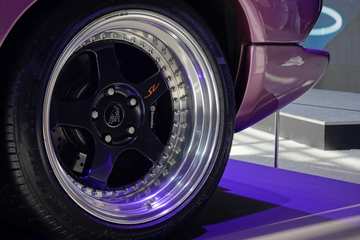 The front of the car utilizes a “tea-tray” aerodynamic device to manage airflow under the body, sucking the car to the pavement. For those looking into luxury supercar insurance or exotic car collision coverage, it is worth noting that these carbon-fiber aerodynamic elements are intricate and costly to replace, emphasizing the need for comprehensive protection plans.
Driving Dynamics: The “Fun to Drive” Philosophy
In my ten years of testing supercars, I have found that horsepower figures are often vanity metrics. A 1,000-horsepower car that cannot communicate with the driver is useless. The Ferrari 296 GTB prioritizes agility over brute force, thanks largely to its shortened wheelbase.
Ferrari shaved nearly two inches off the wheelbase compared to the F8 Tributo. This makes the car incredibly eager to rotate. It feels compact, almost shrinking around you as you navigate tight canyons in Malibu or attack the apexes at Circuit of the Americas.
The 6w-CDS Sensor
The secret sauce is the new six-way Chassis Dynamic Sensor (6w-CDS). This sensor detects the car’s movement in three axes (X, Y, Z) and communicates with the ABS Evo controller and the electronic differential.
What does this mean for the driver? It means you can trail-brake deep into a corner with absolute confidence. The “ABS Evo” system allows you to stomp on the carbon-ceramic brakes even while the steering wheel is turned, and the computer manages the grip at each tire individually to prevent a spin. It makes a hero out of an average driver and a deity out of a skilled one.
The steering is light, precise, and hyper-reactive—classic Ferrari. However, unlike the sometimes twitchy nature of the F12 Berlinetta, the Ferrari 296 GTB feels planted. The grip provided by the Michelin Pilot Sport 4S tires (or the optional Cup 2 Rs) is immense.
The Hybrid Experience: Dr. Jekyll and Mr. Hyde
One of the most surprising aspects of the Ferrari 296 GTB is its duality. In ‘eDrive’ mode, the car decouples the V6 engine and runs purely on electricity for up to 15 miles. I found this particularly useful when navigating quiet suburban neighborhoods or leaving early for a Sunday morning drive without waking the neighbors. It glides silently, a futuristic pod amidst the noise of the city.
Switch to ‘Qualifying’ mode, however, and the battery is drained rapidly to provide maximum attack power. The transition between electric drive and combustion is seamless—a testament to the software calibration that puts Maranello miles ahead of its rivals.
For those considering supercar lease deals or financing a Ferrari 296 GTB, it is vital to understand that the hybrid system is covered by a separate warranty, usually extending up to five years, which safeguards the long-term value of the vehicle.
Interior and Technology: A Digital Cockpit
If there is a point of contention with the Ferrari 296 GTB, it lies in the cabin. Ferrari has fully embraced the digital revolution, first seen in the SF90. The analog tachometer—a staple of the brand for 70 years—is gone, replaced by a high-definition curved digital display.
The steering wheel is now a capacitive touch interface. While it looks sleek, the lack of physical tactile buttons can be frustrating when you are trying to adjust the volume or change tracks while wearing driving gloves. The haptic feedback is an improvement over early iterations, but there is a learning curve.
On the positive side, the seating position is perfect. You sit low, connected to the chassis. The cabin feels airy, not claustrophobic, and the material quality is exquisite, with leather and Alcantara covering every surface. For buyers looking to customize their vehicle, the “Tailor Made” program offers limitless options, though these bespoke touches will significantly impact the final Ferrari 296 GTB price.
The Assetto Fiorano Package: Is It Worth It?
For the US market, roughly 50% of buyers are opting for the Assetto Fiorano package. This is the track-focused variant of the Ferrari 296 GTB. It includes:
Multimatic GT Racing Dampers: These fixed-rate dampers are derived from GT racing and offer superior body control on the track, though they do compromise ride comfort on bumpy city streets.
Carbon Fiber Components: Extensive use of carbon fiber on the door panels and front bumper shaves off about 26 pounds.
Aerodynamic Tweaks: A high-downforce front splitter increases grip at the front axle.
Lexan Rear Screen: A lightweight polycarbonate rear window replaces the glass.
The front of the car utilizes a “tea-tray” aerodynamic device to manage airflow under the body, sucking the car to the pavement. For those looking into luxury supercar insurance or exotic car collision coverage, it is worth noting that these carbon-fiber aerodynamic elements are intricate and costly to replace, emphasizing the need for comprehensive protection plans.
Driving Dynamics: The “Fun to Drive” Philosophy
In my ten years of testing supercars, I have found that horsepower figures are often vanity metrics. A 1,000-horsepower car that cannot communicate with the driver is useless. The Ferrari 296 GTB prioritizes agility over brute force, thanks largely to its shortened wheelbase.
Ferrari shaved nearly two inches off the wheelbase compared to the F8 Tributo. This makes the car incredibly eager to rotate. It feels compact, almost shrinking around you as you navigate tight canyons in Malibu or attack the apexes at Circuit of the Americas.
The 6w-CDS Sensor
The secret sauce is the new six-way Chassis Dynamic Sensor (6w-CDS). This sensor detects the car’s movement in three axes (X, Y, Z) and communicates with the ABS Evo controller and the electronic differential.
What does this mean for the driver? It means you can trail-brake deep into a corner with absolute confidence. The “ABS Evo” system allows you to stomp on the carbon-ceramic brakes even while the steering wheel is turned, and the computer manages the grip at each tire individually to prevent a spin. It makes a hero out of an average driver and a deity out of a skilled one.
The steering is light, precise, and hyper-reactive—classic Ferrari. However, unlike the sometimes twitchy nature of the F12 Berlinetta, the Ferrari 296 GTB feels planted. The grip provided by the Michelin Pilot Sport 4S tires (or the optional Cup 2 Rs) is immense.
The Hybrid Experience: Dr. Jekyll and Mr. Hyde
One of the most surprising aspects of the Ferrari 296 GTB is its duality. In ‘eDrive’ mode, the car decouples the V6 engine and runs purely on electricity for up to 15 miles. I found this particularly useful when navigating quiet suburban neighborhoods or leaving early for a Sunday morning drive without waking the neighbors. It glides silently, a futuristic pod amidst the noise of the city.
Switch to ‘Qualifying’ mode, however, and the battery is drained rapidly to provide maximum attack power. The transition between electric drive and combustion is seamless—a testament to the software calibration that puts Maranello miles ahead of its rivals.
For those considering supercar lease deals or financing a Ferrari 296 GTB, it is vital to understand that the hybrid system is covered by a separate warranty, usually extending up to five years, which safeguards the long-term value of the vehicle.
Interior and Technology: A Digital Cockpit
If there is a point of contention with the Ferrari 296 GTB, it lies in the cabin. Ferrari has fully embraced the digital revolution, first seen in the SF90. The analog tachometer—a staple of the brand for 70 years—is gone, replaced by a high-definition curved digital display.
The steering wheel is now a capacitive touch interface. While it looks sleek, the lack of physical tactile buttons can be frustrating when you are trying to adjust the volume or change tracks while wearing driving gloves. The haptic feedback is an improvement over early iterations, but there is a learning curve.
On the positive side, the seating position is perfect. You sit low, connected to the chassis. The cabin feels airy, not claustrophobic, and the material quality is exquisite, with leather and Alcantara covering every surface. For buyers looking to customize their vehicle, the “Tailor Made” program offers limitless options, though these bespoke touches will significantly impact the final Ferrari 296 GTB price.
The Assetto Fiorano Package: Is It Worth It?
For the US market, roughly 50% of buyers are opting for the Assetto Fiorano package. This is the track-focused variant of the Ferrari 296 GTB. It includes:
Multimatic GT Racing Dampers: These fixed-rate dampers are derived from GT racing and offer superior body control on the track, though they do compromise ride comfort on bumpy city streets.
Carbon Fiber Components: Extensive use of carbon fiber on the door panels and front bumper shaves off about 26 pounds.
Aerodynamic Tweaks: A high-downforce front splitter increases grip at the front axle.
Lexan Rear Screen: A lightweight polycarbonate rear window replaces the glass.
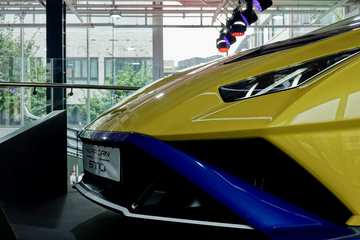 If you plan to track your car regularly—perhaps joining a private club at The Thermal Club or Monticello Motor Club—the Assetto Fiorano package is essential. However, for a grand tourer used primarily on public roads, the standard suspension (with the “Bumpy Road” button) is the superior choice for daily drivability.
Investment Analysis: Depreciation and Market Value
Supercars are assets, and understanding the market is crucial. The Ferrari 296 GTB has held its value remarkably well since its 2022 debut. As the first V6 hybrid, it holds historical significance.
Comparatively, the McLaren Artura has suffered from reliability glitches that have hurt its residual value. The Ferrari 296 GTB, by contrast, benefits from Ferrari’s 7-Year Genuine Maintenance program, which covers all standard servicing. This is a massive selling point that reduces the cost of ownership and bolsters resale value.
When researching luxury car financing rates, lenders often view Ferrari as a lower-risk asset compared to McLaren or Aston Martin due to this stability. The demand for the 296 GTB remains high, with waiting lists still stretching 12 to 18 months in many US dealerships.
The Rivalry: Ferrari 296 GTB vs. Lamborghini Temerario vs. McLaren 750S
The landscape of the “junior” supercar market (if you can call $350,000 junior) is fierce.
McLaren 750S: The 750S is the evolution of the 720S. It remains a pure internal combustion V8 with rear-wheel drive. It is lighter than the Ferrari, offering a more raw, mechanical connection. However, it lacks the torque-fill of the hybrid system and feels a generation behind in terms of powertrain technology.
Lamborghini Temerario: The incoming replacement for the Huracán is the true challenger. With a high-revving V8 hybrid system, it targets the Ferrari 296 GTB directly. While the Lamborghini promises more horsepower (900+), it will likely be heavier due to its all-wheel-drive system. The Ferrari’s rear-wheel-drive layout offers a purity of balance that AWD systems often struggle to replicate.
Porsche 911 GT2 RS (Future): While not out yet, rumors suggest the next GT2 RS will also be a hybrid. Until then, the Ferrari 296 GTB sits in a league of its own regarding performance-per-dollar.
The Verdict: A Future Classic
The Ferrari 296 GTB is not just a great Ferrari; it is one of the greatest sports cars of the 21st century. It successfully bridges the gap between the analog joy of driving and the digital efficiency of the future. The integration of the hybrid system is so natural, so seamless, that it enhances the drive rather than detracting from it.
While the infotainment system may frustrate traditionalists, the chassis dynamics and that glorious 120-degree V6 more than make up for it. It is faster than an Enzo, more agile than a 458 Speciale, and more usable than a LaFerrari.
As we look toward 2025 and beyond, the Ferrari 296 GTB stands as the definitive supercar of this hybrid generation. It has thrown the gauntlet down to Lamborghini. The Temerario has a mountain to climb.
Ownership Considerations for US Buyers
If you are in the market for a Ferrari 296 GTB, consider the following practical advice:
Charging: While it is a PHEV, you do not need a dedicated wall box to enjoy the car. The engine charges the battery rapidly in ‘Performance’ mode. However, installing a Level 2 charger in your garage is recommended for battery health.
Options: Avoid the temptation to over-spec carbon fiber if you are concerned about ROI. Focus on the racing seats (which offer better feel) and the relentless “Rosso Corsa” or historical “Rosso Imola” paintworks, which always command a premium on the used market.
Protection: Immediately upon delivery, invest in Paint Protection Film (PPF) and ceramic coating. The low nose of the 296 GTB is prone to rock chips, and protecting the original factory paint is the single best thing you can do for future resale value.
Ready to Experience the Benchmark?
Reading about the Ferrari 296 GTB is one thing; feeling the 819-horsepower kick in your back is another entirely. The production slots for the 2025 allocation are filling up rapidly across the United States. Whether you are looking to configure a new specification or find a low-mileage example, expert guidance is required to navigate the market.
Don’t let the hybrid revolution pass you by.
If you plan to track your car regularly—perhaps joining a private club at The Thermal Club or Monticello Motor Club—the Assetto Fiorano package is essential. However, for a grand tourer used primarily on public roads, the standard suspension (with the “Bumpy Road” button) is the superior choice for daily drivability.
Investment Analysis: Depreciation and Market Value
Supercars are assets, and understanding the market is crucial. The Ferrari 296 GTB has held its value remarkably well since its 2022 debut. As the first V6 hybrid, it holds historical significance.
Comparatively, the McLaren Artura has suffered from reliability glitches that have hurt its residual value. The Ferrari 296 GTB, by contrast, benefits from Ferrari’s 7-Year Genuine Maintenance program, which covers all standard servicing. This is a massive selling point that reduces the cost of ownership and bolsters resale value.
When researching luxury car financing rates, lenders often view Ferrari as a lower-risk asset compared to McLaren or Aston Martin due to this stability. The demand for the 296 GTB remains high, with waiting lists still stretching 12 to 18 months in many US dealerships.
The Rivalry: Ferrari 296 GTB vs. Lamborghini Temerario vs. McLaren 750S
The landscape of the “junior” supercar market (if you can call $350,000 junior) is fierce.
McLaren 750S: The 750S is the evolution of the 720S. It remains a pure internal combustion V8 with rear-wheel drive. It is lighter than the Ferrari, offering a more raw, mechanical connection. However, it lacks the torque-fill of the hybrid system and feels a generation behind in terms of powertrain technology.
Lamborghini Temerario: The incoming replacement for the Huracán is the true challenger. With a high-revving V8 hybrid system, it targets the Ferrari 296 GTB directly. While the Lamborghini promises more horsepower (900+), it will likely be heavier due to its all-wheel-drive system. The Ferrari’s rear-wheel-drive layout offers a purity of balance that AWD systems often struggle to replicate.
Porsche 911 GT2 RS (Future): While not out yet, rumors suggest the next GT2 RS will also be a hybrid. Until then, the Ferrari 296 GTB sits in a league of its own regarding performance-per-dollar.
The Verdict: A Future Classic
The Ferrari 296 GTB is not just a great Ferrari; it is one of the greatest sports cars of the 21st century. It successfully bridges the gap between the analog joy of driving and the digital efficiency of the future. The integration of the hybrid system is so natural, so seamless, that it enhances the drive rather than detracting from it.
While the infotainment system may frustrate traditionalists, the chassis dynamics and that glorious 120-degree V6 more than make up for it. It is faster than an Enzo, more agile than a 458 Speciale, and more usable than a LaFerrari.
As we look toward 2025 and beyond, the Ferrari 296 GTB stands as the definitive supercar of this hybrid generation. It has thrown the gauntlet down to Lamborghini. The Temerario has a mountain to climb.
Ownership Considerations for US Buyers
If you are in the market for a Ferrari 296 GTB, consider the following practical advice:
Charging: While it is a PHEV, you do not need a dedicated wall box to enjoy the car. The engine charges the battery rapidly in ‘Performance’ mode. However, installing a Level 2 charger in your garage is recommended for battery health.
Options: Avoid the temptation to over-spec carbon fiber if you are concerned about ROI. Focus on the racing seats (which offer better feel) and the relentless “Rosso Corsa” or historical “Rosso Imola” paintworks, which always command a premium on the used market.
Protection: Immediately upon delivery, invest in Paint Protection Film (PPF) and ceramic coating. The low nose of the 296 GTB is prone to rock chips, and protecting the original factory paint is the single best thing you can do for future resale value.
Ready to Experience the Benchmark?
Reading about the Ferrari 296 GTB is one thing; feeling the 819-horsepower kick in your back is another entirely. The production slots for the 2025 allocation are filling up rapidly across the United States. Whether you are looking to configure a new specification or find a low-mileage example, expert guidance is required to navigate the market.
Don’t let the hybrid revolution pass you by.
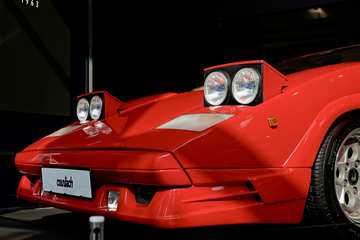 Contact your local authorized Ferrari dealer today to schedule your consultation, or reach out to a luxury automotive broker to secure your allocation for the Ferrari 296 GTB before the waitlists extend even further. Drive the future, today.