
2025 Ferrari 296 GTB Review: The V6 Hybrid Benchmark vs. Lamborghini Temerario
In the high-stakes world of exotic automotive engineering, standing still is equivalent to moving backward. For over a de
cade, I have tracked the evolution of the supercar species, witnessing the transition from naturally aspirated screamers to forced-induction torque monsters. Now, we are firmly in the era of electrification. When the Ferrari 296 GTB first arrived, it signaled a seismic shift in Maranello’s philosophy—dispensing with the beloved V8 in favor of a hybridized V6.
Critics were skeptical. Could a V6 really carry the Prancing Horse legacy? Fast forward to 2025, and the answer is an emphatic yes. However, the landscape has shifted again. The arrival of the Lamborghini Temerario, a 903-horsepower hybrid beast revving to 10,000 rpm, challenges the 296’s supremacy. Yet, after extensive seat time, I am convinced that the Ferrari 296 GTB remains the dynamic benchmark the rest of the world is chasing.
The Engineering Marvel: Why the V6 Wins
To understand the Ferrari 296 GTB, you have to look past the cylinder count. This isn’t a downsizing exercise for emissions compliance alone; it is a pursuit of performance efficiency. The heart of the beast is a 3.0-liter twin-turbo V6, utilizing a 120-degree “hot-vee” configuration. By placing the turbos inside the V of the engine, Ferrari engineers achieved a lower center of gravity and instantaneous throttle response.
On its own, this internal combustion engine produces a staggering 654 horsepower. That is the highest specific output of any production engine currently on sale. But the magic lies in the electrification. Sandwiched between the engine and the eight-speed dual-clutch transmission is an electric motor (MGU-K) derived from Formula 1 technology. This adds 164 horsepower, bringing the total system output to a class-leading 819 horsepower.
While the Lamborghini Temerario chases peak horsepower figures, the Ferrari 296 GTB focuses on usable, explosive dynamics. The electric motor fills the torque gaps that naturally occur in turbocharged engines at low RPMs. The result? Zero lag. You plant your foot, and the car surges forward with the ferocity of a naturally aspirated V12, yet with the mid-range punch that only a turbo-hybrid setup can deliver.
Driving Dynamics: The “Piccolo V12”
Driving the Ferrari 296 GTB on US roads reveals a dual personality that defines the modern supercar experience. In eDrive mode, the car glides silently, utilizing its 7.45 kWh battery to offer roughly 15 miles of all-electric range. This is perfect for sneaking out of your subdivision early in the morning without waking the neighbors or navigating slow-moving city traffic in Los Angeles or Miami.
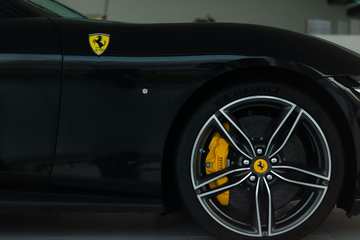 However, switch the Manettino dial to ‘Qualifying’ mode, and the car transforms. Ferrari engineers have dubbed this engine the “piccolo V12” (little V12), and the soundtrack justifies the nickname. Due to the equal-length exhaust headers and the specific firing order of the 120-degree V6, the Ferrari 296 GTB sings a high-pitched, soulful melody that screams toward an 8,500 rpm redline. It lacks the bass-heavy rumble of the old V8s, replacing it with a piercing mechanical scream that is purely intoxicating.
The handling is where the 296 truly separates itself from the McLaren Artura and the incoming Lamborghini. By shaving nearly two inches (50mm) off the wheelbase compared to the F8 Tributo, Ferrari has created a car that rotates with telepathic immediacy.
The secret sauce is the 6w-CDS (6-way Chassis Dynamic Sensor). This aerospace-grade sensor measures acceleration and rotation on three axes (X, Y, Z). It feeds data to the ABS Evo controller and the side-slip control system. In layman’s terms: the car knows exactly how much grip is available at each tire and adjusts brake pressure and power delivery faster than a human brain can process. You can trail-brake deep into a corner at Laguna Seca or your local canyon road, and the rear end will pivot beautifully, making you feel like a hero without spinning out.
Design and Aerodynamics: Function Meets Beauty
Visually, the Ferrari 296 GTB is a masterclass in clean, reductive design. It avoids the aggressive, slash-cut styling of recent Lamborghinis in favor of sensual curves inspired by the legendary 250 LM of the 1960s. The flying buttresses at the rear and the vertical rear screen are pure automotive art.
But in 2025, beauty must be functional. The car features an active rear spoiler inspired by the LaFerrari. Unlike competitors that use wings to reduce drag, the Ferrari 296 GTB uses its active aero to generate downforce—up to 794 lbs at 155 mph when equipped with the Assetto Fiorano package.
The front of the car features the “tea-tray” aerodynamic device, which manages airflow under the car to suck it to the pavement. For buyers looking for the ultimate expression of this design, the Assetto Fiorano package adds carbon fiber appendages on the front bumper and swaps standard dampers for Multimatic racing-derived units.
Interior Innovation and Frustrations
If there is a point of contention with the Ferrari 296 GTB, it lies within the cabin—specifically the Human Machine Interface (HMI). Ferrari has moved almost entirely to capacitive touch controls. The engine start button is now a touch-sensitive zone on the steering wheel, as are the mirror controls and climate settings.
From an industry expert’s perspective, this is a mixed bag. While it cleans up the dashboard aesthetic, creating a futuristic, driver-focused cockpit, the lack of tactile feedback can be frustrating while driving. Simple tasks like skipping a track or adjusting the volume require taking your eyes off the road.
However, the seating position is perfect. You sit low, connected to the chassis. The digital instrument cluster is sharp and customizable, placing the tachometer front and center. For those planning long weekends, there is a surprising amount of space behind the seats for soft bags, and the front trunk (frunk) can swallow a carry-on case, making this a legitimate grand tourer.
The 2025 Competitive Landscape
The supercar market in 2025 is more competitive than ever. The primary rival is the newly announced Lamborghini Temerario. The Temerario boasts a V8 hybrid setup with 903 horsepower, clearly targeting the Ferrari 296 GTB on the spec sheet.
While the Lamborghini offers more raw power and the drama of a 10,000 rpm redline, it carries more weight. The Ferrari’s advantage lies in its power-to-weight ratio and its short-wheelbase agility. The 296 feels like a precision scalpel, whereas the Lamborghini is a sledgehammer. Both are effective, but they serve different masters.
Then there is the McLaren 750S and the hybrid Artura. The McLaren 750S remains the lightweight purist’s choice, sticking with hydraulic steering and rear-wheel drive without hybrid assistance (in the 750S case). However, the Ferrari 296 GTB bridges the gap between the analog past and the digital future better than any other car in the segment.
Ownership and Financial Considerations
Entering the world of Maranello ownership requires financial savvy. The Ferrari 296 GTB starts around the $340,000 mark, but few leave the dealership without pushing past $400,000 via options.
For potential owners, investigating exotic car financing options early is crucial. Interest rates for high-line vehicles have fluctuated in 2025, and securing a specialized loan with a balloon payment structure can often make ownership more cash-flow friendly. Furthermore, given the complexity of the hybrid system, supercar insurance premiums have adjusted. Insurers are now looking closely at repair costs for carbon fiber tubs and high-voltage battery systems. It is advisable to shop for quotes from carriers who specialize in high-value collections.
However, switch the Manettino dial to ‘Qualifying’ mode, and the car transforms. Ferrari engineers have dubbed this engine the “piccolo V12” (little V12), and the soundtrack justifies the nickname. Due to the equal-length exhaust headers and the specific firing order of the 120-degree V6, the Ferrari 296 GTB sings a high-pitched, soulful melody that screams toward an 8,500 rpm redline. It lacks the bass-heavy rumble of the old V8s, replacing it with a piercing mechanical scream that is purely intoxicating.
The handling is where the 296 truly separates itself from the McLaren Artura and the incoming Lamborghini. By shaving nearly two inches (50mm) off the wheelbase compared to the F8 Tributo, Ferrari has created a car that rotates with telepathic immediacy.
The secret sauce is the 6w-CDS (6-way Chassis Dynamic Sensor). This aerospace-grade sensor measures acceleration and rotation on three axes (X, Y, Z). It feeds data to the ABS Evo controller and the side-slip control system. In layman’s terms: the car knows exactly how much grip is available at each tire and adjusts brake pressure and power delivery faster than a human brain can process. You can trail-brake deep into a corner at Laguna Seca or your local canyon road, and the rear end will pivot beautifully, making you feel like a hero without spinning out.
Design and Aerodynamics: Function Meets Beauty
Visually, the Ferrari 296 GTB is a masterclass in clean, reductive design. It avoids the aggressive, slash-cut styling of recent Lamborghinis in favor of sensual curves inspired by the legendary 250 LM of the 1960s. The flying buttresses at the rear and the vertical rear screen are pure automotive art.
But in 2025, beauty must be functional. The car features an active rear spoiler inspired by the LaFerrari. Unlike competitors that use wings to reduce drag, the Ferrari 296 GTB uses its active aero to generate downforce—up to 794 lbs at 155 mph when equipped with the Assetto Fiorano package.
The front of the car features the “tea-tray” aerodynamic device, which manages airflow under the car to suck it to the pavement. For buyers looking for the ultimate expression of this design, the Assetto Fiorano package adds carbon fiber appendages on the front bumper and swaps standard dampers for Multimatic racing-derived units.
Interior Innovation and Frustrations
If there is a point of contention with the Ferrari 296 GTB, it lies within the cabin—specifically the Human Machine Interface (HMI). Ferrari has moved almost entirely to capacitive touch controls. The engine start button is now a touch-sensitive zone on the steering wheel, as are the mirror controls and climate settings.
From an industry expert’s perspective, this is a mixed bag. While it cleans up the dashboard aesthetic, creating a futuristic, driver-focused cockpit, the lack of tactile feedback can be frustrating while driving. Simple tasks like skipping a track or adjusting the volume require taking your eyes off the road.
However, the seating position is perfect. You sit low, connected to the chassis. The digital instrument cluster is sharp and customizable, placing the tachometer front and center. For those planning long weekends, there is a surprising amount of space behind the seats for soft bags, and the front trunk (frunk) can swallow a carry-on case, making this a legitimate grand tourer.
The 2025 Competitive Landscape
The supercar market in 2025 is more competitive than ever. The primary rival is the newly announced Lamborghini Temerario. The Temerario boasts a V8 hybrid setup with 903 horsepower, clearly targeting the Ferrari 296 GTB on the spec sheet.
While the Lamborghini offers more raw power and the drama of a 10,000 rpm redline, it carries more weight. The Ferrari’s advantage lies in its power-to-weight ratio and its short-wheelbase agility. The 296 feels like a precision scalpel, whereas the Lamborghini is a sledgehammer. Both are effective, but they serve different masters.
Then there is the McLaren 750S and the hybrid Artura. The McLaren 750S remains the lightweight purist’s choice, sticking with hydraulic steering and rear-wheel drive without hybrid assistance (in the 750S case). However, the Ferrari 296 GTB bridges the gap between the analog past and the digital future better than any other car in the segment.
Ownership and Financial Considerations
Entering the world of Maranello ownership requires financial savvy. The Ferrari 296 GTB starts around the $340,000 mark, but few leave the dealership without pushing past $400,000 via options.
For potential owners, investigating exotic car financing options early is crucial. Interest rates for high-line vehicles have fluctuated in 2025, and securing a specialized loan with a balloon payment structure can often make ownership more cash-flow friendly. Furthermore, given the complexity of the hybrid system, supercar insurance premiums have adjusted. Insurers are now looking closely at repair costs for carbon fiber tubs and high-voltage battery systems. It is advisable to shop for quotes from carriers who specialize in high-value collections.
 Maintenance is another factor where Ferrari shines. The 7-Year Genuine Maintenance program covers all scheduled maintenance for the first seven years of the car’s life. This is a significant value proposition compared to McLaren or Lamborghini, where annual services can cost thousands.
For those looking to buy, searching for a “Ferrari dealership near me” will reveal that allocations for the Ferrari 296 GTB are still tight, with waitlists stretching 12 to 18 months in some regions. This scarcity has kept residual values high, making the 296 a relatively safe place to park capital compared to quickly depreciating luxury sedans.
The Assetto Fiorano Question
A common question I receive from clients is: “Is the Assetto Fiorano package worth it?” This package reduces weight by approximately 26 lbs via extensive use of carbon fiber and a Lexan rear window. It also includes the aforementioned Multimatic dampers and Michelin Pilot Sport Cup 2 R tires.
If you plan to track your Ferrari 296 GTB, the package is essential. The grip provided by the Cup 2 R tires is phenomenal, and the dampers offer sublime body control. However, for a purely street-driven car in the US—where potholes and expansion joints are common—the standard magnetorheological dampers offer a more compliant ride. The standard setup is still incredibly capable but offers a “Bumpy Road” mode that makes the car genuinely comfortable for daily driving.
Performance Specs Breakdown
Let’s look at the hard numbers that define this machine:
Engine: 3.0L Twin-Turbo 120° V6 + Electric Motor
Total Power: 819 horsepower @ 8,000 rpm
Torque: 546 lb-ft @ 6,250 rpm
Transmission: 8-Speed F1 Dual-Clutch
0-60 mph: 2.9 seconds
Top Speed: >205 mph
Dry Weight: 3,241 lbs
Electric Range: 15 miles
These numbers put the Ferrari 296 GTB in the upper echelon of performance. The 0-60 time is conservative; in real-world testing on warm asphalt, times closer to 2.7 seconds are achievable thanks to the electric motor’s instant torque fill.
Conclusion: The King Retains Its Crown
The automotive industry is in a state of flux, but the Ferrari 296 GTB proves that the future is bright. It is a car that manages to be two things at once: a responsible, quiet EV for the city, and a screaming, tyre-shredding exotic for the canyons.
While the Lamborghini Temerario brings formidable stats to the table, the 296 possesses a delicacy of balance and a purity of steering response that is uniquely Ferrari. It does not just rely on power; it relies on sophisticated aerodynamics and world-class chassis engineering to deliver a feeling of connection that is becoming increasingly rare.
For the driving enthusiast who values precision over brute force, and heritage over hysteria, the Ferrari 296 GTB remains the gold standard of the hybrid supercar era. It is a future classic that you can drive today.
Maintenance is another factor where Ferrari shines. The 7-Year Genuine Maintenance program covers all scheduled maintenance for the first seven years of the car’s life. This is a significant value proposition compared to McLaren or Lamborghini, where annual services can cost thousands.
For those looking to buy, searching for a “Ferrari dealership near me” will reveal that allocations for the Ferrari 296 GTB are still tight, with waitlists stretching 12 to 18 months in some regions. This scarcity has kept residual values high, making the 296 a relatively safe place to park capital compared to quickly depreciating luxury sedans.
The Assetto Fiorano Question
A common question I receive from clients is: “Is the Assetto Fiorano package worth it?” This package reduces weight by approximately 26 lbs via extensive use of carbon fiber and a Lexan rear window. It also includes the aforementioned Multimatic dampers and Michelin Pilot Sport Cup 2 R tires.
If you plan to track your Ferrari 296 GTB, the package is essential. The grip provided by the Cup 2 R tires is phenomenal, and the dampers offer sublime body control. However, for a purely street-driven car in the US—where potholes and expansion joints are common—the standard magnetorheological dampers offer a more compliant ride. The standard setup is still incredibly capable but offers a “Bumpy Road” mode that makes the car genuinely comfortable for daily driving.
Performance Specs Breakdown
Let’s look at the hard numbers that define this machine:
Engine: 3.0L Twin-Turbo 120° V6 + Electric Motor
Total Power: 819 horsepower @ 8,000 rpm
Torque: 546 lb-ft @ 6,250 rpm
Transmission: 8-Speed F1 Dual-Clutch
0-60 mph: 2.9 seconds
Top Speed: >205 mph
Dry Weight: 3,241 lbs
Electric Range: 15 miles
These numbers put the Ferrari 296 GTB in the upper echelon of performance. The 0-60 time is conservative; in real-world testing on warm asphalt, times closer to 2.7 seconds are achievable thanks to the electric motor’s instant torque fill.
Conclusion: The King Retains Its Crown
The automotive industry is in a state of flux, but the Ferrari 296 GTB proves that the future is bright. It is a car that manages to be two things at once: a responsible, quiet EV for the city, and a screaming, tyre-shredding exotic for the canyons.
While the Lamborghini Temerario brings formidable stats to the table, the 296 possesses a delicacy of balance and a purity of steering response that is uniquely Ferrari. It does not just rely on power; it relies on sophisticated aerodynamics and world-class chassis engineering to deliver a feeling of connection that is becoming increasingly rare.
For the driving enthusiast who values precision over brute force, and heritage over hysteria, the Ferrari 296 GTB remains the gold standard of the hybrid supercar era. It is a future classic that you can drive today.
 Are you ready to experience the pinnacle of Italian engineering? Don’t just read about it. Contact your local Ferrari dealership today to schedule a consultation and secure your allocation for the most exhilarating driving experience of 2025. The road is waiting.