
Engineering Euphoria: The Definitive Guide to the Best Supercars 2025
The automotive industry is currently navigating its most significant pivot in a century. We are witnessing the twilight of the pur
e internal combustion engine and the dawn of high-performance electrification. For the uninitiated, this might sound like a compromise. But for those of us who have spent the last decade analyzing telemetry data and burning rubber at the Nürburgring, we know the truth: we are living in the golden age of horsepower. The best supercars 2025 has to offer are not just fast; they are multidimensional feats of engineering that blend raw emotion with surgical precision.
This year’s lineup is arguably the most diverse we have ever seen. You have naturally aspirated V12s fighting for survival against high-tech plug-in hybrids that use electricity to fill torque gaps rather than save the planet. If you have the capital and the garage space, navigating this market requires more than just reading a spec sheet. It requires understanding the character of the machine.
Below, I break down the absolute peak of the market. These are the vehicles that define the landscape for collectors, drivers, and investors this year.
Chevrolet Corvette Z06: The Democratization of Velocity
For decades, the Corvette was the “bang for your buck” sports car—fast, but rough around the edges. That narrative is dead. The C8 generation changed the geometry, but the Z06 changed the philosophy. When discussing the best supercars 2025 brings to the streets, omitting the Z06 is a critical error.
This is not a muscle car; it is a precision instrument. The heart of the beast is the LT6, a 5.5-liter flat-plane crank V8. If that sounds like Ferrari architecture, it’s because it is. Spinning to a shrieking 8,600 RPM, it delivers 670 naturally aspirated horsepower. It is the most powerful naturally aspirated V8 ever placed in a production car.
Driving the Z06 feels less like piloting a Chevy and more like strapping into a GT3 race car. The steering is heavy and direct, the magnetic ride control reads the tarmac with braille-like sensitivity, and the sound is a distinct, high-pitched wail that separates it from the burble of traditional American iron. For US buyers, this remains the value proposition of the century, but do not mistake value for cheapness. In terms of lap times and sensory engagement, it hunts down vehicles three times its price point.
Lamborghini Revuelto: The V12 Lives On
When Lamborghini announced the Aventador’s successor, the fear was palpable. Would emissions regulations kill the V12? The answer is the Revuelto, a High-Performance Electrified Vehicle (HPEV) that secures its spot among the best supercars 2025 by refusing to let the V12 die.
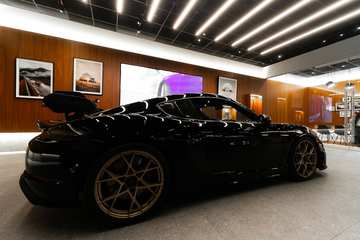 Lamborghini has done something audacious here. They kept the massive 6.5-liter V12 engine but paired it with three electric motors. The result is a combined output of 1,001 horsepower. The electrification isn’t there to make it a Prius; it’s there to sharpen the throttle response and provide torque vectoring that defies physics.
Behind the wheel, the Revuelto is surprisingly approachable. The carbon fiber monofuselage chassis is stiffer and lighter than its predecessor, providing agility that a car of this size shouldn’t possess. It offers a dedicated electric mode for creeping out of your neighborhood silently, but once you engage ‘Corsa’ mode, the V12 screams with an intensity that vibrates through your chest. It is flamboyant, aggressive, and expensive—everything a Lamborghini must be. For those looking into exotic car financing, the Revuelto holds its value exceptionally well due to the scarcity of V12 production.
Porsche 911 GT3 RS: The Aerodynamic Anomaly
There are fast cars, and then there are track weapons. The Porsche 911 GT3 RS is unapologetically the latter. While other contenders on the list of best supercars 2025 rely on brute horsepower, Porsche relies on the wind.
The 992-generation GT3 RS looks like it escaped a Le Mans paddock. It features an active Drag Reduction System (DRS)—a first for a production Porsche. The massive rear wing and active front flaps adjust in real-time, generating nearly 1,900 lbs of downforce at 177 mph.
The 4.0-liter flat-six engine produces 518 horsepower. On paper, that seems low compared to the 1,000-horsepower Lamborghini. On a track, however, the GT3 RS embarrasses more powerful machinery. The suspension is adjustable from the steering wheel, allowing you to tweak rebound and compression settings mid-lap. This is not a grand tourer. It is loud, stiff, and vibrates with intent. It is the ultimate tool for the driving purist who values cornering speed over highway pulls.
Ferrari 296 GTB: The Modern Benchmark
The transition to V6 engines was a controversial move for Maranello, but the Ferrari 296 GTB silenced the critics immediately. It is widely regarded by industry veterans as one of the most complete supercars of the last decade.
The “piccolo V12,” as Ferrari engineers call it, is a 3.0-liter twin-turbo V6 paired with an electric motor. The combined output is a staggering 819 horsepower. Because the electric motor fills the turbo lag, the throttle response is instant. The short wheelbase makes the car incredibly rotatable; it dances through corners with a fluidity that the older, larger V8 models couldn’t match.
What makes the 296 GTB one of the best supercars 2025 offers is its duality. In hybrid mode, it is a docile, comfortable cruiser suitable for a daily commute. Switch the Manettino to ‘Qualify,’ and it becomes a visceral, tire-shredding monster. It represents the perfect integration of future tech and heritage soul.
McLaren 750S: The Internal Combustion Purist
While the Artura (discussed below) handles the hybrid duties, McLaren knew there was still a market for raw, unassisted combustion. Enter the 750S. As the successor to the 720S, it takes an already brilliant platform and sharpens every edge.
Lighter, more powerful, and louder than the car it replaces, the 750S produces 740 horsepower from its 4.0-liter twin-turbo V8. McLaren claims 30% of the parts are new or changed. The result is a 0-60 mph time of 2.7 seconds.
The magic of the 750S lies in its hydraulic steering. While almost every other manufacturer has moved to electric power steering (which can feel numb), McLaren sticks to hydraulics. The feedback is granular and alive, telling your fingertips exactly what the front tires are doing. If you are looking for the purest connection between driver and road among the best supercars 2025, the 750S is likely your winner.
Aston Martin Vantage: The British Bruiser
Aston Martin has historically been seen as the “gentleman’s choice”—beautiful, but perhaps a step behind the Italians in raw performance. The 2025 Vantage update obliterates that reputation. This is no longer just a pretty face; it is a serious performance contender.
Under the hood lies a heavily revised AMG-sourced 4.0-liter twin-turbo V8, now pumping out 656 horsepower. That is a massive jump from the previous generation. Aston Martin has also stiffened the chassis and overhauled the suspension geometry.
The result is a car that likes to slide. It is rowdy and muscular, with a soundtrack that sounds like tearing canvas. It lacks the surgical precision of the Porsche GT3 RS, but it makes up for it with charisma. The interior, previously a weak point, has been completely redesigned with a modern infotainment system, making it a viable daily driver. It earns its place among the best supercars 2025 by proving that a front-engine layout can still compete in a mid-engine world.
Lamborghini has done something audacious here. They kept the massive 6.5-liter V12 engine but paired it with three electric motors. The result is a combined output of 1,001 horsepower. The electrification isn’t there to make it a Prius; it’s there to sharpen the throttle response and provide torque vectoring that defies physics.
Behind the wheel, the Revuelto is surprisingly approachable. The carbon fiber monofuselage chassis is stiffer and lighter than its predecessor, providing agility that a car of this size shouldn’t possess. It offers a dedicated electric mode for creeping out of your neighborhood silently, but once you engage ‘Corsa’ mode, the V12 screams with an intensity that vibrates through your chest. It is flamboyant, aggressive, and expensive—everything a Lamborghini must be. For those looking into exotic car financing, the Revuelto holds its value exceptionally well due to the scarcity of V12 production.
Porsche 911 GT3 RS: The Aerodynamic Anomaly
There are fast cars, and then there are track weapons. The Porsche 911 GT3 RS is unapologetically the latter. While other contenders on the list of best supercars 2025 rely on brute horsepower, Porsche relies on the wind.
The 992-generation GT3 RS looks like it escaped a Le Mans paddock. It features an active Drag Reduction System (DRS)—a first for a production Porsche. The massive rear wing and active front flaps adjust in real-time, generating nearly 1,900 lbs of downforce at 177 mph.
The 4.0-liter flat-six engine produces 518 horsepower. On paper, that seems low compared to the 1,000-horsepower Lamborghini. On a track, however, the GT3 RS embarrasses more powerful machinery. The suspension is adjustable from the steering wheel, allowing you to tweak rebound and compression settings mid-lap. This is not a grand tourer. It is loud, stiff, and vibrates with intent. It is the ultimate tool for the driving purist who values cornering speed over highway pulls.
Ferrari 296 GTB: The Modern Benchmark
The transition to V6 engines was a controversial move for Maranello, but the Ferrari 296 GTB silenced the critics immediately. It is widely regarded by industry veterans as one of the most complete supercars of the last decade.
The “piccolo V12,” as Ferrari engineers call it, is a 3.0-liter twin-turbo V6 paired with an electric motor. The combined output is a staggering 819 horsepower. Because the electric motor fills the turbo lag, the throttle response is instant. The short wheelbase makes the car incredibly rotatable; it dances through corners with a fluidity that the older, larger V8 models couldn’t match.
What makes the 296 GTB one of the best supercars 2025 offers is its duality. In hybrid mode, it is a docile, comfortable cruiser suitable for a daily commute. Switch the Manettino to ‘Qualify,’ and it becomes a visceral, tire-shredding monster. It represents the perfect integration of future tech and heritage soul.
McLaren 750S: The Internal Combustion Purist
While the Artura (discussed below) handles the hybrid duties, McLaren knew there was still a market for raw, unassisted combustion. Enter the 750S. As the successor to the 720S, it takes an already brilliant platform and sharpens every edge.
Lighter, more powerful, and louder than the car it replaces, the 750S produces 740 horsepower from its 4.0-liter twin-turbo V8. McLaren claims 30% of the parts are new or changed. The result is a 0-60 mph time of 2.7 seconds.
The magic of the 750S lies in its hydraulic steering. While almost every other manufacturer has moved to electric power steering (which can feel numb), McLaren sticks to hydraulics. The feedback is granular and alive, telling your fingertips exactly what the front tires are doing. If you are looking for the purest connection between driver and road among the best supercars 2025, the 750S is likely your winner.
Aston Martin Vantage: The British Bruiser
Aston Martin has historically been seen as the “gentleman’s choice”—beautiful, but perhaps a step behind the Italians in raw performance. The 2025 Vantage update obliterates that reputation. This is no longer just a pretty face; it is a serious performance contender.
Under the hood lies a heavily revised AMG-sourced 4.0-liter twin-turbo V8, now pumping out 656 horsepower. That is a massive jump from the previous generation. Aston Martin has also stiffened the chassis and overhauled the suspension geometry.
The result is a car that likes to slide. It is rowdy and muscular, with a soundtrack that sounds like tearing canvas. It lacks the surgical precision of the Porsche GT3 RS, but it makes up for it with charisma. The interior, previously a weak point, has been completely redesigned with a modern infotainment system, making it a viable daily driver. It earns its place among the best supercars 2025 by proving that a front-engine layout can still compete in a mid-engine world.
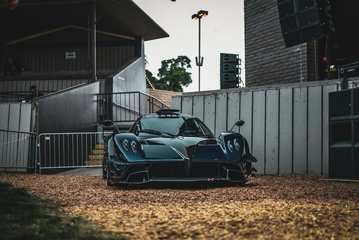 McLaren Artura: The High-Tech Entry Point
The Artura had a rocky start with delays, but for the 2025 model year, Woking has ironed out the kinks. This car replaces the Sports Series and introduces McLaren’s new carbon fiber lightweight architecture (MCLA).
It utilizes a 3.0-liter twin-turbo V6 hybrid setup producing 690 horsepower. Unlike the Ferrari 296 GTB, the Artura is positioned at a more accessible price point (relatively speaking), making it an interesting option for those entering the supercar market. It utilizes an axial-flux electric motor, which is lighter and more power-dense than traditional radial motors.
The Artura is incredibly agile and easy to drive fast. It lacks the sheer drama of the 750S, but its bandwidth is wider. It handles city traffic in electric mode with grace and attacks back roads with ferocity. For buyers cross-shopping the best supercars 2025, the Artura offers a futuristic driving experience without the intimidation factor of the flagship models.
Maserati MC20: Italian Renaissance
Maserati spent years in the wilderness, but the MC20 marked a glorious return to form. For 2025, the MC20 (and its convertible sibling, the Cielo) remains a stunning piece of design. It is arguably the most beautiful car in this segment.
The centerpiece is the “Nettuno” engine, a 3.0-liter twin-turbo V6 that utilizes Formula 1-derived pre-chamber ignition technology. It produces 621 horsepower and creates a unique, whooshing turbo soundtrack. The carbon fiber tub keeps the weight down, ensuring the car feels nimble.
While it may not have the dealer network of Porsche or the resale velocity of Ferrari, the MC20 offers something different: exclusivity and style. It is less clinical than the Germans and less aggressive than the Lamborghinis. It is a GT car with the heart of a racer, securing its status as one of the best supercars 2025 for the discerning aesthete.
The Reality of Ownership: Costs and Considerations
Buying the car is only the entry fee. To truly enjoy these machines, one must consider the ecosystem of ownership. When analyzing the best supercars 2025, smart money looks at the total cost of ownership.
Insurance and Protection:
Insuring a vehicle with a replacement value north of $300,000 requires specialized carriers. Luxury car insurance premiums have risen in 2025, but bundling policies can help. More importantly, immediately upon delivery, you should invest in paint protection film (PPF) and ceramic coating. These vehicles sit low to the ground; rock chips on a carbon fiber bumper can cost thousands to repair. High-quality PPF is essential for preserving the factory finish and, by extension, the resale value.
Maintenance and Leasing:
Many owners today opt for supercar leasing rather than outright purchase. This strategy mitigates the risk of depreciation curves, which can be volatile in a market shifting toward electrification. Leasing allows you to drive the best supercars 2025 for a set term and swap into the newest model without the hassle of selling.
However, if you buy to hold, be aware of high-performance vehicle maintenance. Carbon ceramic brakes, for example, last a long time but cost a fortune to replace. Dual-clutch transmissions require precise fluid intervals. Establishing a relationship with a certified supercar dealership service center is vital. Do not cut corners here; a documented service history is the single most important factor in future valuation.
Final Verdict
The automotive world is changing, but the spirit of the supercar is very much alive. Whether you crave the high-RPM scream of the Corvette Z06, the technological wizardry of the Ferrari 296 GTB, or the aerodynamic mastery of the Porsche GT3 RS, the best supercars 2025 offer a flavor for every palate.
These machines represent the pinnacle of what is technically possible today. They are faster, safer, and more capable than anything that came before. If you have been on the fence, now is the time to act. As regulations tighten, the era of unbridled internal combustion and high-horsepower hybrids may not last forever.
Ready to experience the pinnacle of performance?
McLaren Artura: The High-Tech Entry Point
The Artura had a rocky start with delays, but for the 2025 model year, Woking has ironed out the kinks. This car replaces the Sports Series and introduces McLaren’s new carbon fiber lightweight architecture (MCLA).
It utilizes a 3.0-liter twin-turbo V6 hybrid setup producing 690 horsepower. Unlike the Ferrari 296 GTB, the Artura is positioned at a more accessible price point (relatively speaking), making it an interesting option for those entering the supercar market. It utilizes an axial-flux electric motor, which is lighter and more power-dense than traditional radial motors.
The Artura is incredibly agile and easy to drive fast. It lacks the sheer drama of the 750S, but its bandwidth is wider. It handles city traffic in electric mode with grace and attacks back roads with ferocity. For buyers cross-shopping the best supercars 2025, the Artura offers a futuristic driving experience without the intimidation factor of the flagship models.
Maserati MC20: Italian Renaissance
Maserati spent years in the wilderness, but the MC20 marked a glorious return to form. For 2025, the MC20 (and its convertible sibling, the Cielo) remains a stunning piece of design. It is arguably the most beautiful car in this segment.
The centerpiece is the “Nettuno” engine, a 3.0-liter twin-turbo V6 that utilizes Formula 1-derived pre-chamber ignition technology. It produces 621 horsepower and creates a unique, whooshing turbo soundtrack. The carbon fiber tub keeps the weight down, ensuring the car feels nimble.
While it may not have the dealer network of Porsche or the resale velocity of Ferrari, the MC20 offers something different: exclusivity and style. It is less clinical than the Germans and less aggressive than the Lamborghinis. It is a GT car with the heart of a racer, securing its status as one of the best supercars 2025 for the discerning aesthete.
The Reality of Ownership: Costs and Considerations
Buying the car is only the entry fee. To truly enjoy these machines, one must consider the ecosystem of ownership. When analyzing the best supercars 2025, smart money looks at the total cost of ownership.
Insurance and Protection:
Insuring a vehicle with a replacement value north of $300,000 requires specialized carriers. Luxury car insurance premiums have risen in 2025, but bundling policies can help. More importantly, immediately upon delivery, you should invest in paint protection film (PPF) and ceramic coating. These vehicles sit low to the ground; rock chips on a carbon fiber bumper can cost thousands to repair. High-quality PPF is essential for preserving the factory finish and, by extension, the resale value.
Maintenance and Leasing:
Many owners today opt for supercar leasing rather than outright purchase. This strategy mitigates the risk of depreciation curves, which can be volatile in a market shifting toward electrification. Leasing allows you to drive the best supercars 2025 for a set term and swap into the newest model without the hassle of selling.
However, if you buy to hold, be aware of high-performance vehicle maintenance. Carbon ceramic brakes, for example, last a long time but cost a fortune to replace. Dual-clutch transmissions require precise fluid intervals. Establishing a relationship with a certified supercar dealership service center is vital. Do not cut corners here; a documented service history is the single most important factor in future valuation.
Final Verdict
The automotive world is changing, but the spirit of the supercar is very much alive. Whether you crave the high-RPM scream of the Corvette Z06, the technological wizardry of the Ferrari 296 GTB, or the aerodynamic mastery of the Porsche GT3 RS, the best supercars 2025 offer a flavor for every palate.
These machines represent the pinnacle of what is technically possible today. They are faster, safer, and more capable than anything that came before. If you have been on the fence, now is the time to act. As regulations tighten, the era of unbridled internal combustion and high-horsepower hybrids may not last forever.
Ready to experience the pinnacle of performance?
 Don’t just read about the adrenaline—feel it. Contact your local luxury automotive group today to schedule a consultation and reserve your allocation for one of these engineering masterpieces. The open road is waiting.