
Decades of Dominance: Ranking the Top 10 Most Iconic Porsche 911 Models for Collectors and Enthusiasts
If you have spent any time in the automotive industry over the last ten years, you know that few
vehicles command respect quite like the Porsche 911. It is not just a sports car; it is a paradox on wheels. For over 60 years, engineers in Stuttgart have stubbornly perfected a rear-engine layout that physics suggests shouldn’t work. Yet, through relentless evolution, the 911 has become the gold standard by which all other performance vehicles are measured.
Choosing the absolute best Porsche 911 models from a lineage spanning six decades is a task that starts arguments in pit lanes and auction houses alike. As someone who has tracked the market fluctuations of air-cooled classics and tested the limits of modern water-cooled track weapons, I can tell you that “best” is subjective. However, “significance” is measurable.
Whether you are looking for luxury sports cars for sale as an investment or simply want to understand the hierarchy of the 911 family, this list cuts through the noise. We are looking at the disruptors, the homologation specials, and the engineering marvels that defined their respective eras. These are the ten most iconic Porsche 911 models that changed the automotive landscape forever.
Porsche 996 GT3 RS: The Genesis of the Modern Track Weapon
For a long time, the 996 generation was the black sheep of the family, criticized for its break from air-cooled tradition and those controversial “fried egg” headlights. However, savvy collectors have woke up to the reality of the 996, specifically the GT3 RS. This car represents the raw, unfiltered beginning of the modern GT lineage.
When looking at Porsche 911 models, the 996 GT3 RS is pivotal. It was essentially a street-legal version of the GT3 RSR race car. Porsche didn’t just add power; they stripped weight with an obsession that borders on mania. We are talking about a polycarbonate rear window, a carbon-fiber hood, and even a sticker instead of an enamel hood crest to shave off a few grams.
Under the rear decklid sits the legendary “Mezger” engine. If you are browsing Porsche restoration services or forums, you know that name is royalty. Unlike the standard Carrera engines of the time which suffered from IMS bearing issues, the dry-sump Mezger block was bulletproof, derived directly from the Le Mans-winning GT1. Driving a 996 GT3 RS today feels incredibly analog. It demands your attention. There are no electronic nannies to save you if you get it wrong, making it a favorite for drivers who value purity over lap times.
Porsche 997 GT3 RS 4.0: The Holy Grail of Water-Cooled Eras
If the 996 started the party, the 997 GT3 RS 4.0 was the grand finale that brought the house down. In my decade of analyzing exotic car insurance valuations and auction results, few modern cars have appreciated as aggressively as the RS 4.0. It is widely considered the zenith of the analog 911 era.
 This was the swan song for the Mezger flat-six engine. Porsche bored it out to 4.0 liters, utilizing crankshafts from the RSR race car and titanium connecting rods. The result was 500 naturally aspirated horsepower in a chassis that communicated every pebble on the road to the driver’s fingertips.
The driving dynamics are telepathic. The hydraulic steering rack in the 997 is often cited as the best ever fitted to a road car. Visually, it is aggressive, with dive planes (flics) on the front bumper and a massive rear wing, yet it retains an elegance that some newer, more angular Porsche 911 models lack. If you are looking for a collectible Porsche 911 that serves as a hedge against inflation, the 4.0 is blue-chip stock. It marks the end of an era before electric steering and PDK gearboxes took over the GT department.
Porsche 911 R (991): The Purist’s Rebellion
By 2016, the automotive world had largely accepted that dual-clutch transmissions (PDK) were faster and therefore “better.” Porsche’s GT3 was PDK-only, and enthusiasts were vocal about their displeasure. Porsche listened, and the answer was the 911 R.
The 911 R was a parts-bin special in the most glorious way possible. It took the screaming 4.0-liter engine from the GT3 RS and mated it to a custom-developed six-speed manual transmission. They removed the fixed rear wing, giving it a sleek, touring profile, and focused entirely on driver engagement rather than Nürburgring lap records.
The market reaction was explosive. Prices on the secondary market tripled almost overnight, driving high demand for luxury classic cars with manual gearboxes. The 911 R proved that there was still a massive, wealthy demographic that craved the mechanical connection of a clutch pedal. It features lightweight materials, reduced sound deadening, and a single-mass flywheel that allows the engine to rev with the ferocity of a superbike. It is a modern classic that forced Porsche to bring the manual gearbox back to the GT3 Touring package.
Porsche 911 Carrera RS 2.7: The Icon That Started It All
You cannot discuss iconic Porsche 911 models without bending the knee to the 1973 Carrera RS 2.7. This is the car that gave us the “ducktail” spoiler and the “RS” (Rennsport) badge. It was a homologation special, built solely so Porsche could go racing.
In the early 70s, Porsche’s marketing department thought the spoiler was ugly and would hurt sales. The engineers insisted it was necessary for stability. The engineers won, and the result is arguably the most recognizable silhouette in sports car history. To achieve the RS badge, the car was put on a severe diet. Thin-gauge steel was used for the body panels, the glass was thinner, and luxuries like door handles were replaced with fabric pull straps.
From a vintage Porsche valuation perspective, the 2.7 RS is the gold standard. Driving one is a revelation; it is light, nimble, and the mechanical fuel injection delivers a throttle response that feels instant. It is not the fastest 911 by modern standards, but the feedback it offers is unparalleled. It set the template for every lightweight, track-focused 911 that followed.
Porsche 964 RS: The Hardcore Homologation
Fast forward to the early 90s. The 964 generation brought coil springs and power steering to the 911, making it more civilized. But the 964 RS went in the complete opposite direction. This was a car built for the European club racer, and it was notoriously harsh for street use.
Porsche stripped out the sound deadening, the rear seats, the air conditioning, and the radio. The suspension was lowered and stiffened to the point where driving over a pothole felt like a physical assault. However, on a smooth track, it was magic. The 3.6-liter air-cooled engine was tweaked for sharper response, and the chassis balance was exceptional.
For years, the 964 RS was overlooked in the US market—partially because we never officially got the pure Euro-spec version originally. Now, with the 25-year import rule in effect, they are flooding into certified pre-owned Porsche networks and specialty dealers. It represents a raw, visceral driving experience that bridges the gap between the classic 911 shape and modern suspension geometry.
Porsche 911 R (1967): The Original Lightweight
Before the 2.7 RS, there was the 1967 911 R. This is the genesis of the “less is more” philosophy. Only roughly 20 of these cars were ever built, making it one of the rarest and most expensive Porsche 911 models in existence.
The 1967 R was an experiment in weight reduction. It used fiberglass fenders, plastic windows, and stripped-out interiors to achieve a curb weight of just 1,760 pounds. To put that in perspective, a modern Honda Civic weighs nearly 3,000 pounds. Powered by a highly tuned 2.0-liter flat-six, the power-to-weight ratio was staggering for the era.
While you are unlikely to see one of these at your local Porsche service center, the DNA of the ’67 R lives on in every GT product Porsche sells today. It established the formula: light weight, high revs, and minimal distractions. It is the grandfather of the GT3.
Porsche 930 Turbo: The Widowmaker
The 1975 Porsche 911 Turbo, internally known as the 930, introduced forced induction to the 911 lineup and changed the supercar hierarchy forever. Before the 930, turbocharging was largely reserved for race cars. Porsche brought it to the street, but not without consequences.
This was the swan song for the Mezger flat-six engine. Porsche bored it out to 4.0 liters, utilizing crankshafts from the RSR race car and titanium connecting rods. The result was 500 naturally aspirated horsepower in a chassis that communicated every pebble on the road to the driver’s fingertips.
The driving dynamics are telepathic. The hydraulic steering rack in the 997 is often cited as the best ever fitted to a road car. Visually, it is aggressive, with dive planes (flics) on the front bumper and a massive rear wing, yet it retains an elegance that some newer, more angular Porsche 911 models lack. If you are looking for a collectible Porsche 911 that serves as a hedge against inflation, the 4.0 is blue-chip stock. It marks the end of an era before electric steering and PDK gearboxes took over the GT department.
Porsche 911 R (991): The Purist’s Rebellion
By 2016, the automotive world had largely accepted that dual-clutch transmissions (PDK) were faster and therefore “better.” Porsche’s GT3 was PDK-only, and enthusiasts were vocal about their displeasure. Porsche listened, and the answer was the 911 R.
The 911 R was a parts-bin special in the most glorious way possible. It took the screaming 4.0-liter engine from the GT3 RS and mated it to a custom-developed six-speed manual transmission. They removed the fixed rear wing, giving it a sleek, touring profile, and focused entirely on driver engagement rather than Nürburgring lap records.
The market reaction was explosive. Prices on the secondary market tripled almost overnight, driving high demand for luxury classic cars with manual gearboxes. The 911 R proved that there was still a massive, wealthy demographic that craved the mechanical connection of a clutch pedal. It features lightweight materials, reduced sound deadening, and a single-mass flywheel that allows the engine to rev with the ferocity of a superbike. It is a modern classic that forced Porsche to bring the manual gearbox back to the GT3 Touring package.
Porsche 911 Carrera RS 2.7: The Icon That Started It All
You cannot discuss iconic Porsche 911 models without bending the knee to the 1973 Carrera RS 2.7. This is the car that gave us the “ducktail” spoiler and the “RS” (Rennsport) badge. It was a homologation special, built solely so Porsche could go racing.
In the early 70s, Porsche’s marketing department thought the spoiler was ugly and would hurt sales. The engineers insisted it was necessary for stability. The engineers won, and the result is arguably the most recognizable silhouette in sports car history. To achieve the RS badge, the car was put on a severe diet. Thin-gauge steel was used for the body panels, the glass was thinner, and luxuries like door handles were replaced with fabric pull straps.
From a vintage Porsche valuation perspective, the 2.7 RS is the gold standard. Driving one is a revelation; it is light, nimble, and the mechanical fuel injection delivers a throttle response that feels instant. It is not the fastest 911 by modern standards, but the feedback it offers is unparalleled. It set the template for every lightweight, track-focused 911 that followed.
Porsche 964 RS: The Hardcore Homologation
Fast forward to the early 90s. The 964 generation brought coil springs and power steering to the 911, making it more civilized. But the 964 RS went in the complete opposite direction. This was a car built for the European club racer, and it was notoriously harsh for street use.
Porsche stripped out the sound deadening, the rear seats, the air conditioning, and the radio. The suspension was lowered and stiffened to the point where driving over a pothole felt like a physical assault. However, on a smooth track, it was magic. The 3.6-liter air-cooled engine was tweaked for sharper response, and the chassis balance was exceptional.
For years, the 964 RS was overlooked in the US market—partially because we never officially got the pure Euro-spec version originally. Now, with the 25-year import rule in effect, they are flooding into certified pre-owned Porsche networks and specialty dealers. It represents a raw, visceral driving experience that bridges the gap between the classic 911 shape and modern suspension geometry.
Porsche 911 R (1967): The Original Lightweight
Before the 2.7 RS, there was the 1967 911 R. This is the genesis of the “less is more” philosophy. Only roughly 20 of these cars were ever built, making it one of the rarest and most expensive Porsche 911 models in existence.
The 1967 R was an experiment in weight reduction. It used fiberglass fenders, plastic windows, and stripped-out interiors to achieve a curb weight of just 1,760 pounds. To put that in perspective, a modern Honda Civic weighs nearly 3,000 pounds. Powered by a highly tuned 2.0-liter flat-six, the power-to-weight ratio was staggering for the era.
While you are unlikely to see one of these at your local Porsche service center, the DNA of the ’67 R lives on in every GT product Porsche sells today. It established the formula: light weight, high revs, and minimal distractions. It is the grandfather of the GT3.
Porsche 930 Turbo: The Widowmaker
The 1975 Porsche 911 Turbo, internally known as the 930, introduced forced induction to the 911 lineup and changed the supercar hierarchy forever. Before the 930, turbocharging was largely reserved for race cars. Porsche brought it to the street, but not without consequences.
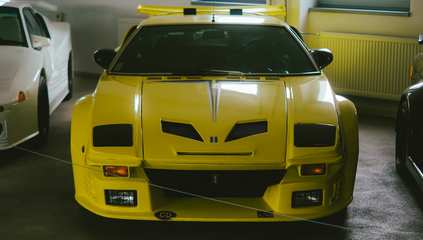 This car earned the nickname “Widowmaker” for a reason. The early turbo technology resulted in massive “turbo lag.” You would put your foot down, wait a few seconds, and then suddenly the boost would hit like a freight train. If this happened mid-corner, the heavy rear end would swing out, and unless you were a highly skilled driver, you were spinning.
Despite—or perhaps because of—this danger, the 930 is an icon. The wide flared fenders, the massive “whale tail” spoiler, and the sheer presence of the car defined 1980s excess. Today, Porsche restoration services specialize in keeping these finicky machines running. As a driving experience, it demands respect. Mastering a 930 Turbo is a badge of honor among enthusiasts.
Porsche 964 Carrera 4: The AWD Revolution
While the RS and Turbo models get the glory for speed, the 964 Carrera 4 deserves its spot on this list for changing the usability of the 911. Launched in 1989, the 964 C4 was the first production 911 to feature all-wheel drive.
This technology was derived from the legendary 959 supercar. By sending power to all four wheels, Porsche transformed the 911 from a fair-weather sports car into an all-weather grand tourer. Suddenly, you could drive a 911 in the rain or snow with confidence. This expanded the market significantly, appealing to buyers in colder climates who needed a daily driver.
The 964 C4 also marked a significant update in aerodynamics and comfort. For those looking for Porsche financing options on a classic, the 964 C4 is often a more accessible entry point than the RS models, yet it offers the classic air-cooled sound and smell that purists desire. It proved that the 911 could evolve technologically without losing its soul.
Porsche 993 GT2: The Air-Cooled King
The 993 generation is beloved because it is the final iteration of the air-cooled engine. If the 993 is the crown, the GT2 is the jewel. It was essentially a 911 Turbo with the front driveshafts removed, making it rear-wheel drive, lighter, and terrifyingly fast.
With its bolt-on fender flares and massive rear wing, the 993 GT2 looks like a race car that got lost on the way to the track. Only 57 road-legal versions were built for homologation purposes. The twin-turbocharged engine produced 430 horsepower, which, in a car stripped of heavy all-wheel-drive components, resulted in explosive acceleration.
The 993 GT2 is the pinnacle of Porsche 911 investment grade assets. Prices have soared into the seven-figure range. It represents the absolute limit of what Porsche could achieve with air-cooled technology before stricter emissions and noise regulations forced the switch to water cooling. It is raw, mechanical, and beautiful.
Porsche 992 S/T: The Modern Masterpiece
We conclude our list with a current model that instantly secured its status as a future classic: the 992 S/T. Released to celebrate the 60th anniversary of the 911, the S/T is a greatest hits compilation of modern Porsche engineering.
It combines the 518-horsepower engine from the GT3 RS with the manual transmission of the GT3 Touring, all wrapped in a discreet body that eschews massive wings. Crucially, it utilizes a lightweight clutch and a single-mass flywheel, reducing rotating mass significantly. The throttle response is razor-sharp.
Porsche stripped weight everywhere, using carbon fiber for the doors, roof, and hood. It is the lightest of the 992 generation Porsche 911 models. While the GT3 RS is designed for lap times, the S/T is designed for road driving pleasure. It is compliant enough for back roads but stiff enough to feel electric. With limited production numbers, securing an allocation was nearly impossible, driving the secondary market wild. It proves that even in 2025, Porsche has not forgotten the recipe that made the 911 a legend.
The Legacy Continues
The Porsche 911 is unique in the automotive world. It is a car that refuses to abandon its heritage, yet constantly pushes the boundaries of technology. From the dangerous charm of the original 930 Turbo to the surgical precision of the 992 S/T, each model tells a story of engineering triumph.
For potential owners, the market for these vehicles is complex. Whether you are looking for Porsche dealers near me to configure a new 911 or scouting auctions for a vintage air-cooled gem, understanding the nuance of each generation is vital. High-CPC factors like Porsche appreciation value and maintenance costs vary wildly between a 996 and a 993.
Owning a 911 is more than just owning a car; it is joining a community of drivers who appreciate the finer mechanical details of life.
Ready to find your own piece of automotive history?
This car earned the nickname “Widowmaker” for a reason. The early turbo technology resulted in massive “turbo lag.” You would put your foot down, wait a few seconds, and then suddenly the boost would hit like a freight train. If this happened mid-corner, the heavy rear end would swing out, and unless you were a highly skilled driver, you were spinning.
Despite—or perhaps because of—this danger, the 930 is an icon. The wide flared fenders, the massive “whale tail” spoiler, and the sheer presence of the car defined 1980s excess. Today, Porsche restoration services specialize in keeping these finicky machines running. As a driving experience, it demands respect. Mastering a 930 Turbo is a badge of honor among enthusiasts.
Porsche 964 Carrera 4: The AWD Revolution
While the RS and Turbo models get the glory for speed, the 964 Carrera 4 deserves its spot on this list for changing the usability of the 911. Launched in 1989, the 964 C4 was the first production 911 to feature all-wheel drive.
This technology was derived from the legendary 959 supercar. By sending power to all four wheels, Porsche transformed the 911 from a fair-weather sports car into an all-weather grand tourer. Suddenly, you could drive a 911 in the rain or snow with confidence. This expanded the market significantly, appealing to buyers in colder climates who needed a daily driver.
The 964 C4 also marked a significant update in aerodynamics and comfort. For those looking for Porsche financing options on a classic, the 964 C4 is often a more accessible entry point than the RS models, yet it offers the classic air-cooled sound and smell that purists desire. It proved that the 911 could evolve technologically without losing its soul.
Porsche 993 GT2: The Air-Cooled King
The 993 generation is beloved because it is the final iteration of the air-cooled engine. If the 993 is the crown, the GT2 is the jewel. It was essentially a 911 Turbo with the front driveshafts removed, making it rear-wheel drive, lighter, and terrifyingly fast.
With its bolt-on fender flares and massive rear wing, the 993 GT2 looks like a race car that got lost on the way to the track. Only 57 road-legal versions were built for homologation purposes. The twin-turbocharged engine produced 430 horsepower, which, in a car stripped of heavy all-wheel-drive components, resulted in explosive acceleration.
The 993 GT2 is the pinnacle of Porsche 911 investment grade assets. Prices have soared into the seven-figure range. It represents the absolute limit of what Porsche could achieve with air-cooled technology before stricter emissions and noise regulations forced the switch to water cooling. It is raw, mechanical, and beautiful.
Porsche 992 S/T: The Modern Masterpiece
We conclude our list with a current model that instantly secured its status as a future classic: the 992 S/T. Released to celebrate the 60th anniversary of the 911, the S/T is a greatest hits compilation of modern Porsche engineering.
It combines the 518-horsepower engine from the GT3 RS with the manual transmission of the GT3 Touring, all wrapped in a discreet body that eschews massive wings. Crucially, it utilizes a lightweight clutch and a single-mass flywheel, reducing rotating mass significantly. The throttle response is razor-sharp.
Porsche stripped weight everywhere, using carbon fiber for the doors, roof, and hood. It is the lightest of the 992 generation Porsche 911 models. While the GT3 RS is designed for lap times, the S/T is designed for road driving pleasure. It is compliant enough for back roads but stiff enough to feel electric. With limited production numbers, securing an allocation was nearly impossible, driving the secondary market wild. It proves that even in 2025, Porsche has not forgotten the recipe that made the 911 a legend.
The Legacy Continues
The Porsche 911 is unique in the automotive world. It is a car that refuses to abandon its heritage, yet constantly pushes the boundaries of technology. From the dangerous charm of the original 930 Turbo to the surgical precision of the 992 S/T, each model tells a story of engineering triumph.
For potential owners, the market for these vehicles is complex. Whether you are looking for Porsche dealers near me to configure a new 911 or scouting auctions for a vintage air-cooled gem, understanding the nuance of each generation is vital. High-CPC factors like Porsche appreciation value and maintenance costs vary wildly between a 996 and a 993.
Owning a 911 is more than just owning a car; it is joining a community of drivers who appreciate the finer mechanical details of life.
Ready to find your own piece of automotive history?
 Whether you are looking to acquire a vintage air-cooled classic or the latest high-performance machine from Stuttgart, the right guidance makes all the difference. Visit your local authorized Porsche center or browse our curated inventory of certified pre-owned models today to take the first step toward the drive of a lifetime.