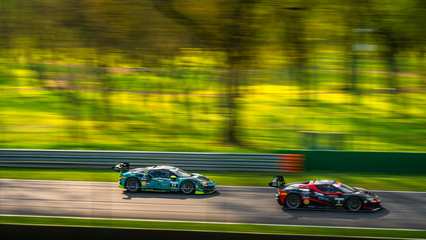
From the Apex to the Asphalt: 10 Production Cars with Unmistakable Motorsport DNA
For over a decade, I’ve witnessed firsthand the profound impact of motorsport on the automotive landscap
e. It’s more than just a weekend pastime for manufacturers; it’s a crucible of innovation, a proving ground for technology, and a potent marketing tool. The thrill of a roaring engine, the precision of a race-honed chassis – these aren’t just concepts reserved for the track. They are palpable sensations delivered to your steering wheel in a select group of production vehicles. Today, we delve into the fascinating realm of cars with motorsport DNA, exploring ten incredible machines that blur the lines between dedicated racing machines and street-legal marvels. These aren’t just cars with sporty aesthetics; they are vehicles that incorporate engines and engineering principles forged in the heat of competition, offering an unparalleled connection to the world of professional racing.
The allure of motorsport-inspired engines in road-going cars is undeniable. It speaks to a primal desire for performance, for engineering excellence pushed to its limits. When an automaker invests heavily in racing programs, particularly in high-stakes arenas like Formula 1, Le Mans, or top-tier GT racing, the benefits extend far beyond mere brand prestige. This dedication to pushing the envelope on the track directly influences the development of the cars you and I can purchase. Think about it: the extreme conditions of circuit racing demand robust, lightweight, and incredibly powerful powertrains. Engineers are forced to innovate at a pace unheard of in standard road car development. This relentless pursuit of speed and reliability results in breakthroughs in areas like advanced engine management, sophisticated aerodynamics, the utilization of exotic materials, and, crucially, the development of race-bred engines that eventually find their way into production models.
The “Win on Sunday, Sell on Monday” philosophy, a cornerstone of automotive marketing for decades, is experiencing a remarkable resurgence. Manufacturers are recognizing that success on the racetrack translates directly into consumer desire and, ultimately, sales. When a marque consistently dominates prestigious races, its entire product lineup benefits from that halo effect. Suddenly, even a family sedan can feel a touch more special when its manufacturer is synonymous with victory on the global motorsport stage. While the average driver may never pilot a Formula 1 car or a full-blown Le Mans prototype, the experience of driving a production car that shares its mechanical heart with these legendary machines offers a tangible, visceral connection to the world of professional racing. This is where the magic of track-derived powertrains truly shines.
The Symbiotic Relationship: Motorsport and the Road
The intertwined destiny of motorsport and road cars is a narrative that spans the entire history of the automobile. Racing, at its core, is an extreme engineering challenge. Cars are subjected to forces, temperatures, and stresses that would quickly render ordinary vehicles unusable. This environment serves as an unparalleled testing ground. Innovations that prove their mettle under such duress are then meticulously refined and adapted for broader application. Think of technologies we now take for granted: disc brakes, sophisticated anti-lock braking systems (ABS), advanced traction control, and even the ubiquitous paddle shifters that allow for lightning-fast gear changes. All of these were pioneered and perfected on the racetrack before becoming standard features in our daily drivers.
Beyond the technological trickle-down, motorsport success plays a critical role in shaping brand perception. A manufacturer that consistently triumphs in competitive series cultivates an image of engineering prowess, durability, and sheer performance. This emotional connection resonates deeply with consumers, elevating the desirability of their entire product portfolio. Even if the connection is indirect – a specific engine architecture used in a production car shares lineage with a race-winning powerplant – it imbues the road vehicle with a sense of heritage and capability. It’s about more than just speed; it’s about the underlying engineering philosophy, the commitment to excellence, and the sheer excitement that competition breeds.
Let’s explore ten remarkable examples where this ethos has been powerfully translated from the racetrack to the street, showcasing performance car engineering at its finest.
Alfa Romeo Montreal: A V8 Echo from the Endurance Circuit
The Alfa Romeo Montreal, a striking Italian sports coupe from the early 1970s, stands as a testament to the brand’s rich motorsport heritage. Nestled beneath its captivating Bertone-designed skin lies a 2.6-liter naturally aspirated V8 engine, a powerplant that traces its lineage directly back to Alfa Romeo’s formidable Tipo 33 sports prototype. This very engine, in various iterations, was instrumental in Alfa’s campaigns in grueling endurance races like the Targa Florio and the 24 Hours of Daytona, events that demanded unwavering reliability and searing performance.
 While the Montreal’s V8 was thoughtfully detuned for the rigors of public road use and emissions regulations of the era, it retained a significant portion of its motorsport character. It possessed a remarkable ability to rev freely, reaching up to 7,000 RPM, and delivered a spirited 200 horsepower. The distinctive, high-pitched wail of its V8 symphony, combined with its avant-garde styling, cemented the Montreal’s status as an underappreciated masterpiece, a car that truly offered a taste of racing pedigree on the open road. For enthusiasts seeking classic sports cars with racing heritage, the Montreal is a compelling proposition.
BMW M Cars: The Genesis of Performance
BMW’s M division is synonymous with performance, and many of its iconic models owe their existence and exceptional capabilities to direct motorsport involvement. The legendary BMW M1, a mid-engined supercar, was powered by the formidable 3.5-liter M88 inline-six engine. This powerplant was not merely inspired by racing; it was a direct product of BMW’s racing programs, specifically developed for the electrifying M1 ProCar series. This potent engine later found its way into the potent E24 M6 and the esteemed E28 M5, bringing a significant slice of race-car performance to these executive and luxury models.
Furthermore, the iconic four-cylinder S14 engine found in the E30 M3, a car that utterly dominated touring car championships worldwide, also shared significant engineering DNA with BMW’s racing engines. Its architecture was heavily influenced by the M88 and the fearsome M12 turbocharged Formula 1 engines. This direct lineage meant the E30 M3 inherited a chassis and powertrain meticulously honed for the rigors of competitive racing, making it one of the most capable and rewarding driver’s cars of its era. The M3, in particular, represents the pinnacle of BMW M performance heritage translating to road car excellence.
Chevrolet Camaro ZL1 (1969): A Can-Am Beast Unleashed
The 1969 Chevrolet Camaro ZL1 is a legendary muscle car that was, in essence, a production race car for the street. Its heart was the colossal 427 cubic-inch (7.0-liter) V8, an engine originally conceived and engineered for the brutal world of Can-Am racing. This all-aluminum behemoth was remarkably lightweight for its displacement, and in its full race trim, it was rumored to produce well over 500 horsepower. For its road-legal iteration, the powerplant was intentionally de-tuned to a still-potent 430 horsepower, though many believe the true output was significantly higher.
The ZL1 package transformed the already potent Camaro into a drag strip terror and a formidable competitor on road courses. Its engine found its way into numerous race cars competing in the SCCA Trans-Am series, further cementing its racing credentials. With an incredibly limited production run of just 69 units, the 1969 Camaro ZL1 is now an exceedingly rare and highly coveted collector’s item, representing one of the most extreme examples of American muscle cars with racing roots.
Ferrari Dino 206 GT: Formula 2 Prowess on Public Roads
While bearing the “Dino” moniker to differentiate it from its V12 brethren, the Ferrari Dino 206 GT was a groundbreaking sports car that carried the Prancing Horse’s spirit. Its compact 2.0-liter V6 engine was originally developed for Ferrari’s Formula 2 racing endeavors in the 1960s. This allowed the Dino to offer a sharp, agile driving experience that was perfectly suited to winding roads and spirited driving.
Though detuned for street use, the V6 retained its high-revving nature, delivering an enthusiastic 180 horsepower. This was ample performance for a car weighing just over 2,000 pounds, creating an exhilarating driving dynamic. The Dino marked Ferrari’s significant entry into the mid-engined V6 sports car segment, paving the way for future models and demonstrating that even smaller displacement engines, when imbued with Formula 2 race car technology, could deliver immense driving pleasure.
Ferrari F50: A Formula 1 Car in Disguise
The Ferrari F50, introduced to celebrate the marque’s 50th anniversary, represents perhaps the most direct and audacious application of a Formula 1 engine in a production car. Its heart is a glorious 4.7-liter naturally aspirated V12, derived directly from the engine that powered Ferrari’s 1990 Formula 1 challenger, the Tipo 641 (also known as the F1-90), driven by legends like Alain Prost.
This race-bred V12 is a mechanical marvel, capable of screaming to an ear-splitting 8,500 RPM and producing a colossal 513 horsepower. The F50 aimed to deliver an unfiltered, raw experience akin to driving an actual F1 car. With only minimal modifications necessary to comply with road regulations, it offered an unparalleled connection to the pinnacle of motorsport. For those seeking the ultimate Ferrari supercar with F1 DNA, the F50 stands unmatched.
Ford GT: A Homage to Le Mans Legends
The Ford GT is a modern supercar that proudly wears its racing heritage on its sleeve, serving as a direct homage to the legendary Ford GT40 that famously conquered the 24 Hours of Le Mans. The first generation GT, introduced in 2005, featured a formidable 5.4-liter supercharged V8. The development of this engine was deeply intertwined with Ford’s endurance racing programs, sharing architectural DNA with the powerplants used in their Daytona Prototype race cars, highlighting Ford GT race car technology in production form.
The subsequent generation GT, launched in 2017, continued this tradition with a twin-turbocharged 3.5-liter EcoBoost V6. This highly potent engine was also born from Ford’s extensive experience in endurance racing, showcasing the evolution of Ford performance engines across different racing disciplines. Both iterations of the Ford GT embody the spirit of their Le Mans-winning predecessors, offering breathtaking performance and unmistakable race-bred character.
While the Montreal’s V8 was thoughtfully detuned for the rigors of public road use and emissions regulations of the era, it retained a significant portion of its motorsport character. It possessed a remarkable ability to rev freely, reaching up to 7,000 RPM, and delivered a spirited 200 horsepower. The distinctive, high-pitched wail of its V8 symphony, combined with its avant-garde styling, cemented the Montreal’s status as an underappreciated masterpiece, a car that truly offered a taste of racing pedigree on the open road. For enthusiasts seeking classic sports cars with racing heritage, the Montreal is a compelling proposition.
BMW M Cars: The Genesis of Performance
BMW’s M division is synonymous with performance, and many of its iconic models owe their existence and exceptional capabilities to direct motorsport involvement. The legendary BMW M1, a mid-engined supercar, was powered by the formidable 3.5-liter M88 inline-six engine. This powerplant was not merely inspired by racing; it was a direct product of BMW’s racing programs, specifically developed for the electrifying M1 ProCar series. This potent engine later found its way into the potent E24 M6 and the esteemed E28 M5, bringing a significant slice of race-car performance to these executive and luxury models.
Furthermore, the iconic four-cylinder S14 engine found in the E30 M3, a car that utterly dominated touring car championships worldwide, also shared significant engineering DNA with BMW’s racing engines. Its architecture was heavily influenced by the M88 and the fearsome M12 turbocharged Formula 1 engines. This direct lineage meant the E30 M3 inherited a chassis and powertrain meticulously honed for the rigors of competitive racing, making it one of the most capable and rewarding driver’s cars of its era. The M3, in particular, represents the pinnacle of BMW M performance heritage translating to road car excellence.
Chevrolet Camaro ZL1 (1969): A Can-Am Beast Unleashed
The 1969 Chevrolet Camaro ZL1 is a legendary muscle car that was, in essence, a production race car for the street. Its heart was the colossal 427 cubic-inch (7.0-liter) V8, an engine originally conceived and engineered for the brutal world of Can-Am racing. This all-aluminum behemoth was remarkably lightweight for its displacement, and in its full race trim, it was rumored to produce well over 500 horsepower. For its road-legal iteration, the powerplant was intentionally de-tuned to a still-potent 430 horsepower, though many believe the true output was significantly higher.
The ZL1 package transformed the already potent Camaro into a drag strip terror and a formidable competitor on road courses. Its engine found its way into numerous race cars competing in the SCCA Trans-Am series, further cementing its racing credentials. With an incredibly limited production run of just 69 units, the 1969 Camaro ZL1 is now an exceedingly rare and highly coveted collector’s item, representing one of the most extreme examples of American muscle cars with racing roots.
Ferrari Dino 206 GT: Formula 2 Prowess on Public Roads
While bearing the “Dino” moniker to differentiate it from its V12 brethren, the Ferrari Dino 206 GT was a groundbreaking sports car that carried the Prancing Horse’s spirit. Its compact 2.0-liter V6 engine was originally developed for Ferrari’s Formula 2 racing endeavors in the 1960s. This allowed the Dino to offer a sharp, agile driving experience that was perfectly suited to winding roads and spirited driving.
Though detuned for street use, the V6 retained its high-revving nature, delivering an enthusiastic 180 horsepower. This was ample performance for a car weighing just over 2,000 pounds, creating an exhilarating driving dynamic. The Dino marked Ferrari’s significant entry into the mid-engined V6 sports car segment, paving the way for future models and demonstrating that even smaller displacement engines, when imbued with Formula 2 race car technology, could deliver immense driving pleasure.
Ferrari F50: A Formula 1 Car in Disguise
The Ferrari F50, introduced to celebrate the marque’s 50th anniversary, represents perhaps the most direct and audacious application of a Formula 1 engine in a production car. Its heart is a glorious 4.7-liter naturally aspirated V12, derived directly from the engine that powered Ferrari’s 1990 Formula 1 challenger, the Tipo 641 (also known as the F1-90), driven by legends like Alain Prost.
This race-bred V12 is a mechanical marvel, capable of screaming to an ear-splitting 8,500 RPM and producing a colossal 513 horsepower. The F50 aimed to deliver an unfiltered, raw experience akin to driving an actual F1 car. With only minimal modifications necessary to comply with road regulations, it offered an unparalleled connection to the pinnacle of motorsport. For those seeking the ultimate Ferrari supercar with F1 DNA, the F50 stands unmatched.
Ford GT: A Homage to Le Mans Legends
The Ford GT is a modern supercar that proudly wears its racing heritage on its sleeve, serving as a direct homage to the legendary Ford GT40 that famously conquered the 24 Hours of Le Mans. The first generation GT, introduced in 2005, featured a formidable 5.4-liter supercharged V8. The development of this engine was deeply intertwined with Ford’s endurance racing programs, sharing architectural DNA with the powerplants used in their Daytona Prototype race cars, highlighting Ford GT race car technology in production form.
The subsequent generation GT, launched in 2017, continued this tradition with a twin-turbocharged 3.5-liter EcoBoost V6. This highly potent engine was also born from Ford’s extensive experience in endurance racing, showcasing the evolution of Ford performance engines across different racing disciplines. Both iterations of the Ford GT embody the spirit of their Le Mans-winning predecessors, offering breathtaking performance and unmistakable race-bred character.
 Jaguar XJ220: A Group C Racer’s Heartbeat
The Jaguar XJ220, a sensational supercar from the early 1990s, is a prime example of how motorsport engineering can elevate a road car to extraordinary heights. Initially planned with a V12 engine, the production version astonishingly incorporated a 3.5-liter twin-turbocharged V6 sourced directly from the formidable Jaguar XJR-11 Group C race car. This competition-honed engine was a masterpiece of its time, pushing the boundaries of performance for road-legal vehicles.
This race-bred V6 propelled the XJ220 to a blistering top speed of 217 mph, crowning it the world’s fastest production car for a significant period. The XJ220’s engine represented one of the most advanced and track-proven powertrains ever to find its way into a road-going automobile, making it a truly exceptional example of supercar engineering with racing pedigree.
Plymouth Belvedere (1964): The NASCAR Hemi Revolution
The 1964 Plymouth Belvedere might not immediately strike one as a dedicated race car, but lurking beneath its seemingly conventional exterior was a legend: the 426 Hemi V8. This monstrous engine was specifically developed and unleashed upon the NASCAR circuit, where it quickly became a dominant force. Dubbed the “Race Hemi,” its unparalleled power and torque proved too much for the competition, leading to its ban from stock car racing.
However, the Hemi’s prowess couldn’t be contained. It soon found its way into Plymouth’s production lineup, and the Belvedere equipped with this powerplant became an instant icon. Producing a thunderous 425 horsepower, the road-going Belvedere was one of the most potent muscle cars of the 1960s, a reputation that continued with its spiritual successor, the ‘Cuda. This car exemplifies how NASCAR-developed engines can transform a street car into a formidable performance machine.
Porsche 918 Spyder: Hybrid Hypercar with LMP Roots
The Porsche 918 Spyder, a groundbreaking hybrid hypercar, showcases the sophisticated integration of motorsport technology into a road-legal supercar. Its 4.6-liter naturally aspirated V8 engine is based on the highly successful RS Spyder, a prototype race car that competed valiantly in the LMP2 class at the grueling 24 Hours of Le Mans.
In the 918 Spyder, this race-derived V8 is paired with advanced electric motors, resulting in a staggering combined output of 875 horsepower. This immense power allows the 918 to achieve hypercar-level acceleration, famously completing the 0-60 mph sprint in a mere 2.2 seconds (as confirmed by independent testing), placing it among the quickest production cars ever made. While the electric motors contribute significantly to its blistering performance, it is the LMP race-derived V8 that provides the emotional core and the thrilling auditory experience that defines the 918 Spyder.
Porsche Carrera GT: An Analog Masterpiece Fueled by Racing Ambition
The Porsche Carrera GT is widely celebrated as one of the greatest analog supercars ever created, and its legendary status is intrinsically linked to its magnificent ten-cylinder engine. The potent 5.7-liter V10 powerplant was originally conceived for Porsche’s Formula 1 program during the V10 era. When that project didn’t materialize as planned, the engine was shelved, only to be later earmarked for a Le Mans prototype car that, unfortunately, never saw track action.
Instead of letting this potent engine go to waste, Porsche made the inspired decision to transplant it into its flagship supercar. This race-built engine allowed the Carrera GT to produce an exhilarating 612 horsepower and rev with incredible alacrity to an astonishing 8,000 RPM. Combined with its exceptionally lightweight construction and pure, unfiltered driving dynamics, the Carrera GT remains a challenging yet immensely rewarding supercar, a true embodiment of Porsche’s racing DNA in a road car.
The Enduring Thrill of the Track-Worn Engine
These ten vehicles represent the pinnacle of automotive engineering, where the passion and innovation of motorsport have been masterfully translated into exhilarating road-going experiences. They serve as powerful reminders that the quest for performance, reliability, and sheer driving pleasure is a continuous cycle of advancement, fueled by the relentless pursuit of victory on the track.
If you’re captivated by the idea of owning a piece of motorsport history and experiencing the thrill of a performance car with racing heritage, exploring these iconic models is an essential step. We invite you to delve deeper into the specifications, the driving dynamics, and the rich histories behind these incredible machines.
Jaguar XJ220: A Group C Racer’s Heartbeat
The Jaguar XJ220, a sensational supercar from the early 1990s, is a prime example of how motorsport engineering can elevate a road car to extraordinary heights. Initially planned with a V12 engine, the production version astonishingly incorporated a 3.5-liter twin-turbocharged V6 sourced directly from the formidable Jaguar XJR-11 Group C race car. This competition-honed engine was a masterpiece of its time, pushing the boundaries of performance for road-legal vehicles.
This race-bred V6 propelled the XJ220 to a blistering top speed of 217 mph, crowning it the world’s fastest production car for a significant period. The XJ220’s engine represented one of the most advanced and track-proven powertrains ever to find its way into a road-going automobile, making it a truly exceptional example of supercar engineering with racing pedigree.
Plymouth Belvedere (1964): The NASCAR Hemi Revolution
The 1964 Plymouth Belvedere might not immediately strike one as a dedicated race car, but lurking beneath its seemingly conventional exterior was a legend: the 426 Hemi V8. This monstrous engine was specifically developed and unleashed upon the NASCAR circuit, where it quickly became a dominant force. Dubbed the “Race Hemi,” its unparalleled power and torque proved too much for the competition, leading to its ban from stock car racing.
However, the Hemi’s prowess couldn’t be contained. It soon found its way into Plymouth’s production lineup, and the Belvedere equipped with this powerplant became an instant icon. Producing a thunderous 425 horsepower, the road-going Belvedere was one of the most potent muscle cars of the 1960s, a reputation that continued with its spiritual successor, the ‘Cuda. This car exemplifies how NASCAR-developed engines can transform a street car into a formidable performance machine.
Porsche 918 Spyder: Hybrid Hypercar with LMP Roots
The Porsche 918 Spyder, a groundbreaking hybrid hypercar, showcases the sophisticated integration of motorsport technology into a road-legal supercar. Its 4.6-liter naturally aspirated V8 engine is based on the highly successful RS Spyder, a prototype race car that competed valiantly in the LMP2 class at the grueling 24 Hours of Le Mans.
In the 918 Spyder, this race-derived V8 is paired with advanced electric motors, resulting in a staggering combined output of 875 horsepower. This immense power allows the 918 to achieve hypercar-level acceleration, famously completing the 0-60 mph sprint in a mere 2.2 seconds (as confirmed by independent testing), placing it among the quickest production cars ever made. While the electric motors contribute significantly to its blistering performance, it is the LMP race-derived V8 that provides the emotional core and the thrilling auditory experience that defines the 918 Spyder.
Porsche Carrera GT: An Analog Masterpiece Fueled by Racing Ambition
The Porsche Carrera GT is widely celebrated as one of the greatest analog supercars ever created, and its legendary status is intrinsically linked to its magnificent ten-cylinder engine. The potent 5.7-liter V10 powerplant was originally conceived for Porsche’s Formula 1 program during the V10 era. When that project didn’t materialize as planned, the engine was shelved, only to be later earmarked for a Le Mans prototype car that, unfortunately, never saw track action.
Instead of letting this potent engine go to waste, Porsche made the inspired decision to transplant it into its flagship supercar. This race-built engine allowed the Carrera GT to produce an exhilarating 612 horsepower and rev with incredible alacrity to an astonishing 8,000 RPM. Combined with its exceptionally lightweight construction and pure, unfiltered driving dynamics, the Carrera GT remains a challenging yet immensely rewarding supercar, a true embodiment of Porsche’s racing DNA in a road car.
The Enduring Thrill of the Track-Worn Engine
These ten vehicles represent the pinnacle of automotive engineering, where the passion and innovation of motorsport have been masterfully translated into exhilarating road-going experiences. They serve as powerful reminders that the quest for performance, reliability, and sheer driving pleasure is a continuous cycle of advancement, fueled by the relentless pursuit of victory on the track.
If you’re captivated by the idea of owning a piece of motorsport history and experiencing the thrill of a performance car with racing heritage, exploring these iconic models is an essential step. We invite you to delve deeper into the specifications, the driving dynamics, and the rich histories behind these incredible machines.
 Are you ready to experience the thrill of motorsport DNA firsthand? Discover the perfect vehicle that bridges the gap between the racetrack and your driveway. Contact our expert team today for a personalized consultation and explore our curated selection of vehicles with unparalleled racing pedigree.