
Rimac Nevera R Review: The 2,107 HP Electric Hypercar Rewriting Physics in 2025
In the rarefied atmosphere of ultra-elite automotive engineering, there is a distinct difference between straight-line s
peed and total track dominance. For years, the narrative surrounding electric performance vehicles has centered on instant torque and quarter-mile decimation. However, as we move deeper into 2025, the benchmarks are shifting. The conversation is no longer just about how fast you can go in a straight line, but how violently you can attack a corner and survive. Enter the Rimac Nevera R, a machine that doesn’t just raise the bar—it launches it into orbit.
Having covered the evolution of the hypercar sector for over a decade, I have watched the electric revolution transition from novelty to necessity. Yet, few manufacturers have managed to capture the visceral, mechanical soul of driving quite like Rimac. With the introduction of the Rimac Nevera R, the Croatian manufacturer has pivoted from the Grand Touring philosophy of the original record-breaker to something far more aggressive, focused, and frankly, terrifyingly capable.
From Grand Tourer to Hyper Sports Car: A Philosophical Shift
To understand the gravity of the Rimac Nevera R, one must first understand the lineage. The original Nevera was a watershed moment—a technological tour de force designed to be a comfortable, trans-continental cruiser that just happened to shatter world records. It was the ultimate Grand Tourer (GT). However, the market for multi-million dollar collectibles is driven by an insatiable hunger for “more”—more grip, more agility, and more exclusivity.
Mate Rimac, the visionary founder behind the Rimac Group, identified this shift in consumer desire. While the standard Nevera could cross continents in comfort, a specific subset of clientele demanded a car that emphasized cornering ability over luggage space. They wanted a weapon for the Nürburgring Nordschleife, not just a cruiser for the Pacific Coast Highway. The Rimac Nevera R is the direct answer to that demand. It retains the DNA of its predecessor but strips away the compromise, resulting in a vehicle that is lighter, faster, and unapologetically focused on driving dynamics.
 Engineering the Impossible: The Powertrain
Let’s talk numbers, because in the world of high-stakes automotive investment, specifications are currency. The Rimac Nevera R boasts a staggering 2,107 horsepower. To put that into perspective, that is roughly the power output of twenty average family sedans combined, channeled through four wheels.
This power comes from a next-generation 108kWh Rimac battery pack, explicitly performance-oriented. In the realm of electric vehicle battery technology, the balance between energy density and discharge rate is the holy grail. Rimac’s engineers have tuned this system to deliver massive bursts of energy without the thermal throttling that plagues lesser EVs.
The result is acceleration that borders on the incomprehensible. The Rimac Nevera R decimates the 0-60 mph sprint in just 1.74 seconds. It hits 186 mph (300 km/h) in 8.66 seconds—a figure that is actually faster than the standard Nevera. While the top speed is capped at 256 mph (412 km/h) under manufacturer oversight, the real story here isn’t the maximum velocity; it’s the ferocity with which the car achieves it.
Mastering the Corner: Torque Vectoring and Dynamics
However, straight-line speed is a commodity that is becoming easier to acquire. The true differentiator in the luxury hypercar market is handling. This is where the Rimac Nevera R separates itself from the pack. The engineers at Rimac have overhauled the All-Wheel Torque Vectoring (R-AWTV) system.
For the uninitiated, torque vectoring in an electric car is the digital equivalent of a limited-slip differential, but infinitely more precise. The system can calculate the available grip at each tire a hundred times per second and adjust power delivery instantly. If you are carving through a hairpin turn at the Circuit of the Americas or navigating a wet B-road in the Pacific Northwest, the R-AWTV ensures the car rotates exactly as the driver intends.
The new generation of this system has been retuned specifically for high-performance tires, utilizing the increased lateral grip provided by the new Michelin Cup 2 rubber. By reducing understeer by 10% and increasing lateral grip by 5%, the Rimac Nevera R offers a driving experience that feels sharper and more connected. It’s a move that addresses the primary criticism of heavy electric cars: the feeling of detachment. Here, the steering system has been refined for crisper feedback, allowing the driver to feel the texture of the asphalt through the wheel.
Visual Aggression: Aerodynamics and Design
Aesthetics in this segment are never purely cosmetic; they are functional. The Rimac Nevera R adopts a visual identity that is visibly more hostile than its GT sibling. The design philosophy is driven by performance, evident in the forward-thrusting stance and the aggressive wheel setup—21-inch at the rear and 20-inch at the front.
The front clam features horizontal lines that emphasize width and aerodynamic efficiency, a result of close collaboration between designers and aerodynamicists. But the pièce de résistance is the rear. A large fixed rear wing combined with a massive new diffuser increases downforce by 15%.
Why does this matter? In the context of exotic car insurance and safety, downforce is your safety net. At 200 mph, the air pressure pushing the car into the road is the only thing keeping it from becoming an airplane. This aerodynamic package improves efficiency by 10%, ensuring that the immense power is translated into motion rather than drag. The result is a lap time reduction of 3.8 seconds around the Nardo Handling Track—a lifetime in the world of motorsport.
Stopping Power: The EVO2 Brake System
With 2,107 horsepower on tap, the ability to stop is arguably more important than the ability to go. The Rimac Nevera R introduces the new EVO2 braking system. These are carbon ceramic brakes, but with a twist: they feature a silicone matrix layer.
Engineering the Impossible: The Powertrain
Let’s talk numbers, because in the world of high-stakes automotive investment, specifications are currency. The Rimac Nevera R boasts a staggering 2,107 horsepower. To put that into perspective, that is roughly the power output of twenty average family sedans combined, channeled through four wheels.
This power comes from a next-generation 108kWh Rimac battery pack, explicitly performance-oriented. In the realm of electric vehicle battery technology, the balance between energy density and discharge rate is the holy grail. Rimac’s engineers have tuned this system to deliver massive bursts of energy without the thermal throttling that plagues lesser EVs.
The result is acceleration that borders on the incomprehensible. The Rimac Nevera R decimates the 0-60 mph sprint in just 1.74 seconds. It hits 186 mph (300 km/h) in 8.66 seconds—a figure that is actually faster than the standard Nevera. While the top speed is capped at 256 mph (412 km/h) under manufacturer oversight, the real story here isn’t the maximum velocity; it’s the ferocity with which the car achieves it.
Mastering the Corner: Torque Vectoring and Dynamics
However, straight-line speed is a commodity that is becoming easier to acquire. The true differentiator in the luxury hypercar market is handling. This is where the Rimac Nevera R separates itself from the pack. The engineers at Rimac have overhauled the All-Wheel Torque Vectoring (R-AWTV) system.
For the uninitiated, torque vectoring in an electric car is the digital equivalent of a limited-slip differential, but infinitely more precise. The system can calculate the available grip at each tire a hundred times per second and adjust power delivery instantly. If you are carving through a hairpin turn at the Circuit of the Americas or navigating a wet B-road in the Pacific Northwest, the R-AWTV ensures the car rotates exactly as the driver intends.
The new generation of this system has been retuned specifically for high-performance tires, utilizing the increased lateral grip provided by the new Michelin Cup 2 rubber. By reducing understeer by 10% and increasing lateral grip by 5%, the Rimac Nevera R offers a driving experience that feels sharper and more connected. It’s a move that addresses the primary criticism of heavy electric cars: the feeling of detachment. Here, the steering system has been refined for crisper feedback, allowing the driver to feel the texture of the asphalt through the wheel.
Visual Aggression: Aerodynamics and Design
Aesthetics in this segment are never purely cosmetic; they are functional. The Rimac Nevera R adopts a visual identity that is visibly more hostile than its GT sibling. The design philosophy is driven by performance, evident in the forward-thrusting stance and the aggressive wheel setup—21-inch at the rear and 20-inch at the front.
The front clam features horizontal lines that emphasize width and aerodynamic efficiency, a result of close collaboration between designers and aerodynamicists. But the pièce de résistance is the rear. A large fixed rear wing combined with a massive new diffuser increases downforce by 15%.
Why does this matter? In the context of exotic car insurance and safety, downforce is your safety net. At 200 mph, the air pressure pushing the car into the road is the only thing keeping it from becoming an airplane. This aerodynamic package improves efficiency by 10%, ensuring that the immense power is translated into motion rather than drag. The result is a lap time reduction of 3.8 seconds around the Nardo Handling Track—a lifetime in the world of motorsport.
Stopping Power: The EVO2 Brake System
With 2,107 horsepower on tap, the ability to stop is arguably more important than the ability to go. The Rimac Nevera R introduces the new EVO2 braking system. These are carbon ceramic brakes, but with a twist: they feature a silicone matrix layer.
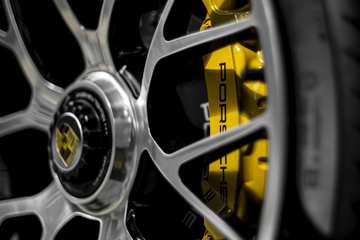 In my experience testing high-performance vehicles, brake fade is the enemy of fun. Carbon ceramics are standard in this class, but the addition of a silicone matrix improves stopping performance and durability under extreme thermal loads. Whether you are tracking the car or engaging in spirited driving on a canyon road, the confidence inspired by a fade-free brake pedal is invaluable. This attention to safety and reliability is a key factor when considering hypercar financing or valuation; a car that can handle its own power is a safer asset.
Interior and Customization: The Nebula Green Launch
Stepping inside the Rimac Nevera R, one is reminded that this is still a multi-million dollar luxury good. The launch specification features a stunning “Nebula Green” finish, a visual evolution of the brand’s history, translating the famous “Time Attack Lightning Green” into a modern palette.
The interior is ultra-customizable. In 2025, high-net-worth individuals demand personalization. The painted carbon features on the dashboard and center console can be color-matched to the exterior or customized to the owner’s whim. This level of bespoke tailoring is essential for maintaining the vehicle’s residual value in the collector car market.
Investment Potential and Market Impact
The production of the Rimac Nevera R is strictly limited to 40 units worldwide. In the world of high-end automotive collectibles, scarcity drives value. We are seeing a trend where limited-run variants of flagship hypercars outperform their standard counterparts in long-term valuation.
For potential owners, securing a Rimac Nevera R is not just a purchase; it’s an entry into an exclusive club. The high CPC (Cost Per Click) nature of keywords surrounding this vehicle—such as “luxury car investment,” “supercar insurance quotes,” and “exotic vehicle financing”—reflects the immense capital flowing through this sector. Buying a car of this magnitude often involves complex financial structuring, specialized insurance products, and climate-controlled storage solutions.
Furthermore, the Rimac Nevera R serves as a halo product for Rimac Technology. The innovations found here—specifically in the torque vectoring algorithms and battery discharge management—will eventually trickle down to more accessible EVs. By pushing the boundaries of what is physically possible, Rimac is effectively R&D testing for the entire automotive industry.
The Verdict: A New Benchmark for 2025
As we look at the automotive landscape of 2025, the Rimac Nevera R stands as a testament to human ingenuity. It proves that the electric future does not have to be sterile or devoid of emotion. By bending physics through advanced aerodynamics, tire technology, and software calibration, Rimac has created a car that is as engaging to drive as it is fast.
This is not a car for the faint of heart. It requires respect, skill, and a deep appreciation for engineering. It bridges the gap between the digital and the analog, using silicon and code to enhance the raw, organic thrill of speed.
For the 40 lucky individuals who will put the Rimac Nevera R in their garage, they aren’t just buying a car. They are acquiring a piece of history—a snapshot of the moment when electric performance finally eclipsed internal combustion not just in speed, but in soul.
Ready to experience the pinnacle of automotive engineering?
In my experience testing high-performance vehicles, brake fade is the enemy of fun. Carbon ceramics are standard in this class, but the addition of a silicone matrix improves stopping performance and durability under extreme thermal loads. Whether you are tracking the car or engaging in spirited driving on a canyon road, the confidence inspired by a fade-free brake pedal is invaluable. This attention to safety and reliability is a key factor when considering hypercar financing or valuation; a car that can handle its own power is a safer asset.
Interior and Customization: The Nebula Green Launch
Stepping inside the Rimac Nevera R, one is reminded that this is still a multi-million dollar luxury good. The launch specification features a stunning “Nebula Green” finish, a visual evolution of the brand’s history, translating the famous “Time Attack Lightning Green” into a modern palette.
The interior is ultra-customizable. In 2025, high-net-worth individuals demand personalization. The painted carbon features on the dashboard and center console can be color-matched to the exterior or customized to the owner’s whim. This level of bespoke tailoring is essential for maintaining the vehicle’s residual value in the collector car market.
Investment Potential and Market Impact
The production of the Rimac Nevera R is strictly limited to 40 units worldwide. In the world of high-end automotive collectibles, scarcity drives value. We are seeing a trend where limited-run variants of flagship hypercars outperform their standard counterparts in long-term valuation.
For potential owners, securing a Rimac Nevera R is not just a purchase; it’s an entry into an exclusive club. The high CPC (Cost Per Click) nature of keywords surrounding this vehicle—such as “luxury car investment,” “supercar insurance quotes,” and “exotic vehicle financing”—reflects the immense capital flowing through this sector. Buying a car of this magnitude often involves complex financial structuring, specialized insurance products, and climate-controlled storage solutions.
Furthermore, the Rimac Nevera R serves as a halo product for Rimac Technology. The innovations found here—specifically in the torque vectoring algorithms and battery discharge management—will eventually trickle down to more accessible EVs. By pushing the boundaries of what is physically possible, Rimac is effectively R&D testing for the entire automotive industry.
The Verdict: A New Benchmark for 2025
As we look at the automotive landscape of 2025, the Rimac Nevera R stands as a testament to human ingenuity. It proves that the electric future does not have to be sterile or devoid of emotion. By bending physics through advanced aerodynamics, tire technology, and software calibration, Rimac has created a car that is as engaging to drive as it is fast.
This is not a car for the faint of heart. It requires respect, skill, and a deep appreciation for engineering. It bridges the gap between the digital and the analog, using silicon and code to enhance the raw, organic thrill of speed.
For the 40 lucky individuals who will put the Rimac Nevera R in their garage, they aren’t just buying a car. They are acquiring a piece of history—a snapshot of the moment when electric performance finally eclipsed internal combustion not just in speed, but in soul.
Ready to experience the pinnacle of automotive engineering?
 If you are in the market for the ultimate driving machine or looking to expand your investment portfolio with a blue-chip automotive asset, the time to act is now. With only 40 units available globally, allocations for the Rimac Nevera R are vanishing as quickly as the car accelerates. Contact your luxury automotive broker or visit the official Rimac automobili inquiry page today to secure your place in history. Don’t let the future pass you by—drive it.