
Pagani Utopia 2025 Review: The Analog V12 Masterpiece That Defies the Digital Age
In the rarefied atmosphere of ultra-luxury automotive engineering, there is a palpable tension between the inevitable
march toward electrification and the stubborn, soulful resistance of internal combustion. Most manufacturers have surrendered, trading cylinders for battery cells in a bid to chase specification sheet supremacy. However, there remains one sanctuary where art and science still dance to the rhythm of twelve cylinders firing in sequence. That sanctuary is Modena, and its high priest is Horacio Pagani.
The Pagani Utopia 2025 is not merely a car; it is a defiant, rolling manifesto. Having spent over a decade analyzing the supercar market, from the stripped-out racers of Stuttgart to the hybrid missiles of Maranello, I can tell you that the Utopia is different. It doesn’t want to simulate reality; it wants to heighten it. With a price tag hovering around the $3 million mark (depending on your specific bespoke commissioning), this successor to the Huayra ignores the contemporary obsession with 0-60 times and focuses entirely on a metric that algorithms cannot quantify: emotion.
The Philosophy of Utopia: Art Meets Science
To understand the Pagani Utopia 2025, one must first understand the ethos of its creator. Horacio Pagani has famously drawn inspiration from Leonardo da Vinci’s principle that art and science should exist hand-in-hand. While other hypercars look like they were designed purely by a wind tunnel, the Utopia looks like it was sculpted by the wind itself, then refined by a jeweler.
This is only the third all-new model line in the company’s history, following the legendary Zonda and the active-aero-laden Huayra. The wait has been substantial, but the payoff is extraordinary. The design language avoids the aggressive, jagged aero appendages found on many modern track toys. Instead, it features smooth, flowing lines that effectively manage airflow without ruining the silhouette. It is a lesson in aerodynamic efficiency achieved through form, not just add-ons.
For the collector considering a Pagani Utopia 2025 as part of a diversified high-performance vehicle portfolio, the visual drama is paramount. The car sits on the road with a predatory grace. It is compact, lacking the unwieldy width that makes driving a Lamborghini Revuelto in a city like Los Angeles or Miami a nerve-wracking affair. The Utopia feels approachable, yet undeniably exotic.
The Heart of the Matter: AMG’s V12 Masterclass
Turn the key—a sculptural object in its own right—and you aren’t greeted by the silence of an EV startup or the whir of a hybrid motor. You are met with the awakening of a 6.0-liter, twin-turbocharged V12 engine. Built exclusively for Pagani by Mercedes-AMG in Affalterbach, this power plant is a marvel of thermal dynamics and mechanical force.
The numbers are staggering, yet they tell only half the story. The engine produces 852 horsepower and roughly 811 lb-ft of torque. In the world of 2,000-horsepower electric rimac refrigerators, 852 might sound conservative. It is not. The delivery of this power is what sets the Pagani Utopia 2025 apart. The torque is available almost instantly, creating a sensation of endless, elastic thrust.
 When you pin the throttle in third gear, the longitudinal G-force doesn’t just push you back; it compresses your lungs. It is a relentless, surging acceleration that feels more like a jet taking off than a car accelerating. The turbo lag is virtually non-existent, a testament to the tuning wizardry at AMG and Pagani. The sound, meanwhile, is a rich, baritone roar that climbs into a mechanical scream as you approach the 6,700 RPM redline. It is a sound that requires no synthetic enhancement through the speakers. It is pure, unadulterated combustion.
The Transmission: Saving the Manual
Perhaps the most headline-worthy feature of the Pagani Utopia 2025 is the gearbox. In a world where dual-clutch automatics are the standard for chasing lap times, Pagani offers a seven-speed manual transmission.
Let that sink in. A brand-new, V12 hypercar in 2025 with a clutch pedal.
During my time in the industry, I have seen the manual transmission fade into obscurity, relegated to base models or niche heritage editions. Pagani has placed it front and center. The shifter mechanism is an exposed masterpiece of billet aluminum, rising from the center tunnel like a skeletal sculpture. You can see the linkages moving as you select a gear.
The shift action is precise, mechanical, and immensely satisfying. It requires intention. You cannot lazily flick a paddle while scrolling through your playlist. You must be involved in the process of driving. For those who prefer a two-pedal setup, an automated manual is available, but nearly 70% of buyers are opting for the stick shift. This speaks volumes about what the ultra-high-net-worth demographic truly values: engagement over easy speed.
The clutch is surprisingly light, making the car usable in traffic—a rare trait for a high-horsepower manual. Whether you are navigating the coastal roads of Malibu or the tight streets of Monaco, the Pagani Utopia 2025 remains compliant. It brings back the “heel-and-toe” downshift, an art form that connects the driver to the machine in a way that no software update ever could.
Chassis and Handling: The Science of Lightweighting
Mass is the enemy of performance. While the industry trends toward heavy battery packs, the Pagani Utopia 2025 tips the scales at a featherweight 2,822 lbs (1,280 kg) dry. This is achieved through the extensive use of Carbo-Titanium HP62 G2 and Carbo-Triax HP62, proprietary composite materials that offer the rigidity of carbon fiber with the tensile strength of titanium.
This lack of weight transforms the driving experience. On the Futa Pass, a winding stretch of road near the factory in Italy, the Utopia changes direction with telepathic immediacy. There is no inertia to overcome. You turn the wheel, and the nose darts toward the apex.
The suspension utilizes semi-active dampers that constantly analyze the road surface. In “Comfort” mode, the ride is shockingly supple, absorbing bumps that would send a shudder through a stiffly sprung track car. Switch to “Race” mode, and the car tightens up, eliminating body roll and sharpening the throttle response.
The tires, massive Pirelli P Zero Corsa rubber developed specifically for this car (21 inches front, 22 inches rear), provide immense mechanical grip. Yet, because the car is light, it doesn’t rely solely on the tires to mask its weight. The steering is hydraulically assisted—another nod to analog purity—providing feedback that electric steering racks simply filter out. You can feel the texture of the asphalt through your fingertips.
Interior Craftsmanship: A Feast for the Senses
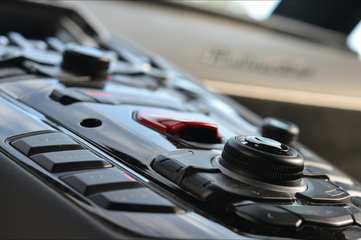
Stepping inside the Pagani Utopia 2025 via the dihedral doors is an event. The cabin is a rejection of the “screens everywhere” trend. While there is a digital display in the instrument cluster for essential data, the dashboard is dominated by analog dials and physical switchgear.
Every toggle switch, every bezel, and every vent is machined from solid blocks of aluminum. The tactility is unmatched. When you flip a switch, it feels heavy and substantial, clicking with the precision of a Swiss chronograph. The leather is sourced from the finest tanneries, stitched with a level of obsession that rivals Hermes.
The steering wheel is a work of art, milled from a single 43kg block of aluminum down to a 1.6kg frame. It is these details that justify the investment. You aren’t just paying for horsepower; you are paying for the thousands of hours of skilled labor required to finish the interior components.
The “skeletal” theme continues with the instrument binnacle, where the dials reveal their internal gears. It’s a steampunk fantasy realized with aerospace-grade materials. The interior lighting is subtle, highlighting the floating shapes of the dashboard at night. It is an environment that feels special whether you are driving at 200 mph or sitting parked in a climate-controlled garage.
The Economics of Hypercar Ownership
Owning a Pagani Utopia 2025 is as much a financial decision as it is an emotional one. Vehicles in this stratosphere often transcend the traditional depreciation curve of luxury autos. The Pagani Zonda, for instance, has appreciated wildly, with some examples trading for over $10 million.
For the savvy investor, the Utopia represents a tangible asset with high liquidity potential in the exclusive car collection market. High-CPC keywords like “classic car investment” and “exotic car insurance” become relevant here. Insuring a vehicle of this caliber requires specialized carriers who understand the agreed-value nature of bespoke hypercars.
When you pin the throttle in third gear, the longitudinal G-force doesn’t just push you back; it compresses your lungs. It is a relentless, surging acceleration that feels more like a jet taking off than a car accelerating. The turbo lag is virtually non-existent, a testament to the tuning wizardry at AMG and Pagani. The sound, meanwhile, is a rich, baritone roar that climbs into a mechanical scream as you approach the 6,700 RPM redline. It is a sound that requires no synthetic enhancement through the speakers. It is pure, unadulterated combustion.
The Transmission: Saving the Manual
Perhaps the most headline-worthy feature of the Pagani Utopia 2025 is the gearbox. In a world where dual-clutch automatics are the standard for chasing lap times, Pagani offers a seven-speed manual transmission.
Let that sink in. A brand-new, V12 hypercar in 2025 with a clutch pedal.
During my time in the industry, I have seen the manual transmission fade into obscurity, relegated to base models or niche heritage editions. Pagani has placed it front and center. The shifter mechanism is an exposed masterpiece of billet aluminum, rising from the center tunnel like a skeletal sculpture. You can see the linkages moving as you select a gear.
The shift action is precise, mechanical, and immensely satisfying. It requires intention. You cannot lazily flick a paddle while scrolling through your playlist. You must be involved in the process of driving. For those who prefer a two-pedal setup, an automated manual is available, but nearly 70% of buyers are opting for the stick shift. This speaks volumes about what the ultra-high-net-worth demographic truly values: engagement over easy speed.
The clutch is surprisingly light, making the car usable in traffic—a rare trait for a high-horsepower manual. Whether you are navigating the coastal roads of Malibu or the tight streets of Monaco, the Pagani Utopia 2025 remains compliant. It brings back the “heel-and-toe” downshift, an art form that connects the driver to the machine in a way that no software update ever could.
Chassis and Handling: The Science of Lightweighting
Mass is the enemy of performance. While the industry trends toward heavy battery packs, the Pagani Utopia 2025 tips the scales at a featherweight 2,822 lbs (1,280 kg) dry. This is achieved through the extensive use of Carbo-Titanium HP62 G2 and Carbo-Triax HP62, proprietary composite materials that offer the rigidity of carbon fiber with the tensile strength of titanium.
This lack of weight transforms the driving experience. On the Futa Pass, a winding stretch of road near the factory in Italy, the Utopia changes direction with telepathic immediacy. There is no inertia to overcome. You turn the wheel, and the nose darts toward the apex.
The suspension utilizes semi-active dampers that constantly analyze the road surface. In “Comfort” mode, the ride is shockingly supple, absorbing bumps that would send a shudder through a stiffly sprung track car. Switch to “Race” mode, and the car tightens up, eliminating body roll and sharpening the throttle response.
The tires, massive Pirelli P Zero Corsa rubber developed specifically for this car (21 inches front, 22 inches rear), provide immense mechanical grip. Yet, because the car is light, it doesn’t rely solely on the tires to mask its weight. The steering is hydraulically assisted—another nod to analog purity—providing feedback that electric steering racks simply filter out. You can feel the texture of the asphalt through your fingertips.
Interior Craftsmanship: A Feast for the Senses
Stepping inside the Pagani Utopia 2025 via the dihedral doors is an event. The cabin is a rejection of the “screens everywhere” trend. While there is a digital display in the instrument cluster for essential data, the dashboard is dominated by analog dials and physical switchgear.
Every toggle switch, every bezel, and every vent is machined from solid blocks of aluminum. The tactility is unmatched. When you flip a switch, it feels heavy and substantial, clicking with the precision of a Swiss chronograph. The leather is sourced from the finest tanneries, stitched with a level of obsession that rivals Hermes.
The steering wheel is a work of art, milled from a single 43kg block of aluminum down to a 1.6kg frame. It is these details that justify the investment. You aren’t just paying for horsepower; you are paying for the thousands of hours of skilled labor required to finish the interior components.
The “skeletal” theme continues with the instrument binnacle, where the dials reveal their internal gears. It’s a steampunk fantasy realized with aerospace-grade materials. The interior lighting is subtle, highlighting the floating shapes of the dashboard at night. It is an environment that feels special whether you are driving at 200 mph or sitting parked in a climate-controlled garage.
The Economics of Hypercar Ownership
Owning a Pagani Utopia 2025 is as much a financial decision as it is an emotional one. Vehicles in this stratosphere often transcend the traditional depreciation curve of luxury autos. The Pagani Zonda, for instance, has appreciated wildly, with some examples trading for over $10 million.
For the savvy investor, the Utopia represents a tangible asset with high liquidity potential in the exclusive car collection market. High-CPC keywords like “classic car investment” and “exotic car insurance” become relevant here. Insuring a vehicle of this caliber requires specialized carriers who understand the agreed-value nature of bespoke hypercars.
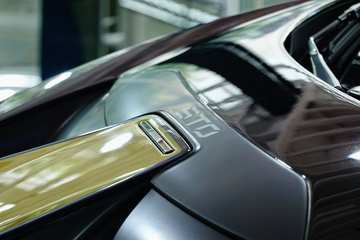 Furthermore, the cost of ownership extends to maintenance. “Supercar service” for a V12 Pagani is a specialized affair, often requiring technicians to fly out from the factory or transport the vehicle to certified hubs in major markets like New York, Los Angeles, or London. However, the use of a Mercedes-AMG derived block ensures a level of mechanical reliability often missing in boutique manufacturers who build their own engines from scratch.
The Utopia Roadster: Open-Air Theater
For those who crave an even more visceral connection to the V12 soundtrack, Pagani has developed the Utopia Roadster alongside the coupe. Unlike many convertibles that require heavy bracing to compensate for the loss of the roof, the Utopia’s carbon-titanium tub is so rigid that the Roadster weighs exactly the same as the coupe.
Limited to 130 units worldwide, the Roadster pushes the price point even higher, likely exceeding $3.4 million. It offers the same manual transmission and the same 852 horsepower, but with the added benefit of wind-in-the-hair motoring. Driving the Roadster through a tunnel with the roof off is an auditory experience that borders on religious.
Driving Impressions: The Verdict
Driving the Pagani Utopia 2025 reveals a character that is surprisingly dual-natured. In traffic, with the suspension in its softest setting and the exhaust valves closed, it is docile. The clutch is manageable, and the visibility is better than expected for a mid-engine supercar.
But find a clear stretch of highway, drop a gear, and the car transforms. The rear end squats, the nose lifts slightly, and you are fired toward the horizon. The active aerodynamics work invisibly. There are no giant wings rising up to block your rearview mirror; instead, the air is channeled through the bodywork to generate downforce, keeping the car planted at speeds exceeding 200 mph.
The braking performance is equally impressive. The Brembo carbon-ceramic brakes (410mm front, 390mm rear) offer stopping power that can detach your retinas. The pedal feel is firm and progressive, allowing you to modulate brake pressure deep into a corner.
This balance between grand tourer comfort and track-weapon capability is the Utopia’s greatest trick. It doesn’t punish the driver. It rewards smoothness. It encourages you to be a better pilot, to match your revs, to hit your apexes, not because the computer does it for you, but because the car gives you the tools to do it yourself.
Why the Pagani Utopia 2025 Matters
In 2025, the automotive landscape is defined by software. Cars are becoming appliances, defined by their range, their charging speeds, and their autonomous driving levels. The Pagani Utopia 2025 stands athwart history, yelling “Stop.”
It proves that there is still a market for mechanical purity. It demonstrates that a combustion engine, when executed with this level of precision, is not antiquated technology—it is the soul of the machine. The Utopia is not about getting from point A to point B. It is about the act of travel itself.
For the 99 lucky individuals who secured a build slot for the coupe, and the 130 for the Roadster, this vehicle is the pinnacle of automotive acquisition. It is a hedge against the digitalization of experience. It is a guarantee that, no matter how many screens are added to the dashboards of the future, there will always be a place for polished aluminum, hand-stitched leather, and the roar of twelve cylinders.
Conclusion
The Pagani Utopia 2025 is a triumph. It successfully builds upon the legacy of the Zonda and the Huayra without merely rehashing old ideas. It offers a driving experience that is unique in the modern market—a blend of extreme performance, artistic beauty, and analog engagement.
While the price of entry is astronomical, the value proposition is undeniable for those in the ultra-high-net-worth bracket. It is a piece of history, likely one of the last V12 manual hypercars ever to be produced. It is a rolling sculpture that you can drive to dinner or thrash on a mountain pass.
In a world of disposable tech and planned obsolescence, the Utopia is built to last forever. It is a car that will be passed down through generations, admired on the lawns of Pebble Beach in 2075 just as much as it is today. Horacio Pagani has not just built a car; he has built a utopia for the driving enthusiast.
Are you ready to elevate your collection with the ultimate expression of automotive art?
Whether you are looking to secure a rare allocation, require specialist exotic car transport, or need expert appraisal on investment-grade hypercars, staying ahead of the market is essential. The world of bespoke automotives waits for no one.
Furthermore, the cost of ownership extends to maintenance. “Supercar service” for a V12 Pagani is a specialized affair, often requiring technicians to fly out from the factory or transport the vehicle to certified hubs in major markets like New York, Los Angeles, or London. However, the use of a Mercedes-AMG derived block ensures a level of mechanical reliability often missing in boutique manufacturers who build their own engines from scratch.
The Utopia Roadster: Open-Air Theater
For those who crave an even more visceral connection to the V12 soundtrack, Pagani has developed the Utopia Roadster alongside the coupe. Unlike many convertibles that require heavy bracing to compensate for the loss of the roof, the Utopia’s carbon-titanium tub is so rigid that the Roadster weighs exactly the same as the coupe.
Limited to 130 units worldwide, the Roadster pushes the price point even higher, likely exceeding $3.4 million. It offers the same manual transmission and the same 852 horsepower, but with the added benefit of wind-in-the-hair motoring. Driving the Roadster through a tunnel with the roof off is an auditory experience that borders on religious.
Driving Impressions: The Verdict
Driving the Pagani Utopia 2025 reveals a character that is surprisingly dual-natured. In traffic, with the suspension in its softest setting and the exhaust valves closed, it is docile. The clutch is manageable, and the visibility is better than expected for a mid-engine supercar.
But find a clear stretch of highway, drop a gear, and the car transforms. The rear end squats, the nose lifts slightly, and you are fired toward the horizon. The active aerodynamics work invisibly. There are no giant wings rising up to block your rearview mirror; instead, the air is channeled through the bodywork to generate downforce, keeping the car planted at speeds exceeding 200 mph.
The braking performance is equally impressive. The Brembo carbon-ceramic brakes (410mm front, 390mm rear) offer stopping power that can detach your retinas. The pedal feel is firm and progressive, allowing you to modulate brake pressure deep into a corner.
This balance between grand tourer comfort and track-weapon capability is the Utopia’s greatest trick. It doesn’t punish the driver. It rewards smoothness. It encourages you to be a better pilot, to match your revs, to hit your apexes, not because the computer does it for you, but because the car gives you the tools to do it yourself.
Why the Pagani Utopia 2025 Matters
In 2025, the automotive landscape is defined by software. Cars are becoming appliances, defined by their range, their charging speeds, and their autonomous driving levels. The Pagani Utopia 2025 stands athwart history, yelling “Stop.”
It proves that there is still a market for mechanical purity. It demonstrates that a combustion engine, when executed with this level of precision, is not antiquated technology—it is the soul of the machine. The Utopia is not about getting from point A to point B. It is about the act of travel itself.
For the 99 lucky individuals who secured a build slot for the coupe, and the 130 for the Roadster, this vehicle is the pinnacle of automotive acquisition. It is a hedge against the digitalization of experience. It is a guarantee that, no matter how many screens are added to the dashboards of the future, there will always be a place for polished aluminum, hand-stitched leather, and the roar of twelve cylinders.
Conclusion
The Pagani Utopia 2025 is a triumph. It successfully builds upon the legacy of the Zonda and the Huayra without merely rehashing old ideas. It offers a driving experience that is unique in the modern market—a blend of extreme performance, artistic beauty, and analog engagement.
While the price of entry is astronomical, the value proposition is undeniable for those in the ultra-high-net-worth bracket. It is a piece of history, likely one of the last V12 manual hypercars ever to be produced. It is a rolling sculpture that you can drive to dinner or thrash on a mountain pass.
In a world of disposable tech and planned obsolescence, the Utopia is built to last forever. It is a car that will be passed down through generations, admired on the lawns of Pebble Beach in 2075 just as much as it is today. Horacio Pagani has not just built a car; he has built a utopia for the driving enthusiast.
Are you ready to elevate your collection with the ultimate expression of automotive art?
Whether you are looking to secure a rare allocation, require specialist exotic car transport, or need expert appraisal on investment-grade hypercars, staying ahead of the market is essential. The world of bespoke automotives waits for no one.
 Contact our luxury automotive consultancy team today to discuss acquisition strategies for the Pagani Utopia 2025 and other tier-one investment vehicles.