
2025 Ferrari 296 GTB Review: Why Maranello’s V6 Hybrid Is Still the Benchmark to Beat
The landscape of the exotic automotive world is shifting beneath our feet. For decades, the formula was simple: mo
re cylinders, more noise, more displacement. But as we move deeper into the 2020s, the rules of engagement have changed. When Maranello introduced the “Little V12″—their affectionate internal nickname for the twin-turbo V6 engine—many purists sharpened their pitchforks. They were wrong. After spending extensive time behind the wheel for this Ferrari 296 GTB review, it is clear that this machine isn’t just a compliance car designed to appease emissions regulators; it is arguably the finest mid-engined supercar the Prancing Horse has produced in a generation.
However, the throne is never secure for long. With the imminent arrival of the Lamborghini Temerario—a 10,000 RPM, V8-hybrid monster—the 296 GTB faces its stiffest competition yet. Can a V6 hybrid hold the line against the raging bull? Let’s dive deep into the engineering, driving dynamics, and ownership reality of the Ferrari 296 GTB.
The Engineering Revolution: Not Just a “Downsized” Engine
To understand this car, you have to look past the cylinder count. In my ten years covering the supercar industry, I have rarely seen a powertrain architecture this clever. The heart of the 296 GTB is a 2.9-liter, 120-degree V6. By spreading the cylinder banks to 120 degrees, Ferrari’s engineers could place the turbochargers inside the “V” (a “hot-vee” configuration).
This achieves two critical things for performance. First, it lowers the center of gravity significantly compared to the older F8 Tributo’s tall V8. Second, it reduces the plumbing distance from the exhaust ports to the turbine wheels, virtually eliminating turbo lag.
But the real magic in this Ferrari 296 GTB review comes from the electrification. Sandwiched between the engine and the 8-speed dual-clutch transmission is an MGU-K electric motor derived from Formula 1 tech. It fills in the torque gaps while the turbos spool, creating a wall of acceleration that feels instantaneous.
The numbers are staggering: 654 horsepower from the gas engine alone (a specific output record for production cars) and an additional 165 horsepower from the electric motor. The combined output? A massive 819 horsepower. All of that is sent strictly to the rear wheels. Unlike the flagship SF90 Stradale, the 296 GTB relies on chassis balance and sticky rubber rather than all-wheel-drive claw to put that power down.
Design and Aerodynamics: The Modern Dino?
Visually, the 296 GTB is a masterclass in clean, reductive design. It eschews the aggressive, slashed vents of the modern Lamborghini or the busy aero-work of recent McLarens. Instead, it draws heavy inspiration from the legendary 250 LM of the 1960s. The flying buttresses, the muscular rear haunches, and the visor-style windshield create a silhouette that is timeless.
However, do not mistake clean lines for a lack of downforce. Ferrari claims 794 lbs of downforce at 155 mph if you opt for the Assetto Fiorano package. Most of this is achieved via underbody aero and an active rear spoiler that deploys from the bodywork like a blade when you hit the brakes or corner hard.
The “tea-tray” front splitter channels air underneath the car to a massive rear diffuser, sucking the chassis to the tarmac. It is a seamless integration of form and function that ensures the car remains stable at speeds approaching its 205 mph limit.
Interior and Technology: The Digital Cockpit
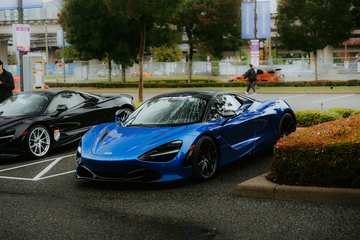 Stepping inside, the cabin is a radical departure from the analog Ferraris of the past. The interior architecture is driver-focused, creating a cocoon effect. The seats, whether you choose the standard comfort specs or the carbon-fiber racing buckets, offer tremendous support.
However, no honest Ferrari 296 GTB review can ignore the controversy of the HMI (Human Machine Interface). Ferrari has moved almost entirely to capacitive touch controls. The engine start button is now a touch-sensitive zone on the steering wheel. While it looks sleek when the car is off, in practice, it lacks the tactile satisfaction of the old red button.
The instrument cluster is a fully digital, curved 16-inch screen. It is brilliant in its clarity, offering massive reconfiguration options. You can have a giant yellow tachometer in the center or a full-screen navigation map. The passenger also gets their own slim display, allowing them to feel like a co-pilot by monitoring speed and RPMs.
If you are looking for luxury car insurance quotes for a vehicle like this, be prepared for premiums that reflect this technology. Replacing a cracked digital dash or a carbon-fiber steering wheel with integrated LEDs is a five-figure affair, a factor that underwriters take seriously.
The Drive: A Telepathic Experience
Specs are for brochures; driving is for reality. Pressing the haptic start button brings the car to life—often in silence. The 296 GTB is a Plug-in Hybrid Electric Vehicle (PHEV) with a 7.45 kWh battery pack located behind the seats. It offers roughly 15 miles of all-electric range. This allows you to leave your neighborhood in “eDrive” mode without waking the neighbors, a feature I found surprisingly useful during early morning testing.
Switch the Manettino to “Hybrid” or “Performance,” and the V6 fires up. The sound is uncanny. Ferrari tuned the exhaust harmonics to mimic a naturally aspirated V12, and it works. As the revs climb toward the 8,500 RPM redline, the note transforms from a bassy growl to a high-pitched mechanical scream that raises the hairs on your neck.
The handling is where the shorter wheelbase (nearly 2 inches shorter than the F8) shines. The car rotates around your hips with an agility that feels almost nervous initially, but quickly becomes intuitive. Ferrari uses a “6-way Chassis Dynamic Sensor” (6w-CDS) that reads acceleration and rotation on three axes. It feeds this data to the ABS-evo controller and the electronic differential.
What does this mean for the driver? It means you can trail-brake deep into a corner, and the car’s brain will modulate brake pressure at individual wheels to keep the nose tucked in. It makes you feel like a hero. The steering is light—typical of modern Ferraris—but laser-precise. You think about the apex, and the car is already there.
The Assetto Fiorano Package: Necessary or Overkill?
For those scouring supercar lease deals or configuring their dream build, the question always arises: Should you get the Assetto Fiorano package?
This track-oriented setup shaves about 33 lbs off the curb weight through extensive use of carbon fiber and titanium. It adds Multimatic dampers (derived from GT racing), carbon-fiber front dive planes for extra downforce, and a Lexan rear screen. Crucially, it unlocks the option for Michelin Pilot Sport Cup 2 R tires.
In my professional opinion, unless you live near a track or have a very smooth commute, the standard suspension is the better buy for US roads. The Multimatic dampers are fixed-rate and can be punishing on broken pavement found in cities like Los Angeles or New York. The standard magnetorheological dampers offer a “Bumpy Road” mode that makes the 296 GTB genuinely usable as a daily driver.
Performance Testing: The Numbers Game
We strapped our test gear to the 296 GTB on a private airstrip to verify the claims. The results were violent.
0-60 mph: 2.9 seconds.
0-124 mph: 7.3 seconds.
Top Speed: 205 mph.
The launch control system is simple to operate and hits with the force of a freight train. Because the electric motor provides instant torque fill, there is zero hesitation. The 8-speed dual-clutch gearbox snaps through shifts faster than you can blink.
Comparatively, the McLaren 750S is lighter but lacks the hybrid punch out of corners. The upcoming Lamborghini Temerario promises more horsepower (over 900 hp), but it will likely carry more weight. For now, the Ferrari 296 GTB review data suggests it is the acceleration king of its class.
Ownership and Practicality
Owning a Ferrari in 2025 is a different experience than in the 1990s. Reliability has improved drastically. The 296 GTB comes with Ferrari’s 7-year genuine maintenance program, covering all standard servicing. This is a massive value proposition that competitors like Lamborghini and McLaren do not match.
However, protecting the asset is key. I highly recommend investing in ceramic coating for Ferrari immediately upon delivery. The water-based paints used by modern manufacturers are eco-friendly but softer than older lacquers. A full-body paint protection film (PPF) cost will run between $6,000 and $10,000, but it is essential to prevent rock chips on that low-slung nose, especially if you plan to enjoy the car on highways.
Stepping inside, the cabin is a radical departure from the analog Ferraris of the past. The interior architecture is driver-focused, creating a cocoon effect. The seats, whether you choose the standard comfort specs or the carbon-fiber racing buckets, offer tremendous support.
However, no honest Ferrari 296 GTB review can ignore the controversy of the HMI (Human Machine Interface). Ferrari has moved almost entirely to capacitive touch controls. The engine start button is now a touch-sensitive zone on the steering wheel. While it looks sleek when the car is off, in practice, it lacks the tactile satisfaction of the old red button.
The instrument cluster is a fully digital, curved 16-inch screen. It is brilliant in its clarity, offering massive reconfiguration options. You can have a giant yellow tachometer in the center or a full-screen navigation map. The passenger also gets their own slim display, allowing them to feel like a co-pilot by monitoring speed and RPMs.
If you are looking for luxury car insurance quotes for a vehicle like this, be prepared for premiums that reflect this technology. Replacing a cracked digital dash or a carbon-fiber steering wheel with integrated LEDs is a five-figure affair, a factor that underwriters take seriously.
The Drive: A Telepathic Experience
Specs are for brochures; driving is for reality. Pressing the haptic start button brings the car to life—often in silence. The 296 GTB is a Plug-in Hybrid Electric Vehicle (PHEV) with a 7.45 kWh battery pack located behind the seats. It offers roughly 15 miles of all-electric range. This allows you to leave your neighborhood in “eDrive” mode without waking the neighbors, a feature I found surprisingly useful during early morning testing.
Switch the Manettino to “Hybrid” or “Performance,” and the V6 fires up. The sound is uncanny. Ferrari tuned the exhaust harmonics to mimic a naturally aspirated V12, and it works. As the revs climb toward the 8,500 RPM redline, the note transforms from a bassy growl to a high-pitched mechanical scream that raises the hairs on your neck.
The handling is where the shorter wheelbase (nearly 2 inches shorter than the F8) shines. The car rotates around your hips with an agility that feels almost nervous initially, but quickly becomes intuitive. Ferrari uses a “6-way Chassis Dynamic Sensor” (6w-CDS) that reads acceleration and rotation on three axes. It feeds this data to the ABS-evo controller and the electronic differential.
What does this mean for the driver? It means you can trail-brake deep into a corner, and the car’s brain will modulate brake pressure at individual wheels to keep the nose tucked in. It makes you feel like a hero. The steering is light—typical of modern Ferraris—but laser-precise. You think about the apex, and the car is already there.
The Assetto Fiorano Package: Necessary or Overkill?
For those scouring supercar lease deals or configuring their dream build, the question always arises: Should you get the Assetto Fiorano package?
This track-oriented setup shaves about 33 lbs off the curb weight through extensive use of carbon fiber and titanium. It adds Multimatic dampers (derived from GT racing), carbon-fiber front dive planes for extra downforce, and a Lexan rear screen. Crucially, it unlocks the option for Michelin Pilot Sport Cup 2 R tires.
In my professional opinion, unless you live near a track or have a very smooth commute, the standard suspension is the better buy for US roads. The Multimatic dampers are fixed-rate and can be punishing on broken pavement found in cities like Los Angeles or New York. The standard magnetorheological dampers offer a “Bumpy Road” mode that makes the 296 GTB genuinely usable as a daily driver.
Performance Testing: The Numbers Game
We strapped our test gear to the 296 GTB on a private airstrip to verify the claims. The results were violent.
0-60 mph: 2.9 seconds.
0-124 mph: 7.3 seconds.
Top Speed: 205 mph.
The launch control system is simple to operate and hits with the force of a freight train. Because the electric motor provides instant torque fill, there is zero hesitation. The 8-speed dual-clutch gearbox snaps through shifts faster than you can blink.
Comparatively, the McLaren 750S is lighter but lacks the hybrid punch out of corners. The upcoming Lamborghini Temerario promises more horsepower (over 900 hp), but it will likely carry more weight. For now, the Ferrari 296 GTB review data suggests it is the acceleration king of its class.
Ownership and Practicality
Owning a Ferrari in 2025 is a different experience than in the 1990s. Reliability has improved drastically. The 296 GTB comes with Ferrari’s 7-year genuine maintenance program, covering all standard servicing. This is a massive value proposition that competitors like Lamborghini and McLaren do not match.
However, protecting the asset is key. I highly recommend investing in ceramic coating for Ferrari immediately upon delivery. The water-based paints used by modern manufacturers are eco-friendly but softer than older lacquers. A full-body paint protection film (PPF) cost will run between $6,000 and $10,000, but it is essential to prevent rock chips on that low-slung nose, especially if you plan to enjoy the car on highways.
 Fuel economy is a mixed bag. In hybrid mode, you can see respectable numbers, but once you start driving the car as intended, expect low double digits. But let’s be honest: if you are worried about gas mileage, you are looking at the wrong segment.
The Competition: Lamborghini Temerario and McLaren Artura
The elephant in the room is the Lamborghini Temerario. Replacing the Huracán, the Temerario ditches the V10 for a high-revving twin-turbo V8 hybrid. It is Lamborghini’s direct answer to the 296. While we haven’t driven the Temerario yet, the specs suggest a brawl. Lamborghini is targeting the emotional connection of a 10,000 RPM redline.
McLaren offers the Artura (V6 Hybrid) and the 750S (V8 non-hybrid). The Artura is a fantastic chassis but has been plagued by early reliability teething issues and lacks the sheer horsepower of the Ferrari. The 750S is the choice for the analog purist—it uses hydraulic steering and feels more raw, but it feels a generation behind in powertrain technology.
Throughout this Ferrari 296 GTB review, the Maranello contender consistently feels like the most complete package. It manages to be a docile EV in the city and a track weapon on the weekends without compromise.
The Verdict: A Future Classic?
There is often a fear that hybrid supercars will lose their soul—that the batteries will dull the experience. The Ferrari 296 GTB proves the opposite. The electricity is used to enhance the internal combustion engine, not replace it. It fills the gaps, sharpens the throttle, and allows the V6 to pursue top-end power without sacrificing low-end drivability.
Is it perfect? No. The haptic interior controls are frustrating, and the price tag—quickly exceeding $400,000 with options—is eye-watering. Furthermore, the brake pedal feel, due to the regeneration blending, takes a few miles to get used to (though it is miles better than the SF90’s initial calibration).
But when you are on a canyon road, with the V6 singing at 8,000 RPM and the chassis pivoting telepathically around you, those gripes vanish. This is a car that rewards skill. It is approachable for a novice thanks to the electronics, yet deeply rewarding for a pro.
As we wait for the Temerario to land at a Ferrari dealership near me (or rather, the Lamborghini dealer down the street) for a head-to-head, the 296 GTB wears the crown. It is the supercar that bridged the gap between the analog past and the electric future without losing the Ferrari soul.
Buying Advice for the US Market
If you are in the market for a 296 GTB, here is some expert advice:
Exotic Car Financing: Rates have fluctuated in 2025. Look for specialized lenders who understand the depreciation curve of Ferraris. A 296 GTB holds value well, which helps with residual-based financing.
Spec for Resale: If you care about value retention, stick to historical colors (Rosso Corsa, Tour de France Blue) and ensure you tick the “Carbon Fiber Steering Wheel with LEDs” box. It is the first thing buyers look for on the secondary market.
Local Inventory: Whether you are looking in Miami, Los Angeles, or Dallas, inventory is tight. Many dealers are asking for premiums over MSRP for immediate delivery. Patience is your friend if you want to order a custom spec.
FAQ: Ferrari 296 GTB
Is the Ferrari 296 GTB faster than the SF90?
In a straight line, the SF90 is faster due to all-wheel drive and nearly 1,000 horsepower. However, many reviewers, myself included, find the 296 GTB more fun and agile to drive due to its lighter weight and rear-wheel-drive dynamics.
Can I drive the 296 GTB every day?
Absolutely. In “Hybrid” mode with the “Bumpy Road” suspension setting active, it is surprisingly compliant. The nose-lift system is a mandatory option to clear driveways and speed bumps.
How does the hybrid system affect maintenance?
The high-voltage battery comes with a warranty (typically 8 years). The standard mechanicals are covered under the 7-year maintenance plan. Ferrari has designed the car with serviceability in mind, unlike some older hybrids where battery replacement totaled the car.
Final Thoughts
The 2025 Ferrari 296 GTB is not just a stepping stone; it is a destination. It has redefined what we expect from a “junior” supercar, offering hypercar performance in a usable package. It has set a benchmark so high that Lamborghini and McLaren have to stretch their engineering capabilities to the breaking point just to keep up.
If you have been on the fence about embracing the hybrid era, let this Ferrari 296 GTB review be your reassurance: The future isn’t just electric; it’s electric, turbocharged, and absolutely thrilling.
Fuel economy is a mixed bag. In hybrid mode, you can see respectable numbers, but once you start driving the car as intended, expect low double digits. But let’s be honest: if you are worried about gas mileage, you are looking at the wrong segment.
The Competition: Lamborghini Temerario and McLaren Artura
The elephant in the room is the Lamborghini Temerario. Replacing the Huracán, the Temerario ditches the V10 for a high-revving twin-turbo V8 hybrid. It is Lamborghini’s direct answer to the 296. While we haven’t driven the Temerario yet, the specs suggest a brawl. Lamborghini is targeting the emotional connection of a 10,000 RPM redline.
McLaren offers the Artura (V6 Hybrid) and the 750S (V8 non-hybrid). The Artura is a fantastic chassis but has been plagued by early reliability teething issues and lacks the sheer horsepower of the Ferrari. The 750S is the choice for the analog purist—it uses hydraulic steering and feels more raw, but it feels a generation behind in powertrain technology.
Throughout this Ferrari 296 GTB review, the Maranello contender consistently feels like the most complete package. It manages to be a docile EV in the city and a track weapon on the weekends without compromise.
The Verdict: A Future Classic?
There is often a fear that hybrid supercars will lose their soul—that the batteries will dull the experience. The Ferrari 296 GTB proves the opposite. The electricity is used to enhance the internal combustion engine, not replace it. It fills the gaps, sharpens the throttle, and allows the V6 to pursue top-end power without sacrificing low-end drivability.
Is it perfect? No. The haptic interior controls are frustrating, and the price tag—quickly exceeding $400,000 with options—is eye-watering. Furthermore, the brake pedal feel, due to the regeneration blending, takes a few miles to get used to (though it is miles better than the SF90’s initial calibration).
But when you are on a canyon road, with the V6 singing at 8,000 RPM and the chassis pivoting telepathically around you, those gripes vanish. This is a car that rewards skill. It is approachable for a novice thanks to the electronics, yet deeply rewarding for a pro.
As we wait for the Temerario to land at a Ferrari dealership near me (or rather, the Lamborghini dealer down the street) for a head-to-head, the 296 GTB wears the crown. It is the supercar that bridged the gap between the analog past and the electric future without losing the Ferrari soul.
Buying Advice for the US Market
If you are in the market for a 296 GTB, here is some expert advice:
Exotic Car Financing: Rates have fluctuated in 2025. Look for specialized lenders who understand the depreciation curve of Ferraris. A 296 GTB holds value well, which helps with residual-based financing.
Spec for Resale: If you care about value retention, stick to historical colors (Rosso Corsa, Tour de France Blue) and ensure you tick the “Carbon Fiber Steering Wheel with LEDs” box. It is the first thing buyers look for on the secondary market.
Local Inventory: Whether you are looking in Miami, Los Angeles, or Dallas, inventory is tight. Many dealers are asking for premiums over MSRP for immediate delivery. Patience is your friend if you want to order a custom spec.
FAQ: Ferrari 296 GTB
Is the Ferrari 296 GTB faster than the SF90?
In a straight line, the SF90 is faster due to all-wheel drive and nearly 1,000 horsepower. However, many reviewers, myself included, find the 296 GTB more fun and agile to drive due to its lighter weight and rear-wheel-drive dynamics.
Can I drive the 296 GTB every day?
Absolutely. In “Hybrid” mode with the “Bumpy Road” suspension setting active, it is surprisingly compliant. The nose-lift system is a mandatory option to clear driveways and speed bumps.
How does the hybrid system affect maintenance?
The high-voltage battery comes with a warranty (typically 8 years). The standard mechanicals are covered under the 7-year maintenance plan. Ferrari has designed the car with serviceability in mind, unlike some older hybrids where battery replacement totaled the car.
Final Thoughts
The 2025 Ferrari 296 GTB is not just a stepping stone; it is a destination. It has redefined what we expect from a “junior” supercar, offering hypercar performance in a usable package. It has set a benchmark so high that Lamborghini and McLaren have to stretch their engineering capabilities to the breaking point just to keep up.
If you have been on the fence about embracing the hybrid era, let this Ferrari 296 GTB review be your reassurance: The future isn’t just electric; it’s electric, turbocharged, and absolutely thrilling.
 Ready to experience the pinnacle of Italian engineering? Check your local inventory or contact a specialist today to schedule your test drive of the Ferrari 296 GTB. The road is waiting.