
Redefining Velocity: The Unstoppable Rise of American Supercars and Hypercars in 2025
For decades, the global conversation regarding the absolute peak of automotive engineering—specifically the rarefi
ed air of the hypercar—was conducted almost exclusively in Italian, German, or French accents. The formula was predictable: a mid-engine layout, an exotic badge with a century of heritage, and a price tag that rivaled the GDP of a small island nation. European marques held a monopoly on the posters adorning bedroom walls and the wallpapers of smartphones. However, a quiet revolution has been building stateside, fueled by a relentless innovative spirit and a refusal to accept second place. As an analyst tracking this sector for over ten years, I have watched the narrative shift. The United States, once pigeonholed as the land of straight-line muscle cars and mass-market trucks, has cultivated a terrifyingly capable lineage of American supercars.
We are no longer knocking on the door of the 300-mph club; we have kicked it down. This evolution was not instantaneous. It required a departure from the “there is no replacement for displacement” dogma, moving toward a sophisticated synthesis of aerodynamics, active suspension geometry, and material science. In late 2025, the domestic landscape is unrecognizable compared to the early 2000s. We are witnessing a golden era where American supercars are not just value propositions or drag-strip specialists; they are technological tours de force that challenge the very laws of physics.
The Philosophical Shift in American Engineering
To understand where we are, we must acknowledge the journey. The skepticism regarding US-made performance vehicles was historically rooted in a lack of refinement. While a Corvette or Viper could always scare a passenger, they rarely possessed the surgical precision of a McLaren or the interior opulence of a Bugatti. That gap has closed. The modern obsession with Nürburgring lap times and time-attack dominance forced a maturation in chassis development.
The turning point was arguably the moment domestic manufacturers stopped trying to emulate Europe and started leaning into their own distinct advantages: raw mechanical aggression paired with Silicon Valley-level computing power. Today, when we discuss American supercars, we are discussing vehicles that utilize 3D-printed components, generative AI design in chassis structures, and hybrid powertrains that offer torque-fill capabilities previously the domain of Formula 1.
The Economic Landscape of High-Performance Ownership
The rise of these vehicles has also shifted the financial ecosystem surrounding them. Ten years ago, investing in a domestic performance car was a gamble. Today, specific models have become blue-chip assets. The surge in demand has created a robust market for supercar financing and specialized exotic car leasing programs, allowing a broader demographic to access these machines. Furthermore, the insurance industry has had to adapt; obtaining luxury auto insurance for a 1,800-horsepower vehicle requires underwriters who understand that these are not just cars, but appreciable assets.
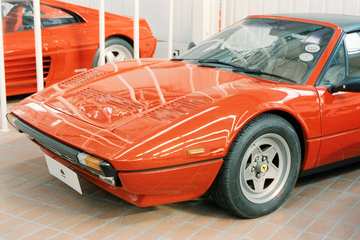 Collectors are no longer just looking at Maranello for ROI. Smart money is flowing into limited-run vehicles from Texas and California. Whether browsing classic car auctions or looking for Corvette ZR1 listings, the market data suggests that high-performance American metal is holding value better than ever before, rivaling the depreciation curves of top-tier European imports.
Hennessey Venom F5: The Texan Storm
If one vehicle encapsulates the sheer unbridled ambition of the modern sector, it is the Hennessey Venom F5. Hennessey Special Vehicles has moved far beyond their tuner roots to become a full-fledged manufacturer of one of the world’s most potent American supercars. The F5 is an exercise in excess, but controlled excess.
At its heart sits “Fury,” a 6.6-liter twin-turbocharged V8 that seems to operate on pure anger. Delivering 1,817 horsepower, this powertrain doesn’t just push the car; it seemingly alters the rotation of the earth beneath it. The 0 to 60 mph sprint is dismissed in 2.6 seconds, but the F5’s true terror—and beauty—is its top-end capability. Designed to exceed 300 mph, the F5 utilizes a bespoke carbon fiber chassis that creates a rigid, lightweight safety cell. It creates a driving experience that is visceral and terrifyingly analog in a digital world. For the buyer seeking the absolute zenith of internal combustion performance, the Venom F5 is the benchmark.
Czinger 21C: The Algorithm of Speed
While Hennessey represents the pinnacle of traditional combustion, the Czinger 21C represents the future of manufacturing. Based in Los Angeles, Czinger has upended the industry not just with speed, but with how they build it. The 21C is arguably the most technologically advanced of all American supercars currently in production.
The car features a 2.88-liter flat-plane crank V8 paired with two electric motors, generating 1,250 horsepower. But the headline isn’t the power; it’s the weight. By utilizing a proprietary AI-driven design system and industrial 3D printing (additive manufacturing), Czinger has created structures that look organic, mimicking bone and tendon rather than traditional beams. The tandem seating position—pilot and co-pilot—reduces the frontal area for aerodynamic efficiency. With a 0-60 time of 1.9 seconds, it is a weapon of track destruction. This is what happens when American software ingenuity meets automotive lust.
SSC Tuatara: The Resurrection of the Speed King
SSC North America has ridden a rollercoaster of public perception, but the Tuatara stands as a solidified testament to their engineering prowess. Named after a New Zealand reptile with the fastest molecular evolution of any living animal, the car lives up to the moniker.
The Tuatara is a masterclass in drag coefficient management. Its silhouette is one of the slipperiest in the industry, allowing it to cut through the air with minimal resistance. Powered by a Nelson Racing Engines-derived V8 producing up to 1,750 horsepower on E85 fuel, the Tuatara is a monster. After a series of public challenges regarding speed records, SSC put their heads down and verified their capabilities, proving that American supercars can hold the title of “World’s Fastest Production Car.” For collectors, the Tuatara represents a relentless pursuit of a singular goal: velocity.
Chevrolet Corvette C8 ZR1: The Democratization of Hyper-Performance
Perhaps the most significant disruption in the market has come from a major OEM. The Chevrolet Corvette C8 ZR1 is not a limited-run boutique car; it is a mass-production miracle that embarrasses vehicles costing four times as much. When Chevrolet moved the engine behind the driver, they changed the game.
The C8 ZR1, with its twin-turbocharged 5.5-liter LT7 V8, produces over 1,000 horsepower (revealed in final 2025 specs). It features active aerodynamics and magnetic ride control that makes it usable on a trip to the grocery store in Miami or a track day at Laguna Seca. It is the definitive argument for American supercars being superior value propositions. The search volume for Corvette ZR1 for sale has spiked globally, indicating that European buyers are finally importing American metal to Germany and Italy, a reversal of the traditional flow. It offers exotic car performance with domestic serviceability—a killer combination.
Ford GT: The Le Mans Legacy
No list of American supercars is complete without the Ford GT. While production has ceased, its impact in 2025 remains massive. It was a car born of a grudge, designed to win Le Mans, which it did. The carbon-fiber monocoque and the integrated steel roll cage make it practically a race car with license plates.
The 3.5-liter EcoBoost V6 was controversial at launch but has proven itself a marvel of specific output. The flying buttresses are not just aesthetic; they channel air into the intake and generate downforce. The Ford GT is currently one of the highest-performing investment grade automobiles on the market. If you can find a Ford GT for sale, you aren’t just buying a car; you are buying a piece of racing history that bridged the gap between the analog and digital eras.
Collectors are no longer just looking at Maranello for ROI. Smart money is flowing into limited-run vehicles from Texas and California. Whether browsing classic car auctions or looking for Corvette ZR1 listings, the market data suggests that high-performance American metal is holding value better than ever before, rivaling the depreciation curves of top-tier European imports.
Hennessey Venom F5: The Texan Storm
If one vehicle encapsulates the sheer unbridled ambition of the modern sector, it is the Hennessey Venom F5. Hennessey Special Vehicles has moved far beyond their tuner roots to become a full-fledged manufacturer of one of the world’s most potent American supercars. The F5 is an exercise in excess, but controlled excess.
At its heart sits “Fury,” a 6.6-liter twin-turbocharged V8 that seems to operate on pure anger. Delivering 1,817 horsepower, this powertrain doesn’t just push the car; it seemingly alters the rotation of the earth beneath it. The 0 to 60 mph sprint is dismissed in 2.6 seconds, but the F5’s true terror—and beauty—is its top-end capability. Designed to exceed 300 mph, the F5 utilizes a bespoke carbon fiber chassis that creates a rigid, lightweight safety cell. It creates a driving experience that is visceral and terrifyingly analog in a digital world. For the buyer seeking the absolute zenith of internal combustion performance, the Venom F5 is the benchmark.
Czinger 21C: The Algorithm of Speed
While Hennessey represents the pinnacle of traditional combustion, the Czinger 21C represents the future of manufacturing. Based in Los Angeles, Czinger has upended the industry not just with speed, but with how they build it. The 21C is arguably the most technologically advanced of all American supercars currently in production.
The car features a 2.88-liter flat-plane crank V8 paired with two electric motors, generating 1,250 horsepower. But the headline isn’t the power; it’s the weight. By utilizing a proprietary AI-driven design system and industrial 3D printing (additive manufacturing), Czinger has created structures that look organic, mimicking bone and tendon rather than traditional beams. The tandem seating position—pilot and co-pilot—reduces the frontal area for aerodynamic efficiency. With a 0-60 time of 1.9 seconds, it is a weapon of track destruction. This is what happens when American software ingenuity meets automotive lust.
SSC Tuatara: The Resurrection of the Speed King
SSC North America has ridden a rollercoaster of public perception, but the Tuatara stands as a solidified testament to their engineering prowess. Named after a New Zealand reptile with the fastest molecular evolution of any living animal, the car lives up to the moniker.
The Tuatara is a masterclass in drag coefficient management. Its silhouette is one of the slipperiest in the industry, allowing it to cut through the air with minimal resistance. Powered by a Nelson Racing Engines-derived V8 producing up to 1,750 horsepower on E85 fuel, the Tuatara is a monster. After a series of public challenges regarding speed records, SSC put their heads down and verified their capabilities, proving that American supercars can hold the title of “World’s Fastest Production Car.” For collectors, the Tuatara represents a relentless pursuit of a singular goal: velocity.
Chevrolet Corvette C8 ZR1: The Democratization of Hyper-Performance
Perhaps the most significant disruption in the market has come from a major OEM. The Chevrolet Corvette C8 ZR1 is not a limited-run boutique car; it is a mass-production miracle that embarrasses vehicles costing four times as much. When Chevrolet moved the engine behind the driver, they changed the game.
The C8 ZR1, with its twin-turbocharged 5.5-liter LT7 V8, produces over 1,000 horsepower (revealed in final 2025 specs). It features active aerodynamics and magnetic ride control that makes it usable on a trip to the grocery store in Miami or a track day at Laguna Seca. It is the definitive argument for American supercars being superior value propositions. The search volume for Corvette ZR1 for sale has spiked globally, indicating that European buyers are finally importing American metal to Germany and Italy, a reversal of the traditional flow. It offers exotic car performance with domestic serviceability—a killer combination.
Ford GT: The Le Mans Legacy
No list of American supercars is complete without the Ford GT. While production has ceased, its impact in 2025 remains massive. It was a car born of a grudge, designed to win Le Mans, which it did. The carbon-fiber monocoque and the integrated steel roll cage make it practically a race car with license plates.
The 3.5-liter EcoBoost V6 was controversial at launch but has proven itself a marvel of specific output. The flying buttresses are not just aesthetic; they channel air into the intake and generate downforce. The Ford GT is currently one of the highest-performing investment grade automobiles on the market. If you can find a Ford GT for sale, you aren’t just buying a car; you are buying a piece of racing history that bridged the gap between the analog and digital eras.
 Dodge Viper ACR: The Final Word in Analog Grip
The Dodge Viper ACR (American Club Racer) holds a special place in the pantheon of American supercars. It is the antithesis of the Czinger 21C. There are no hybrid motors, no sophisticated dual-clutch transmissions—just a massive 8.4-liter V10, a manual gearbox, and an aero package so aggressive it reduces top speed in exchange for cornering grip that rearranges internal organs.
Despite being out of production, the Viper ACR remains a favorite for track rats and purists. It holds lap records across the US, often beating modern machinery. It serves as a reminder of a brute-force philosophy that is slowly dying out. For those looking for high-performance car insurance, the Viper is often a distinct category due to its lack of driver aids; it requires a skilled hand. Finding a Dodge Viper for sale is becoming a treasure hunt for those who value driver engagement over lap times derived from computer intervention.
Saleen S7 Twin-Turbo: The Pioneer
We must pay homage to the Saleen S7. In the early 2000s, this was the car that proved a small American manufacturer could build a mid-engine exotic to rival the Ferrari Enzo. With a 7.0-liter twin-turbo V8, it was rightfully feared.
The S7 was long, wide, and incredibly low. It generated so much downforce at 160 mph that it could theoretically drive upside down in a tunnel. Today, it is a rare sight, but its DNA is evident in the current crop of American supercars. It established the supply chain and the credibility that allowed brands like SSC and Hennessey to flourish later.
Vector W8: The Retro-Futurist Dream
The Vector W8 is the outlier, a wedge of 1980s aerospace technology brought to the road. Only 17 were made, but its twin-turbo V8 and three-speed automatic transmission (borrowed from an RV to handle the torque) made it a legend. It represents the “dream big” era of American supercars. While not competitive by 2025 performance standards, its value as a collector’s item is astronomical. It symbolizes the risk-taking culture that defines the US auto industry.
The Future of American Performance
As we look toward 2026 and beyond, the definition of American supercars is expanding. We are seeing the introduction of high-performance EVs from established players and startups like Tesla and Lucid, challenging the 0-60 times of even the Venom F5. However, the emotional connection to the internal combustion engine remains strong in the US market.
The integration of hybrid technology, as seen in the Corvette E-Ray and the Czinger, suggests a middle ground where electrification is used for performance enhancement rather than just efficiency. We are also seeing a rise in “restomods”—classic chassis fitted with modern hypercar powertrains—blurring the lines between vintage and cutting-edge.
Regional Hubs of Performance
The culture of these machines is not uniform across the US. Southern California remains the design hub, where one can spot a Czinger testing in the canyons of Malibu or find the best exotic car dealerships in Los Angeles. Meanwhile, Texas has established itself as the center of high-speed testing and horsepower wars, with Hennessey leading the charge. Florida continues to be the primary consumption market; the density of American supercars in Miami is higher than almost anywhere else on the globe.
Conclusion
The narrative has changed. The United States is no longer playing catch-up; it is setting the pace. From the raw, mechanical violence of the Venom F5 to the AI-generated precision of the Czinger 21C, American supercars have diversified and matured. They offer a distinct alternative to the European establishment—one that is louder, bolder, and increasingly faster.
For the enthusiast, the investor, or the adrenaline junkie, there has never been a better time to engage with this market. The engineering is world-class, the performance is record-breaking, and the soul of these machines is undeniably American.
Dodge Viper ACR: The Final Word in Analog Grip
The Dodge Viper ACR (American Club Racer) holds a special place in the pantheon of American supercars. It is the antithesis of the Czinger 21C. There are no hybrid motors, no sophisticated dual-clutch transmissions—just a massive 8.4-liter V10, a manual gearbox, and an aero package so aggressive it reduces top speed in exchange for cornering grip that rearranges internal organs.
Despite being out of production, the Viper ACR remains a favorite for track rats and purists. It holds lap records across the US, often beating modern machinery. It serves as a reminder of a brute-force philosophy that is slowly dying out. For those looking for high-performance car insurance, the Viper is often a distinct category due to its lack of driver aids; it requires a skilled hand. Finding a Dodge Viper for sale is becoming a treasure hunt for those who value driver engagement over lap times derived from computer intervention.
Saleen S7 Twin-Turbo: The Pioneer
We must pay homage to the Saleen S7. In the early 2000s, this was the car that proved a small American manufacturer could build a mid-engine exotic to rival the Ferrari Enzo. With a 7.0-liter twin-turbo V8, it was rightfully feared.
The S7 was long, wide, and incredibly low. It generated so much downforce at 160 mph that it could theoretically drive upside down in a tunnel. Today, it is a rare sight, but its DNA is evident in the current crop of American supercars. It established the supply chain and the credibility that allowed brands like SSC and Hennessey to flourish later.
Vector W8: The Retro-Futurist Dream
The Vector W8 is the outlier, a wedge of 1980s aerospace technology brought to the road. Only 17 were made, but its twin-turbo V8 and three-speed automatic transmission (borrowed from an RV to handle the torque) made it a legend. It represents the “dream big” era of American supercars. While not competitive by 2025 performance standards, its value as a collector’s item is astronomical. It symbolizes the risk-taking culture that defines the US auto industry.
The Future of American Performance
As we look toward 2026 and beyond, the definition of American supercars is expanding. We are seeing the introduction of high-performance EVs from established players and startups like Tesla and Lucid, challenging the 0-60 times of even the Venom F5. However, the emotional connection to the internal combustion engine remains strong in the US market.
The integration of hybrid technology, as seen in the Corvette E-Ray and the Czinger, suggests a middle ground where electrification is used for performance enhancement rather than just efficiency. We are also seeing a rise in “restomods”—classic chassis fitted with modern hypercar powertrains—blurring the lines between vintage and cutting-edge.
Regional Hubs of Performance
The culture of these machines is not uniform across the US. Southern California remains the design hub, where one can spot a Czinger testing in the canyons of Malibu or find the best exotic car dealerships in Los Angeles. Meanwhile, Texas has established itself as the center of high-speed testing and horsepower wars, with Hennessey leading the charge. Florida continues to be the primary consumption market; the density of American supercars in Miami is higher than almost anywhere else on the globe.
Conclusion
The narrative has changed. The United States is no longer playing catch-up; it is setting the pace. From the raw, mechanical violence of the Venom F5 to the AI-generated precision of the Czinger 21C, American supercars have diversified and matured. They offer a distinct alternative to the European establishment—one that is louder, bolder, and increasingly faster.
For the enthusiast, the investor, or the adrenaline junkie, there has never been a better time to engage with this market. The engineering is world-class, the performance is record-breaking, and the soul of these machines is undeniably American.
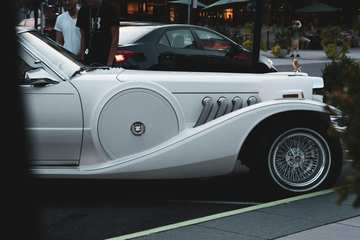 Whether you are looking to diversify your portfolio with an investment-grade classic or are ready to feel the G-forces of a modern hypercar, the options are limitless. Don’t just read about the revolution—experience it. Visit your local luxury showroom or attend an upcoming concours event to witness these engineering marvels in person. The road is calling, and American iron is ready to answer.