
Sculpting Speed: An Insider’s Analysis of the World’s Most Beautiful Cars
In my ten years navigating the high-stakes world of automotive aesthetics—from the clay modeling studios of Detroit to the jud
ging fields of Pebble Beach—I have learned that true design mastery is rare. We live in an era dominated by wind tunnels and pedestrian safety regulations, factors that often homogenize modern vehicles into indistinguishable blobs. However, as we move deeper into 2025, with the electrification of the automobile altering vehicle architecture fundamentally, we are seeing a resurgence of appreciation for the analog masters. The industry is currently looking backward to move forward, studying the most beautiful cars ever created to understand how to imbue electric platforms with soul.
Defining what makes a vehicle truly breathtaking is an exercise in subjectivity, yet there is a professional consensus on certain machines. These are not merely assemblages of metal, glass, and rubber; they are rolling sculptures that adhere to the golden ratio, defy the aging process, and spark a visceral emotional reaction. Whether you are deeply involved in classic car valuation or simply an admirer of mechanical art, understanding the lineage of these icons is essential.
Below, I dissect the titans of automotive history—vehicles that defined their decades and continue to influence the luxury market today.
The Organic Revolution: Ferrari Dino 246 GT (1969–1974)
When discussing the most beautiful cars of the mid-20th century, the conversation often begins in Maranello, but not with a V12. The Ferrari Dino 246 GT represents a pivotal moment in sports car architecture. Before the Dino, mid-engine layouts were reserved for race cars, often resulting in awkward, elongated tails. The Dino changed the paradigm.
From a design perspective, the Dino is a masterclass in “tumblehome”—the way the greenhouse curves inward at the top. The fenders swell with a voluptuous, organic quality that mimics the human form. There are no sharp edges here; it is all fluid motion. In the current market, where investing in collector cars has become a serious alternative asset class, the Dino has seen a meteoric rise. This isn’t just because it drives well; it’s because it sits on the road with a perfect, compact stance that modern safety regulations make nearly impossible to replicate. It remains the archetype for the “baby supercar,” influencing everything from the Porsche Boxster to the modern McLaren Artura.
The Wedge Era: Lamborghini Countach (1974–1990)
 If the Dino was a caress, the Lamborghini Countach was a punch in the jaw. Designed by the maverick Marcello Gandini at Bertone, the Countach didn’t just evolve car design; it decapitated the previous generation. We cannot talk about the most beautiful cars without acknowledging the ones that redefined the word “beauty” to include “shock.”
The Countach introduced the “Italian Wedge” profile—a single arc sweeping from the nose to the roofline. It looked like a spaceship that had crash-landed in Northern Italy. While early models (the Periscopio) are the purest in form, even the later, winged versions exude a brutalist charisma. For designers working today, particularly those in automotive design studios in California, the Countach is the holy grail of breaking the rules. It proved that a car could be commercially successful by being entirely impractical, provided it looked like nothing else on Earth. It created the “bedroom poster” phenomenon and remains a high-water mark for exotic car insurance valuations due to its rarity and cultural impact.
Pre-War Majesty: Alfa Romeo 8C 2900B Lungo Spider (1937–1939)
To understand the roots of grand touring, one must look before the Second World War. The Alfa Romeo 8C 2900B Lungo Spider is widely regarded by concours judges as the peak of the pre-war era. In this period, aerodynamics were in their infancy, understanding broadly that “teardrops are fast.”
The 8C is the embodiment of that theory. The hood stretches out for what seems like miles, emphasizing the potent straight-eight engine beneath. The pontoon fenders are separate from the body, connected by running boards that vanish into the rear arches. This is coachbuilding at its finest, usually by Carrozzeria Touring. When these vehicles come up for auction in places like Monterey or Scottsdale, they command eight-figure sums, representing the zenith of luxury classic car investment. The proportions speak of a different time—a time of unhurried elegance and immense power, a combination that modern luxury sedans still desperately try to emulate.
The Holy Grail: Ferrari 250 GTO (1962–1964)
The Ferrari 250 GTO is not just one of the most beautiful cars; it is the most valuable. But strip away the price tag, and you are left with a shape born purely from function. The GTO (Gran Turismo Omologato) was designed to win championships, and its beauty is a byproduct of aerodynamic necessity.
Unlike the styled-by-committee cars of today, the GTO was hammered into shape by Scaglietti based on rough sketches and wind testing. The result is a low nose, a kick-up “Kamm tail” rear, and muscular haunches that imply forward motion even when static. It captures the essence of the front-engine GT car: a long hood, a cabin pushed back over the rear axle, and a raw, purposeful stance. For those looking into high-end vehicle appraisal, the GTO is the gold standard. It represents the perfect storm of racing pedigree, scarcity, and undeniable aesthetic purity.
Art Deco Extremism: Bugatti Type 57SC Atlantic (1936–1938)
Jean Bugatti’s masterpiece, the Type 57SC Atlantic, is perhaps the closest the automotive world has ever come to fine art. Influenced heavily by the Art Deco movement, the Atlantic is famous for its dorsal seam—a riveted spine that runs the entire length of the car.
Originally, this seam was a structural necessity for using magnesium alloy panels (which couldn’t be welded), but even when they switched to aluminum, they kept it for style. The Atlantic looks like a creature from the deep ocean, with curved windows and wheels tucked tight into the bodywork. It is incredibly compact and low. In the world of vintage car restoration services, working on a Bugatti of this caliber is the equivalent of restoring a Michelangelo. The level of craftsmanship required to create these compound curves by hand in the 1930s is humbling to modern engineers who rely on CAD software.
Engineering as Art: Mercedes-Benz 300SL Gullwing (1954–1957)
Germany’s contribution to the list of the most beautiful cars is rooted in rigid engineering logic that inadvertently created a style icon. The Mercedes-Benz 300SL’s famous gullwing doors were not a marketing gimmick; they were a necessity. The car’s tubular spaceframe chassis was so high at the sills that conventional doors wouldn’t fit.
The result, however, was magic. With the doors down, the 300SL is a sleek, silver bullet, boasting a drag coefficient that embarrassed its contemporaries. With the doors up, it is pure theater. The aesthetic here is one of “form follows function,” a principle that dictates the best German design. The vents on the side, the “eyebrows” over the wheel arches—every detail serves a purpose. Today, finding a 300SL in a condition that warrants a high-grade classic car valuation is a quest for perfection, as these cars are prized for their mechanical durability as much as their looks.
The Iterative Icon: Porsche 911 (1964–Present)
The Porsche 911 is the anomaly. In a list of the most beautiful cars, it is the only one that has retained its core silhouette for over 60 years. The original 901/911 design by Butzi Porsche was a clean, unadorned teardrop. It lacked the aggression of the Italians or the brute force of the Americans, but it possessed a friendly, bug-eyed approachable nature.
What makes the 911 beautiful is its evolution. It is a lesson in brand identity. Whether you are looking at a 1973 Carrera RS or a 2025 GT3, the lineage is unbroken. The sloping roofline and the wide rear hips (necessitated by the rear-engine layout) are distinct. Designers respect the 911 because it is difficult to update an icon without ruining it. Porsche manages to sharpen the lines every decade while keeping the soul intact. It is the ultimate “everyday supercar,” and its aesthetic reliability makes it a staple in discussions regarding luxury auto insurance quotes—it is a known, beloved quantity.
If the Dino was a caress, the Lamborghini Countach was a punch in the jaw. Designed by the maverick Marcello Gandini at Bertone, the Countach didn’t just evolve car design; it decapitated the previous generation. We cannot talk about the most beautiful cars without acknowledging the ones that redefined the word “beauty” to include “shock.”
The Countach introduced the “Italian Wedge” profile—a single arc sweeping from the nose to the roofline. It looked like a spaceship that had crash-landed in Northern Italy. While early models (the Periscopio) are the purest in form, even the later, winged versions exude a brutalist charisma. For designers working today, particularly those in automotive design studios in California, the Countach is the holy grail of breaking the rules. It proved that a car could be commercially successful by being entirely impractical, provided it looked like nothing else on Earth. It created the “bedroom poster” phenomenon and remains a high-water mark for exotic car insurance valuations due to its rarity and cultural impact.
Pre-War Majesty: Alfa Romeo 8C 2900B Lungo Spider (1937–1939)
To understand the roots of grand touring, one must look before the Second World War. The Alfa Romeo 8C 2900B Lungo Spider is widely regarded by concours judges as the peak of the pre-war era. In this period, aerodynamics were in their infancy, understanding broadly that “teardrops are fast.”
The 8C is the embodiment of that theory. The hood stretches out for what seems like miles, emphasizing the potent straight-eight engine beneath. The pontoon fenders are separate from the body, connected by running boards that vanish into the rear arches. This is coachbuilding at its finest, usually by Carrozzeria Touring. When these vehicles come up for auction in places like Monterey or Scottsdale, they command eight-figure sums, representing the zenith of luxury classic car investment. The proportions speak of a different time—a time of unhurried elegance and immense power, a combination that modern luxury sedans still desperately try to emulate.
The Holy Grail: Ferrari 250 GTO (1962–1964)
The Ferrari 250 GTO is not just one of the most beautiful cars; it is the most valuable. But strip away the price tag, and you are left with a shape born purely from function. The GTO (Gran Turismo Omologato) was designed to win championships, and its beauty is a byproduct of aerodynamic necessity.
Unlike the styled-by-committee cars of today, the GTO was hammered into shape by Scaglietti based on rough sketches and wind testing. The result is a low nose, a kick-up “Kamm tail” rear, and muscular haunches that imply forward motion even when static. It captures the essence of the front-engine GT car: a long hood, a cabin pushed back over the rear axle, and a raw, purposeful stance. For those looking into high-end vehicle appraisal, the GTO is the gold standard. It represents the perfect storm of racing pedigree, scarcity, and undeniable aesthetic purity.
Art Deco Extremism: Bugatti Type 57SC Atlantic (1936–1938)
Jean Bugatti’s masterpiece, the Type 57SC Atlantic, is perhaps the closest the automotive world has ever come to fine art. Influenced heavily by the Art Deco movement, the Atlantic is famous for its dorsal seam—a riveted spine that runs the entire length of the car.
Originally, this seam was a structural necessity for using magnesium alloy panels (which couldn’t be welded), but even when they switched to aluminum, they kept it for style. The Atlantic looks like a creature from the deep ocean, with curved windows and wheels tucked tight into the bodywork. It is incredibly compact and low. In the world of vintage car restoration services, working on a Bugatti of this caliber is the equivalent of restoring a Michelangelo. The level of craftsmanship required to create these compound curves by hand in the 1930s is humbling to modern engineers who rely on CAD software.
Engineering as Art: Mercedes-Benz 300SL Gullwing (1954–1957)
Germany’s contribution to the list of the most beautiful cars is rooted in rigid engineering logic that inadvertently created a style icon. The Mercedes-Benz 300SL’s famous gullwing doors were not a marketing gimmick; they were a necessity. The car’s tubular spaceframe chassis was so high at the sills that conventional doors wouldn’t fit.
The result, however, was magic. With the doors down, the 300SL is a sleek, silver bullet, boasting a drag coefficient that embarrassed its contemporaries. With the doors up, it is pure theater. The aesthetic here is one of “form follows function,” a principle that dictates the best German design. The vents on the side, the “eyebrows” over the wheel arches—every detail serves a purpose. Today, finding a 300SL in a condition that warrants a high-grade classic car valuation is a quest for perfection, as these cars are prized for their mechanical durability as much as their looks.
The Iterative Icon: Porsche 911 (1964–Present)
The Porsche 911 is the anomaly. In a list of the most beautiful cars, it is the only one that has retained its core silhouette for over 60 years. The original 901/911 design by Butzi Porsche was a clean, unadorned teardrop. It lacked the aggression of the Italians or the brute force of the Americans, but it possessed a friendly, bug-eyed approachable nature.
What makes the 911 beautiful is its evolution. It is a lesson in brand identity. Whether you are looking at a 1973 Carrera RS or a 2025 GT3, the lineage is unbroken. The sloping roofline and the wide rear hips (necessitated by the rear-engine layout) are distinct. Designers respect the 911 because it is difficult to update an icon without ruining it. Porsche manages to sharpen the lines every decade while keeping the soul intact. It is the ultimate “everyday supercar,” and its aesthetic reliability makes it a staple in discussions regarding luxury auto insurance quotes—it is a known, beloved quantity.
 American Avant-Garde: 1963 Chevrolet Corvette Sting Ray
For one year only, General Motors produced a car that rivaled anything coming out of Europe: the 1963 Corvette Sting Ray “Split-Window” Coupe. Bill Mitchell, the VP of Design at GM, was obsessed with marine life and aeronautics, and it shows.
The sharp beltline that encircles the car, the hidden headlights, and, of course, the controversial rear window spine make this arguably the most beautiful car America has ever produced. It was bold, brash, and futuristic. While the split window was removed in 1964 because of visibility complaints, that flaw is exactly what makes the ’63 immortal today. It represents a time when American designers were allowed to take massive risks. In the context of restoring vintage automobiles, the ’63 Corvette requires specific expertise, particularly in fiberglass bodywork, which ages differently than steel.
The Supercar Blueprint: Lamborghini Miura (1966–1973)
Before the Countach, there was the Miura. If the Countach was male aggression, the Miura was female beauty. Another Gandini masterpiece, the Miura is often cited by industry veterans as the most beautiful mid-engine car in history.
The mechanicals were transverse-mounted, allowing the car to be incredibly short and compact. The “clamshell” hoods front and rear open to reveal the chassis like a intricate watch. The details—the eyelashes around the headlights, the slats on the rear window, the door intakes—are stylized yet functional. The Miura looks like it is speeding even when parked. It has a delicacy that modern supercars, with their massive wings and splitters, have lost. It reminds us that a 170mph car can still look elegant.
The Universal Standard: Jaguar E-Type (1961–1967)
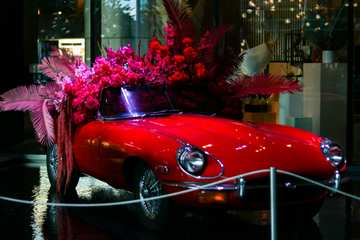
Enzo Ferrari called it “the most beautiful car ever made.” Who am I to argue with Il Commendatore? The Jaguar E-Type is the mathematical average of perfection. Its proportions—an impossibly long hood, a short cabin, and a delicate, tapered tail—hit every pleasure center in the human brain.
The Series 1 E-Type, specifically the Coupe, is the purest form. It lacks the heavy bumpers and exposed headlights of later federalized models. The E-Type was also affordable speed in its day, a democratization of beauty. Today, however, pristine examples are blue-chip assets. When analyzing classic car auctions, the E-Type serves as a market barometer. Its beauty is accessible; you don’t need a degree in design to understand why it works. It is phallic, powerful, and undeniably British.
The Future of Beauty: 2025 and Beyond
As we transition into the age of electrification, the principles established by these most beautiful cars are being challenged. Electric vehicles (EVs), with their skateboard chassis and lack of large engines, offer designers new freedoms, yet many struggle with proportion. We are seeing high beltlines and cab-forward designs that prioritize interior space over exterior elegance.
However, the “neoclassic” trend is emerging. Manufacturers are realizing that aerodynamic efficiency doesn’t have to mean boring. We are seeing a return to the “coke bottle” shapes of the 60s and the sharp wedges of the 70s, reinterpreted for aero-efficiency. The lessons from the 250 GTO and the Type 57 Atlantic—specifically regarding how air moves over a surface—are being applied to increase EV range.
Furthermore, the rise of automotive engineering careers focused purely on “perceived quality” and “surface language” indicates that the industry knows specs aren’t enough. A car must court the eye. We are also seeing a massive surge in the “Restomod” culture, where classic shells (like the 911 or the E-Type) are fitted with modern electric or high-performance powertrains, proving that these designs are truly timeless.
Conclusion: The Enduring Power of Form
In my professional opinion, a car becomes legendary not through its 0-60 time, but through its ability to make you look back at it as you walk away. The most beautiful cars in history share a common thread: a singular vision that prioritized emotion over focus-group data. From the Art Deco curves of the Bugatti to the razor-sharp wedge of the Countach, these vehicles capture the spirit of their times while remaining universally appealing.
Whether you are looking to acquire a piece of history, needing advice on exotic car insurance, or simply wanting to understand the visual language of the road, the journey begins with appreciation. These machines are the ancestors of tomorrow’s innovation.
American Avant-Garde: 1963 Chevrolet Corvette Sting Ray
For one year only, General Motors produced a car that rivaled anything coming out of Europe: the 1963 Corvette Sting Ray “Split-Window” Coupe. Bill Mitchell, the VP of Design at GM, was obsessed with marine life and aeronautics, and it shows.
The sharp beltline that encircles the car, the hidden headlights, and, of course, the controversial rear window spine make this arguably the most beautiful car America has ever produced. It was bold, brash, and futuristic. While the split window was removed in 1964 because of visibility complaints, that flaw is exactly what makes the ’63 immortal today. It represents a time when American designers were allowed to take massive risks. In the context of restoring vintage automobiles, the ’63 Corvette requires specific expertise, particularly in fiberglass bodywork, which ages differently than steel.
The Supercar Blueprint: Lamborghini Miura (1966–1973)
Before the Countach, there was the Miura. If the Countach was male aggression, the Miura was female beauty. Another Gandini masterpiece, the Miura is often cited by industry veterans as the most beautiful mid-engine car in history.
The mechanicals were transverse-mounted, allowing the car to be incredibly short and compact. The “clamshell” hoods front and rear open to reveal the chassis like a intricate watch. The details—the eyelashes around the headlights, the slats on the rear window, the door intakes—are stylized yet functional. The Miura looks like it is speeding even when parked. It has a delicacy that modern supercars, with their massive wings and splitters, have lost. It reminds us that a 170mph car can still look elegant.
The Universal Standard: Jaguar E-Type (1961–1967)
Enzo Ferrari called it “the most beautiful car ever made.” Who am I to argue with Il Commendatore? The Jaguar E-Type is the mathematical average of perfection. Its proportions—an impossibly long hood, a short cabin, and a delicate, tapered tail—hit every pleasure center in the human brain.
The Series 1 E-Type, specifically the Coupe, is the purest form. It lacks the heavy bumpers and exposed headlights of later federalized models. The E-Type was also affordable speed in its day, a democratization of beauty. Today, however, pristine examples are blue-chip assets. When analyzing classic car auctions, the E-Type serves as a market barometer. Its beauty is accessible; you don’t need a degree in design to understand why it works. It is phallic, powerful, and undeniably British.
The Future of Beauty: 2025 and Beyond
As we transition into the age of electrification, the principles established by these most beautiful cars are being challenged. Electric vehicles (EVs), with their skateboard chassis and lack of large engines, offer designers new freedoms, yet many struggle with proportion. We are seeing high beltlines and cab-forward designs that prioritize interior space over exterior elegance.
However, the “neoclassic” trend is emerging. Manufacturers are realizing that aerodynamic efficiency doesn’t have to mean boring. We are seeing a return to the “coke bottle” shapes of the 60s and the sharp wedges of the 70s, reinterpreted for aero-efficiency. The lessons from the 250 GTO and the Type 57 Atlantic—specifically regarding how air moves over a surface—are being applied to increase EV range.
Furthermore, the rise of automotive engineering careers focused purely on “perceived quality” and “surface language” indicates that the industry knows specs aren’t enough. A car must court the eye. We are also seeing a massive surge in the “Restomod” culture, where classic shells (like the 911 or the E-Type) are fitted with modern electric or high-performance powertrains, proving that these designs are truly timeless.
Conclusion: The Enduring Power of Form
In my professional opinion, a car becomes legendary not through its 0-60 time, but through its ability to make you look back at it as you walk away. The most beautiful cars in history share a common thread: a singular vision that prioritized emotion over focus-group data. From the Art Deco curves of the Bugatti to the razor-sharp wedge of the Countach, these vehicles capture the spirit of their times while remaining universally appealing.
Whether you are looking to acquire a piece of history, needing advice on exotic car insurance, or simply wanting to understand the visual language of the road, the journey begins with appreciation. These machines are the ancestors of tomorrow’s innovation.
 If you are ready to stop dreaming and start driving, or if you require expert consultation on acquiring a vehicle that matches your aesthetic and investment goals, contact our team today. Let us help you find the rolling sculpture that belongs in your garage.