
From the Apex to the Asphalt: Unlocking the Thrill of Race-Bred Engines in Production Cars
For automotive enthusiasts, there’s an undeniable allure to the raw, unadulterated performance
that stems from a race-bred engine. It’s more than just cosmetic flair or a few sportier tuning adjustments; it’s about the very heart of a machine – a power plant forged in the crucible of intense motorsport competition, now finding its way onto public roadways. These engines, honed on the unforgiving tarmac of legendary circuits, deliver a visceral connection to the world of professional racing, injecting high-revving, adrenaline-fueled excitement into everyday driving.
This exploration delves into ten remarkable production vehicles that masterfully bridge the divide between the racetrack and the street. From the spine-tingling crescendo of a V12 to the ferocious growl of a twin-turbocharged behemoth, these automobiles offer a tantalizing glimpse into the world of motorsport, all while remaining road-legal. But before we celebrate these automotive marvels, it’s crucial to understand the profound ‘why’ behind manufacturers’ significant investments in motorsport. How does this relentless pursuit of speed and innovation on the track ultimately translate into the vehicles accessible to the average driver?
The Symbiotic Dance: Motorsport’s Influence on Road-Going Machines
The relationship between motorsport and production automobiles is an intricate and enduring one, a fertile ground where technological boundaries are constantly pushed. Racing serves as an unparalleled testing ground, subjecting vehicles and their components to extreme conditions where compromise is simply not an option. The lessons learned, the innovations pioneered, and the engineering breakthroughs achieved on the circuit inevitably filter down, influencing the cars we drive on our daily commutes. Whether it’s the refinement of advanced aerodynamic principles, the integration of lightweight yet robust materials, or the sophisticated trickle-down of engine technology, the innovations born from racing directly contribute to the development of superior road cars.
Consider, for instance, technologies that were once exclusive to the realm of professional racing: disc brakes and paddle shifters. Today, these are commonplace features in the production vehicles of countless manufacturers. Beyond engineering advancements, motorsport success acts as a powerful catalyst for brand enhancement. When a manufacturer’s race car achieves dominance on the track, its road-going counterparts are perceived with a heightened sense of desirability and performance prowess. While the vast majority of us will never have the opportunity to pilot a Formula 1 car or a Le Mans prototype, we can still vicariously experience the thrill of racing, especially when a true race-bred engine vibrates beneath the hood of our own vehicle. This enduring strategy, often summarized as “Win on Sunday, Sell on Monday,” is experiencing a significant resurgence, arguably representing one of the most positive developments for the automotive industry in recent decades.
A Pantheon of Performance: Cars Featuring Race-Derived Powerplants
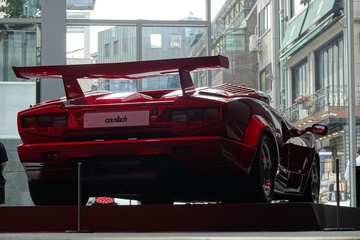 Let’s immerse ourselves in the exhilarating world of production cars that proudly carry the DNA of motorsport:
Alfa Romeo Montreal: The V8 Enigma
The Alfa Romeo Montreal is a testament to bold design and mechanical brilliance. At its heart lies a potent 2.6-liter V8 engine, a powerplant with direct lineage to Alfa Romeo’s formidable Tipo 33 sports prototype. This endurance racer campaigned fiercely in prestigious events like the Targa Florio and the 24 Hours of Daytona. While thoughtfully detuned for civilian road use, the Montreal’s V8 retains a significant portion of its motorsport character. It eagerly spins up to an impressive 7,000 RPM, delivering a robust 200 horsepower. The captivating symphony of its V8, combined with its striking aesthetic, firmly cemented the Montreal’s status as one of the most stylish and criminally underrated cars to ever bear the Alfa Romeo emblem. This model exemplifies the early adoption of V8 sports car engines in production vehicles, offering a taste of endurance racing performance.
BMW M Series: The Ultimate Driving Machines
BMW’s commitment to motorsport is deeply etched into the DNA of its most iconic models. The legendary BMW M1, in particular, was propelled by the formidable 3.5-liter inline-six M88 engine. This engine’s origins are intrinsically linked to BMW’s highly successful racing endeavors, most notably finding application in the exclusive BMW M1 ProCar series. Subsequently, this same powerhouse found its way into the revered E24 M6 and the E28 M5, delivering exhilarating performance. Even the four-cylinder S14 engine that powered the celebrated E30 M3 owed its genesis to the M88 and the technologically advanced, turbocharged F1 engines of the era. This engine architecture drew significant inspiration from BMW’s dominance in touring car racing, sharing critical components and engineering principles with the machines that conquered the DTM series. These BMW performance cars showcase how championship-winning engineering translates to consumer vehicles.
Chevrolet Camaro ZL1 (1969): The Big-Block Beast
The 1969 Chevrolet Camaro ZL1 represents a raw, untamed expression of American muscle, featuring a colossal 427 cubic-inch (7.0-liter) V8 engine originally conceived for the demanding Can-Am racing circuit. Constructed entirely from lightweight aluminum, this engine was remarkably svelte for its displacement, delivering a staggering output. While it produced approximately 500 horsepower in its full racing trim, it was judiciously detuned to 430 horsepower for its road-going iteration. The ZL1 package transformed the already potent Camaro into a street-legal drag strip dominator. Its formidable engine subsequently powered numerous race cars within the SCCA Trans-Am series. With a production run limited to a mere 69 examples, the 1969 Camaro ZL1 stands as an exceptionally rare and highly coveted automotive icon today, a prime example of a 7.0L V8 engine making the leap from track to street.
Ferrari Dino 206 GT: The Mid-Engine V6 Pioneer
The Ferrari Dino 206 GT, while perhaps not carrying the iconic Prancing Horse badge initially, introduced a groundbreaking mid-engine V6 configuration to the Maranello marque. Its 2.0-liter V6 engine was originally developed for Ferrari’s Formula 2 racing aspirations in the 1960s. Though its road-biased tune yielded 180 horsepower, the engine retained its eager, high-revving nature, imbuing the Dino with a distinct racing spirit that made it an absolute delight to navigate on winding country roads. This was particularly impressive considering the car’s remarkably light curb weight, just over 2,000 pounds. The Dino 206 GT marked a pivotal moment for Ferrari, laying the groundwork for future mid-engine V6 and V8 sports cars that would define the brand. Discussions around Ferrari V6 engine history often begin with this groundbreaking model.
Ferrari F50: Formula 1 for the Road
Commissioned to commemorate Ferrari’s 50th anniversary, the Ferrari F50 elevates the concept of a track-derived engine to an entirely new stratum. Its heart is a breathtaking 4.7-liter V12 engine, directly descended from the legendary Tipo 641 Formula 1 car of 1990, famously piloted by Alain Prost. This naturally aspirated marvel screams towards an astonishing 8,500 RPM, unleashing a formidable 513 horsepower. The F50 offers an unfiltered, visceral connection to the raw experience of an F1 car on public roads. With only minor adjustments to comply with road regulations, the F50 represented the closest a road-legal Ferrari could come to genuine Formula 1 performance at the time, solidifying its reputation as a true F1-derived supercar.
Ford GT: A Le Mans Legacy Reimagined
Let’s immerse ourselves in the exhilarating world of production cars that proudly carry the DNA of motorsport:
Alfa Romeo Montreal: The V8 Enigma
The Alfa Romeo Montreal is a testament to bold design and mechanical brilliance. At its heart lies a potent 2.6-liter V8 engine, a powerplant with direct lineage to Alfa Romeo’s formidable Tipo 33 sports prototype. This endurance racer campaigned fiercely in prestigious events like the Targa Florio and the 24 Hours of Daytona. While thoughtfully detuned for civilian road use, the Montreal’s V8 retains a significant portion of its motorsport character. It eagerly spins up to an impressive 7,000 RPM, delivering a robust 200 horsepower. The captivating symphony of its V8, combined with its striking aesthetic, firmly cemented the Montreal’s status as one of the most stylish and criminally underrated cars to ever bear the Alfa Romeo emblem. This model exemplifies the early adoption of V8 sports car engines in production vehicles, offering a taste of endurance racing performance.
BMW M Series: The Ultimate Driving Machines
BMW’s commitment to motorsport is deeply etched into the DNA of its most iconic models. The legendary BMW M1, in particular, was propelled by the formidable 3.5-liter inline-six M88 engine. This engine’s origins are intrinsically linked to BMW’s highly successful racing endeavors, most notably finding application in the exclusive BMW M1 ProCar series. Subsequently, this same powerhouse found its way into the revered E24 M6 and the E28 M5, delivering exhilarating performance. Even the four-cylinder S14 engine that powered the celebrated E30 M3 owed its genesis to the M88 and the technologically advanced, turbocharged F1 engines of the era. This engine architecture drew significant inspiration from BMW’s dominance in touring car racing, sharing critical components and engineering principles with the machines that conquered the DTM series. These BMW performance cars showcase how championship-winning engineering translates to consumer vehicles.
Chevrolet Camaro ZL1 (1969): The Big-Block Beast
The 1969 Chevrolet Camaro ZL1 represents a raw, untamed expression of American muscle, featuring a colossal 427 cubic-inch (7.0-liter) V8 engine originally conceived for the demanding Can-Am racing circuit. Constructed entirely from lightweight aluminum, this engine was remarkably svelte for its displacement, delivering a staggering output. While it produced approximately 500 horsepower in its full racing trim, it was judiciously detuned to 430 horsepower for its road-going iteration. The ZL1 package transformed the already potent Camaro into a street-legal drag strip dominator. Its formidable engine subsequently powered numerous race cars within the SCCA Trans-Am series. With a production run limited to a mere 69 examples, the 1969 Camaro ZL1 stands as an exceptionally rare and highly coveted automotive icon today, a prime example of a 7.0L V8 engine making the leap from track to street.
Ferrari Dino 206 GT: The Mid-Engine V6 Pioneer
The Ferrari Dino 206 GT, while perhaps not carrying the iconic Prancing Horse badge initially, introduced a groundbreaking mid-engine V6 configuration to the Maranello marque. Its 2.0-liter V6 engine was originally developed for Ferrari’s Formula 2 racing aspirations in the 1960s. Though its road-biased tune yielded 180 horsepower, the engine retained its eager, high-revving nature, imbuing the Dino with a distinct racing spirit that made it an absolute delight to navigate on winding country roads. This was particularly impressive considering the car’s remarkably light curb weight, just over 2,000 pounds. The Dino 206 GT marked a pivotal moment for Ferrari, laying the groundwork for future mid-engine V6 and V8 sports cars that would define the brand. Discussions around Ferrari V6 engine history often begin with this groundbreaking model.
Ferrari F50: Formula 1 for the Road
Commissioned to commemorate Ferrari’s 50th anniversary, the Ferrari F50 elevates the concept of a track-derived engine to an entirely new stratum. Its heart is a breathtaking 4.7-liter V12 engine, directly descended from the legendary Tipo 641 Formula 1 car of 1990, famously piloted by Alain Prost. This naturally aspirated marvel screams towards an astonishing 8,500 RPM, unleashing a formidable 513 horsepower. The F50 offers an unfiltered, visceral connection to the raw experience of an F1 car on public roads. With only minor adjustments to comply with road regulations, the F50 represented the closest a road-legal Ferrari could come to genuine Formula 1 performance at the time, solidifying its reputation as a true F1-derived supercar.
Ford GT: A Le Mans Legacy Reimagined
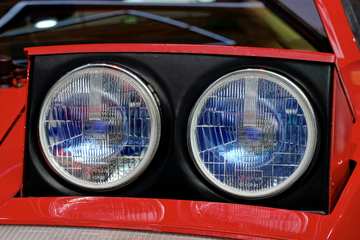 The Ford GT is a powerful homage to one of the most legendary racing machines in automotive history: the Le Mans-conquering Ford GT40. The 2005 iteration of the GT is powered by a 5.4-liter supercharged V8 engine whose roots are deeply intertwined with the development of Ford’s endurance racing powertrains, sharing kinship with the units used in Ford’s Daytona Prototype race cars. Similarly, the more contemporary 2017 Ford GT continues this tradition of motorsport-inspired performance, featuring a twin-turbocharged 3.5-liter V6 engine developed under Ford’s EcoBoost program, a technology honed through rigorous endurance racing campaigns. The Ford GT stands as a modern embodiment of performance car engineering, drawing directly from track triumphs.
Jaguar XJ220: The Twin-Turbocharged Icon
Among the British marque’s most distinctive creations, the Jaguar XJ220 initially conceived with a V12 powerplant, ultimately debuted with a potent 3.5-liter twin-turbocharged V6. This engine was directly sourced from the Jaguar XJR-11 Group C race car, a formidable competitor on the international racing circuit. This competition-honed engine enabled the XJ220 to achieve a breathtaking top speed of 217 mph, briefly crowning it the fastest production car in the world. The XJ220’s motor was a prime example of cutting-edge, track-proven technology making its way into a road-legal automobile, a true marvel of high-speed production cars.
Plymouth Belvedere (1964): The NASCAR Hemi Legend
While outwardly appearing as a quintessential American sedan, the 1964 Plymouth Belvedere harbored a secret weapon under its bonnet: the legendary 426 Hemi V8 engine. This powerhouse was specifically engineered for the fiercely competitive world of NASCAR. Dubbed the “Race Hemi,” this engine was an unstoppable force on the track and soon became a cornerstone of Plymouth’s production car lineup. The road-going Belvedere, boasting an impressive 425 horsepower, swiftly ascended to become one of the most potent muscle cars of the 1960s, a reputation that continued to define the brand well into the 1970s with its iconic ‘Cuda. This represents a pivotal moment in the history of NASCAR engine technology trickling down to consumers.
Porsche 918 Spyder: Hybrid Hypercar with Racing Roots
The Porsche 918 Spyder’s remarkable 4.6-liter V8 engine is a direct descendant of the RS Spyder, a prototype race car that competed valiantly in the LMP2 class at the grueling 24 Hours of Le Mans. The 918 ingeniously integrated this competition-derived engine with advanced electric motors, resulting in a staggering combined output of 887 horsepower. This potent synergy allowed the hypercar to achieve an electrifying 0 to 60 mph sprint in a mere 2.2 seconds (according to independent testing), placing it among the quickest automobiles ever produced. While the electric motors contribute significantly to its blistering acceleration, it is the race-honed V8 that provides the car’s soul-stirring emotional and auditory experience, defining the pinnacle of hybrid supercar performance.
Porsche Carrera GT: The Analog Supercar’s V10 Heart
The Porsche Carrera GT is widely revered as one of the greatest analog supercars ever constructed, and a significant part of its legendary status is attributed to the charismatic 10-cylinder engine that powers it. The 5.7-liter V10 was initially developed for Formula 1 during the V10 engine era. When its F1 aspirations didn’t materialize, the engine was shelved, only to be later earmarked for a Le Mans prototype program that ultimately never saw the light of day. Instead, Porsche made the inspired decision to transplant this race-honed engine into its flagship supercar. This allowed the Carrera GT to unleash 612 horsepower and achieve an exhilarating redline of 8,000 RPM. Coupled with its feather-light construction and profound motorsport DNA, the Carrera GT remains a benchmark for supercar driving experience and a true driver’s machine, challenging and rewarding its pilot in equal measure.
The Enduring Appeal of Motorsport DNA
The examples above are far more than just cars; they are rolling testaments to the enduring power of motorsport. They embody a philosophy where the relentless pursuit of speed and engineering perfection on the racetrack directly enriches the driving experience for enthusiasts worldwide. These performance vehicles offer a tangible link to the world of professional racing, allowing us to feel the pulse of the competition with every press of the accelerator.
For those who yearn for a deeper connection to the automotive world, who appreciate the engineering prowess born from fierce competition, and who seek the thrill of a track-inspired driving experience, exploring these exceptional machines is an absolute must. Whether you’re actively seeking to purchase a vehicle with such pedigree or simply wish to understand the fascinating evolution of automotive technology, a deeper dive into the world of race-bred production cars promises an immensely rewarding journey.
The Ford GT is a powerful homage to one of the most legendary racing machines in automotive history: the Le Mans-conquering Ford GT40. The 2005 iteration of the GT is powered by a 5.4-liter supercharged V8 engine whose roots are deeply intertwined with the development of Ford’s endurance racing powertrains, sharing kinship with the units used in Ford’s Daytona Prototype race cars. Similarly, the more contemporary 2017 Ford GT continues this tradition of motorsport-inspired performance, featuring a twin-turbocharged 3.5-liter V6 engine developed under Ford’s EcoBoost program, a technology honed through rigorous endurance racing campaigns. The Ford GT stands as a modern embodiment of performance car engineering, drawing directly from track triumphs.
Jaguar XJ220: The Twin-Turbocharged Icon
Among the British marque’s most distinctive creations, the Jaguar XJ220 initially conceived with a V12 powerplant, ultimately debuted with a potent 3.5-liter twin-turbocharged V6. This engine was directly sourced from the Jaguar XJR-11 Group C race car, a formidable competitor on the international racing circuit. This competition-honed engine enabled the XJ220 to achieve a breathtaking top speed of 217 mph, briefly crowning it the fastest production car in the world. The XJ220’s motor was a prime example of cutting-edge, track-proven technology making its way into a road-legal automobile, a true marvel of high-speed production cars.
Plymouth Belvedere (1964): The NASCAR Hemi Legend
While outwardly appearing as a quintessential American sedan, the 1964 Plymouth Belvedere harbored a secret weapon under its bonnet: the legendary 426 Hemi V8 engine. This powerhouse was specifically engineered for the fiercely competitive world of NASCAR. Dubbed the “Race Hemi,” this engine was an unstoppable force on the track and soon became a cornerstone of Plymouth’s production car lineup. The road-going Belvedere, boasting an impressive 425 horsepower, swiftly ascended to become one of the most potent muscle cars of the 1960s, a reputation that continued to define the brand well into the 1970s with its iconic ‘Cuda. This represents a pivotal moment in the history of NASCAR engine technology trickling down to consumers.
Porsche 918 Spyder: Hybrid Hypercar with Racing Roots
The Porsche 918 Spyder’s remarkable 4.6-liter V8 engine is a direct descendant of the RS Spyder, a prototype race car that competed valiantly in the LMP2 class at the grueling 24 Hours of Le Mans. The 918 ingeniously integrated this competition-derived engine with advanced electric motors, resulting in a staggering combined output of 887 horsepower. This potent synergy allowed the hypercar to achieve an electrifying 0 to 60 mph sprint in a mere 2.2 seconds (according to independent testing), placing it among the quickest automobiles ever produced. While the electric motors contribute significantly to its blistering acceleration, it is the race-honed V8 that provides the car’s soul-stirring emotional and auditory experience, defining the pinnacle of hybrid supercar performance.
Porsche Carrera GT: The Analog Supercar’s V10 Heart
The Porsche Carrera GT is widely revered as one of the greatest analog supercars ever constructed, and a significant part of its legendary status is attributed to the charismatic 10-cylinder engine that powers it. The 5.7-liter V10 was initially developed for Formula 1 during the V10 engine era. When its F1 aspirations didn’t materialize, the engine was shelved, only to be later earmarked for a Le Mans prototype program that ultimately never saw the light of day. Instead, Porsche made the inspired decision to transplant this race-honed engine into its flagship supercar. This allowed the Carrera GT to unleash 612 horsepower and achieve an exhilarating redline of 8,000 RPM. Coupled with its feather-light construction and profound motorsport DNA, the Carrera GT remains a benchmark for supercar driving experience and a true driver’s machine, challenging and rewarding its pilot in equal measure.
The Enduring Appeal of Motorsport DNA
The examples above are far more than just cars; they are rolling testaments to the enduring power of motorsport. They embody a philosophy where the relentless pursuit of speed and engineering perfection on the racetrack directly enriches the driving experience for enthusiasts worldwide. These performance vehicles offer a tangible link to the world of professional racing, allowing us to feel the pulse of the competition with every press of the accelerator.
For those who yearn for a deeper connection to the automotive world, who appreciate the engineering prowess born from fierce competition, and who seek the thrill of a track-inspired driving experience, exploring these exceptional machines is an absolute must. Whether you’re actively seeking to purchase a vehicle with such pedigree or simply wish to understand the fascinating evolution of automotive technology, a deeper dive into the world of race-bred production cars promises an immensely rewarding journey.
 Are you ready to experience the thrill of a race-bred engine for yourself? Contact your local specialist dealership or a reputable performance car broker today to explore available models and schedule a test drive. The ultimate driving adventure awaits!