
The Pagani Utopia: A Masterpiece of Automotive Artistry and Performance
For over a quarter-century, the name Pagani has been synonymous with automotive perfection. From the legendary Zonda to the grou
ndbreaking Huayra, Horacio Pagani and his dedicated team have consistently pushed the boundaries of what’s possible in the hypercar realm. Now, with the introduction of the Pagani Utopia, they have not only surpassed their previous achievements but have redefined the very essence of a hypercar for the modern era. This isn’t merely a successor; it’s an evolution, a culmination of decades of passion, meticulous engineering, and an unwavering commitment to artistic expression.
The Pagani Utopia represents Pagani’s third distinct model line, a testament to their deliberate and unhurried approach to automotive creation. Each Pagani is not just a vehicle; it’s a meticulously crafted work of art, born from a profound understanding of materials, aerodynamics, and the raw emotion of driving. The Utopia embodies this philosophy, building upon the foundations of the Zonda’s raw passion and the Huayra’s sophisticated innovation, while forging its own unique identity characterized by its breathtaking design, exhilarating performance, and a deeply engaging driving experience.
At its heart, the Utopia is powered by a bespoke, AMG-developed 6.0-liter twin-turbocharged V12 engine. This masterpiece of internal combustion engineering unleashes a staggering 852 horsepower and a colossal 811 lb-ft of torque. This is not about brute force alone; it’s about the intelligent application of immense power, delivered with a visceral urgency that connects the driver to the road in a way few modern machines can. The sensation of acceleration in the Utopia is akin to being propelled by an invisible force, a relentless surge that presses you deeper into the exquisitely crafted seats, accompanied by the sonorous roar of the V12.
The Allure of Torque: An Experiential Deep Dive
The true magic of the Pagani Utopia, and indeed any hypercar of this caliber, lies in its ability to manipulate the very fabric of physics and our perception of it. Imagine cruising at a modest 30 mph in one of the lower gears. Your fingers, lightly gripping the Alcantara-wrapped steering wheel, sense the tension. A gentle application of the throttle, a subtle flex of your right foot, and the slightest hesitation gives way to an avalanche of power. The twin-turbo V12 inhales deeply, transforming air into pure, unadulterated kinetic energy. The world outside blurs, not with the jarring immediacy of an electric supercar’s instantaneous torque, but with a progressive, intensifying squeeze of longitudinal g-forces. It’s a sensation that ignites primal reactions, a feeling of being pushed back into your seat with an intensity that is both exhilarating and almost comical. The initial surprise gives way to a rush of adrenaline, followed by an irrepressible grin. And then, you do it again. And again. The Utopia’s ability to launch you towards the horizon is a constantly renewing source of delight, a highlight of its elemental appeal. While mere in-gear acceleration might seem a simplistic measure of its capabilities, it vividly illustrates the raw, captivating essence of this extraordinary machine.
The name “Utopia” itself evokes a sense of perfection, a concept explored by Sir Thomas More over five centuries ago. Horacio Pagani’s Utopia, however, is a tangible reality. It’s a £2.2 million, 1280kg marvel of advanced composites and exotic alloys, capable of exceeding 217 mph, powered by that formidable V12. While More’s vision remained an abstract ideal, Pagani’s Utopia is an attainable dream for a select few – the 99 fortunate individuals who have secured a build slot for the coupe, with many more likely to opt for the convertible Roadster. For motoring journalists, the Utopia represents a fleeting, yet utterly intoxicating, experience – a day of driving on some of the world’s most exceptional roads, a chance to breathe the rarefied air of automotive connoisseurship.
 A Legacy of Craftsmanship: The Pagani Atelier
The creation of a new Pagani model is a rare event, marked by an obsessive dedication to detail and a relentless pursuit of perfection. The Utopia is only the third new model line to emerge from Pagani’s state-of-the-art “Atelier” in San Cesario sul Panaro in 26 years. This extended gestation period is not a sign of stagnation, but rather a testament to the company’s commitment to developing vehicles that are truly exceptional. Much has evolved since evo first visited Pagani in 1999. The company has grown from a modest workshop to an impressive headquarters and museum, opened in 2017, housing production, restoration, personalization, and special projects departments – known within Pagani as Rinascimento, Unico, and Grandi Complicazioni.
Our initial encounter with the Utopia begins not from the driver’s seat, but from the passenger’s, alongside Pagani’s seasoned R&D test driver, Alberto Scilla. While normally hesitant to relinquish control in such a potent machine, this is a unique opportunity to observe the car’s behavior and performance from an observer’s perspective before taking the reins. We head towards the Futa Pass, a legendary route steeped in automotive history, just 90 minutes from Pagani’s HQ, and a fitting stage for experiencing the Utopia away from the prying eyes of the public. Even as a passenger, the Utopia is a revelation. It possesses a surprising suppleness, and while the V12 is ever-present, it remains commendably restrained at lower speeds, only unleashing its formidable power when provoked. Pagani has always prioritized the road-going experience, and the Utopia blends a new level of refinement with heart-stopping performance.
Scilla articulates the immense effort invested in perfecting the manual transmission. It’s not just about the slickness of the gear changes, but also the delicate feel of the clutch. Managing 811 lb-ft of torque through a traditional stick shift demands an extraordinary level of engineering finesse, and the Utopia’s clutch and gear selection exhibit a remarkable lightness of touch. As we merge onto the autostrada, the Utopia moves with the grace of an apex predator, effortlessly parting traffic with its imposing presence. Every so often, Scilla dips into the throttle, awakening the V12’s deep, resonant growl. It’s a sound that is both sweeter and sharper than the Huayra’s, imbued with a richer, more outgoing personality, yet possessing a steely edge that speaks of untamed power.
Design Philosophy: Artistry Meets Aerodynamics
Upon arriving at our fuel stop, the Utopia immediately draws a crowd. Much like a magnet, it attracts attention, with onlookers emerging from seemingly nowhere, eager to capture its image. Despite having spent the last hour in its company, I too find myself captivated. Devoid of excessive wings and cavernous diffusers, the Utopia eschews the current trend of overt aerodynamic elements in favor of a more artistic interpretation. Its design celebrates purity of form, adorned with lavish embellishments and eye-catching flourishes – a unique fusion that defines Pagani’s distinctive aesthetic.
The “key,” a satisfyingly weighty Utopia-shaped fob, feels like a tangible piece of sculpture in my hand. Yet, my gaze is still drawn to the car’s flowing lines, its compound curves. Every exterior and interior brightwork element is meticulously machined from a solid billet, lending it a jewelry-like quality and an impression that the entire car has been hewn from a single piece of material. It’s a remarkable sight in the real world. The dihedral doors, a signature of supercars, swing upwards, revealing an extraordinary cockpit. It’s a dazzling exercise in maximalism, packed with exquisite materials and a riot of shapes and finishes. Familiar Pagani cues are present: the periscope air vents, the floating crescent-shaped instrument binnacle, the flawless exposed carbon fiber structure, and the intelligent use of glazing that extends into the roof, bathing the interior in light and creating a sense of airy spaciousness.
True to its ethos, the Utopia celebrates the beauty of mechanical engineering. The analog instruments feature small portholes, offering glimpses of their intricate inner workings, akin to admiring the movement of a fine Swiss watch. And then there is the gear shifter, rising from the transmission tunnel like a piece of art. Crafted from a solid block of metal, its complex linkage is proudly displayed, a testament to Pagani’s dedication to showcasing mechanical prowess. This passion for beautifully wrought engineering stems from Pagani’s lifelong admiration for Leonardo da Vinci, who first articulated the inseparable link between art and science. The Utopia is replete with examples of this philosophy, none more striking than the steering wheel. Crafted at Modena Design’s advanced CNC facility, the wheel begins life as a 43kg billet of high-grade alloy. After 28 hours of five-axis machining to tolerances of just 0.5 microns, followed by meticulous hand-polishing, the finished wheel weighs a mere 1.6kg. The 41.3kg of discarded material is, of course, responsibly recycled.
The Manual Transmission: A Driver’s Delight
The myth that manual supercars are anachronistic and demanding to drive is dispelled by the Pagani Utopia. Its clutch pedal, unlike those of old, is light and smooth, requiring just enough effort to feel mechanical, yet offering a precise bite point that allows for effortless starts. The gear shifts are clean and precise, perhaps a fraction longer than some might expect, and lacking the slight resistance of a gated Ferrari shifter, but undeniably satisfying. The inclusion of a dog-leg first gear adds a touch of nostalgic charm. In reality, with the V12’s immense torque available from tickover, one could easily pull away in second gear. However, the positive spring bias that guides the lever towards the center of the open gate ensures slick and precise upshifts to second gear and beyond. It’s no surprise that a significant 70% of Utopia customers have opted for the manual transmission.
While presenting as a proudly analog machine, the Utopia is equipped with advanced, integrated electronics. A choice of dynamic modes – Comfort, Sport, Race, and Wet – allows drivers to tailor the car’s demeanor, while a “Supersoft” mode, akin to a Ferrari’s bumpy road button, offers rapid access to the most compliant suspension setting. However, the semi-active TracTive dampers are so exquisitely tuned that their use is rarely necessary, striking an impressive balance between bump absorption and body control. “Sport” mode becomes my default, infusing the Utopia with a spirited character without rendering it overly agitated. The ESC (Electronic Stability Control) provides a reassuring safety net, subtly intervening when aggressive throttle application is employed on corner exits, yet allowing for blistering progress. This is further enhanced by the grippy Pirelli P Zero Corsa tires, measuring 265/35 R21 at the front and 325/30 R22 at the rear.
A Legacy of Craftsmanship: The Pagani Atelier
The creation of a new Pagani model is a rare event, marked by an obsessive dedication to detail and a relentless pursuit of perfection. The Utopia is only the third new model line to emerge from Pagani’s state-of-the-art “Atelier” in San Cesario sul Panaro in 26 years. This extended gestation period is not a sign of stagnation, but rather a testament to the company’s commitment to developing vehicles that are truly exceptional. Much has evolved since evo first visited Pagani in 1999. The company has grown from a modest workshop to an impressive headquarters and museum, opened in 2017, housing production, restoration, personalization, and special projects departments – known within Pagani as Rinascimento, Unico, and Grandi Complicazioni.
Our initial encounter with the Utopia begins not from the driver’s seat, but from the passenger’s, alongside Pagani’s seasoned R&D test driver, Alberto Scilla. While normally hesitant to relinquish control in such a potent machine, this is a unique opportunity to observe the car’s behavior and performance from an observer’s perspective before taking the reins. We head towards the Futa Pass, a legendary route steeped in automotive history, just 90 minutes from Pagani’s HQ, and a fitting stage for experiencing the Utopia away from the prying eyes of the public. Even as a passenger, the Utopia is a revelation. It possesses a surprising suppleness, and while the V12 is ever-present, it remains commendably restrained at lower speeds, only unleashing its formidable power when provoked. Pagani has always prioritized the road-going experience, and the Utopia blends a new level of refinement with heart-stopping performance.
Scilla articulates the immense effort invested in perfecting the manual transmission. It’s not just about the slickness of the gear changes, but also the delicate feel of the clutch. Managing 811 lb-ft of torque through a traditional stick shift demands an extraordinary level of engineering finesse, and the Utopia’s clutch and gear selection exhibit a remarkable lightness of touch. As we merge onto the autostrada, the Utopia moves with the grace of an apex predator, effortlessly parting traffic with its imposing presence. Every so often, Scilla dips into the throttle, awakening the V12’s deep, resonant growl. It’s a sound that is both sweeter and sharper than the Huayra’s, imbued with a richer, more outgoing personality, yet possessing a steely edge that speaks of untamed power.
Design Philosophy: Artistry Meets Aerodynamics
Upon arriving at our fuel stop, the Utopia immediately draws a crowd. Much like a magnet, it attracts attention, with onlookers emerging from seemingly nowhere, eager to capture its image. Despite having spent the last hour in its company, I too find myself captivated. Devoid of excessive wings and cavernous diffusers, the Utopia eschews the current trend of overt aerodynamic elements in favor of a more artistic interpretation. Its design celebrates purity of form, adorned with lavish embellishments and eye-catching flourishes – a unique fusion that defines Pagani’s distinctive aesthetic.
The “key,” a satisfyingly weighty Utopia-shaped fob, feels like a tangible piece of sculpture in my hand. Yet, my gaze is still drawn to the car’s flowing lines, its compound curves. Every exterior and interior brightwork element is meticulously machined from a solid billet, lending it a jewelry-like quality and an impression that the entire car has been hewn from a single piece of material. It’s a remarkable sight in the real world. The dihedral doors, a signature of supercars, swing upwards, revealing an extraordinary cockpit. It’s a dazzling exercise in maximalism, packed with exquisite materials and a riot of shapes and finishes. Familiar Pagani cues are present: the periscope air vents, the floating crescent-shaped instrument binnacle, the flawless exposed carbon fiber structure, and the intelligent use of glazing that extends into the roof, bathing the interior in light and creating a sense of airy spaciousness.
True to its ethos, the Utopia celebrates the beauty of mechanical engineering. The analog instruments feature small portholes, offering glimpses of their intricate inner workings, akin to admiring the movement of a fine Swiss watch. And then there is the gear shifter, rising from the transmission tunnel like a piece of art. Crafted from a solid block of metal, its complex linkage is proudly displayed, a testament to Pagani’s dedication to showcasing mechanical prowess. This passion for beautifully wrought engineering stems from Pagani’s lifelong admiration for Leonardo da Vinci, who first articulated the inseparable link between art and science. The Utopia is replete with examples of this philosophy, none more striking than the steering wheel. Crafted at Modena Design’s advanced CNC facility, the wheel begins life as a 43kg billet of high-grade alloy. After 28 hours of five-axis machining to tolerances of just 0.5 microns, followed by meticulous hand-polishing, the finished wheel weighs a mere 1.6kg. The 41.3kg of discarded material is, of course, responsibly recycled.
The Manual Transmission: A Driver’s Delight
The myth that manual supercars are anachronistic and demanding to drive is dispelled by the Pagani Utopia. Its clutch pedal, unlike those of old, is light and smooth, requiring just enough effort to feel mechanical, yet offering a precise bite point that allows for effortless starts. The gear shifts are clean and precise, perhaps a fraction longer than some might expect, and lacking the slight resistance of a gated Ferrari shifter, but undeniably satisfying. The inclusion of a dog-leg first gear adds a touch of nostalgic charm. In reality, with the V12’s immense torque available from tickover, one could easily pull away in second gear. However, the positive spring bias that guides the lever towards the center of the open gate ensures slick and precise upshifts to second gear and beyond. It’s no surprise that a significant 70% of Utopia customers have opted for the manual transmission.
While presenting as a proudly analog machine, the Utopia is equipped with advanced, integrated electronics. A choice of dynamic modes – Comfort, Sport, Race, and Wet – allows drivers to tailor the car’s demeanor, while a “Supersoft” mode, akin to a Ferrari’s bumpy road button, offers rapid access to the most compliant suspension setting. However, the semi-active TracTive dampers are so exquisitely tuned that their use is rarely necessary, striking an impressive balance between bump absorption and body control. “Sport” mode becomes my default, infusing the Utopia with a spirited character without rendering it overly agitated. The ESC (Electronic Stability Control) provides a reassuring safety net, subtly intervening when aggressive throttle application is employed on corner exits, yet allowing for blistering progress. This is further enhanced by the grippy Pirelli P Zero Corsa tires, measuring 265/35 R21 at the front and 325/30 R22 at the rear.
 The temptation to switch to “Race” mode is immense, but the thought of explaining a fender-bender to Horacio Pagani is a sobering one. The internal dialogue between caution and daring is a familiar one for any driver of such a machine. Ultimately, a compromise is reached: selecting “Race” mode while conscientiously leaving the ESC engaged. This proves to be the right decision. “Race” mode unleashes the Utopia’s full performance potential, and the less intrusive ESC allows for a controlled and enjoyable degree of rear-wheel oversteer, while still providing a dependable safety net.
The Driving Experience: A Symphony of Power and Precision
Accelerating the Utopia through the gears is an experience akin to riding a rocket. The AMG-designed, hand-built V12, with its 6700rpm redline, is not a high-revving screamer, but each gear change is an event to be savored. Third and fourth gears become the primary tools for enjoyment, with occasional forays into fifth and downshifts into second. In “Race” mode, the V12’s roar becomes harder and more guttural, accompanied by a symphony of induction and turbocharger chuffs and gurgles as the throttle is modulated. The experience off-throttle is equally captivating, with a deep, bass-heavy artillery fire erupting from the Gatling-gun exhaust system on deceleration.
This raw, explosive power is a stark contrast to the Utopia’s seductive shape and refined character. Yet, its precision, poise, and illusion of compactness are thoroughly modern. Where larger supercars once wore their unwieldiness like a badge of honor, the new breed – exemplified by the hybrid, torque-vectoring Lamborghini Revuelto – has rewritten the rules. Paganis have always possessed a genetic advantage: a chassis constructed from titanium-infused carbon fiber and a mechanical purity that negates the need for complex solutions to manage mass. Despite its timeless objectives, the Utopia has moved with the times.
Power-to-weight ratios can be misleading. While numerically a 500bhp car weighing a ton might seem equivalent to a 2-ton car with 1000bhp, their driving dynamics are vastly different. The 1280kg dry (1340kg wet) Utopia, with its 852bhp and 811 lb-ft of torque, while outperformed in pure numbers by electric hypercars like the Pininfarina Battista or the Bugatti Chiron, feels more energized and responsive at all times. This is due to its significantly lower mass, which requires less effort to propel, contain, and maneuver.
Here, on the best stretches of the Futa Pass, this translates into a car with colossal potency between corners, a car that revels in braking zones and the turns themselves. It feels natural, predictable, and even exploitable in a way that belies the immense forces at play, encouraging the driver to delve deeper into its prodigious performance reserves. The steering is light and precise, with quick responses yet sufficient calmness to guide the Utopia to the apex with accuracy, consistency, and confidence. The ability to precisely place the inside front wheel is uncanny. Initially, a fraction more feedback might be desired, but with experience, the lack of distraction becomes evident as part of the Utopia’s carefully considered design. Coupled with the light clutch, the slick gearbox, and the titanic powerplant, the driver never fights the Utopia; instead, a profound harmony is achieved.
This harmonious interplay extends to the Utopia’s massive Brembo CCM-R brakes, featuring 410mm front and 390mm rear rotors, with six-piston front and four-piston rear calipers applying progressive clamping force. These brakes are easy to modulate at low speeds, offering endless bite at higher speeds and a consistently firm pedal that inspires confidence.
The Pagani Utopia Roadster: Open-Air Perfection
The Pagani Utopia transcends conventional hypercar doctrines. While undeniably powerful and astonishingly fast, its name reflects its core philosophy: the pursuit of perfect harmony rather than the prioritization of extremes at the expense of the overall experience. The marriage of the monumental biturbo V12 to a sweet-shifting manual gearbox is transformative. Similarly, eschewing the pursuit of four-digit horsepower figures or stratospheric redlines results in a powertrain that delivers eye-widening, and crucially, nuanced performance perfectly suited for the road at all speeds. The fact that the Utopia meets global emissions and homologation standards is a testament to Pagani’s meticulous approach and the invaluable partnership with AMG as its engine supplier.
While sophisticated electronics might seem antithetical to organic, analog-feeling cars, the Utopia’s deft integration of adaptive damping, ESC, and e-differential successfully refines and, when necessary, tames the machine to enhance the feel and dynamism that discerning drivers crave. The result is a savagely quick and sublimely sorted car – one that combines the purity and engagement of the Zonda with the epic scope and modern refinements of the Huayra, all while imbuing it with its own authentic character and distinct capabilities. The Utopia moves the game forward, yet adheres to its own set of rules, remaining contemporary where it counts and timeless where it matters. Pagani has, once again, achieved automotive brilliance.
The Pagani Utopia Roadster represents a further evolution of this masterpiece. Unlike previous Pagani convertibles, the coupe and Roadster designs were developed concurrently, minimizing compromises. The dry weight remains an identical 1280kg, with Pagani’s mastery of carbon fiber ensuring exceptional tub rigidity without the need for additional reinforcement. Like its coupe counterpart, the Utopia Roadster benefits from worldwide homologation for safety and emissions. While production numbers and price have increased – with the Roadster retailing at £3.1 million for each of the 130 units planned at a rate of 50-60 cars per year – the fundamental Utopia experience remains.
The temptation to switch to “Race” mode is immense, but the thought of explaining a fender-bender to Horacio Pagani is a sobering one. The internal dialogue between caution and daring is a familiar one for any driver of such a machine. Ultimately, a compromise is reached: selecting “Race” mode while conscientiously leaving the ESC engaged. This proves to be the right decision. “Race” mode unleashes the Utopia’s full performance potential, and the less intrusive ESC allows for a controlled and enjoyable degree of rear-wheel oversteer, while still providing a dependable safety net.
The Driving Experience: A Symphony of Power and Precision
Accelerating the Utopia through the gears is an experience akin to riding a rocket. The AMG-designed, hand-built V12, with its 6700rpm redline, is not a high-revving screamer, but each gear change is an event to be savored. Third and fourth gears become the primary tools for enjoyment, with occasional forays into fifth and downshifts into second. In “Race” mode, the V12’s roar becomes harder and more guttural, accompanied by a symphony of induction and turbocharger chuffs and gurgles as the throttle is modulated. The experience off-throttle is equally captivating, with a deep, bass-heavy artillery fire erupting from the Gatling-gun exhaust system on deceleration.
This raw, explosive power is a stark contrast to the Utopia’s seductive shape and refined character. Yet, its precision, poise, and illusion of compactness are thoroughly modern. Where larger supercars once wore their unwieldiness like a badge of honor, the new breed – exemplified by the hybrid, torque-vectoring Lamborghini Revuelto – has rewritten the rules. Paganis have always possessed a genetic advantage: a chassis constructed from titanium-infused carbon fiber and a mechanical purity that negates the need for complex solutions to manage mass. Despite its timeless objectives, the Utopia has moved with the times.
Power-to-weight ratios can be misleading. While numerically a 500bhp car weighing a ton might seem equivalent to a 2-ton car with 1000bhp, their driving dynamics are vastly different. The 1280kg dry (1340kg wet) Utopia, with its 852bhp and 811 lb-ft of torque, while outperformed in pure numbers by electric hypercars like the Pininfarina Battista or the Bugatti Chiron, feels more energized and responsive at all times. This is due to its significantly lower mass, which requires less effort to propel, contain, and maneuver.
Here, on the best stretches of the Futa Pass, this translates into a car with colossal potency between corners, a car that revels in braking zones and the turns themselves. It feels natural, predictable, and even exploitable in a way that belies the immense forces at play, encouraging the driver to delve deeper into its prodigious performance reserves. The steering is light and precise, with quick responses yet sufficient calmness to guide the Utopia to the apex with accuracy, consistency, and confidence. The ability to precisely place the inside front wheel is uncanny. Initially, a fraction more feedback might be desired, but with experience, the lack of distraction becomes evident as part of the Utopia’s carefully considered design. Coupled with the light clutch, the slick gearbox, and the titanic powerplant, the driver never fights the Utopia; instead, a profound harmony is achieved.
This harmonious interplay extends to the Utopia’s massive Brembo CCM-R brakes, featuring 410mm front and 390mm rear rotors, with six-piston front and four-piston rear calipers applying progressive clamping force. These brakes are easy to modulate at low speeds, offering endless bite at higher speeds and a consistently firm pedal that inspires confidence.
The Pagani Utopia Roadster: Open-Air Perfection
The Pagani Utopia transcends conventional hypercar doctrines. While undeniably powerful and astonishingly fast, its name reflects its core philosophy: the pursuit of perfect harmony rather than the prioritization of extremes at the expense of the overall experience. The marriage of the monumental biturbo V12 to a sweet-shifting manual gearbox is transformative. Similarly, eschewing the pursuit of four-digit horsepower figures or stratospheric redlines results in a powertrain that delivers eye-widening, and crucially, nuanced performance perfectly suited for the road at all speeds. The fact that the Utopia meets global emissions and homologation standards is a testament to Pagani’s meticulous approach and the invaluable partnership with AMG as its engine supplier.
While sophisticated electronics might seem antithetical to organic, analog-feeling cars, the Utopia’s deft integration of adaptive damping, ESC, and e-differential successfully refines and, when necessary, tames the machine to enhance the feel and dynamism that discerning drivers crave. The result is a savagely quick and sublimely sorted car – one that combines the purity and engagement of the Zonda with the epic scope and modern refinements of the Huayra, all while imbuing it with its own authentic character and distinct capabilities. The Utopia moves the game forward, yet adheres to its own set of rules, remaining contemporary where it counts and timeless where it matters. Pagani has, once again, achieved automotive brilliance.
The Pagani Utopia Roadster represents a further evolution of this masterpiece. Unlike previous Pagani convertibles, the coupe and Roadster designs were developed concurrently, minimizing compromises. The dry weight remains an identical 1280kg, with Pagani’s mastery of carbon fiber ensuring exceptional tub rigidity without the need for additional reinforcement. Like its coupe counterpart, the Utopia Roadster benefits from worldwide homologation for safety and emissions. While production numbers and price have increased – with the Roadster retailing at £3.1 million for each of the 130 units planned at a rate of 50-60 cars per year – the fundamental Utopia experience remains.
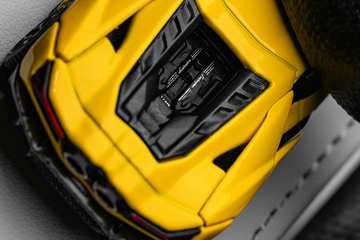 For those captivated by the allure of unparalleled automotive artistry and breathtaking performance, the Pagani Utopia, in both its coupe and Roadster forms, stands as the ultimate expression of the hypercar dream. If you’re ready to explore a level of automotive perfection that transcends mere transportation, now is the time to connect with a Pagani specialist and embark on your own journey towards this automotive utopia.